







news

Categories
Years
2009 | 2010 | 2011 | 2012 | 2013 | 2014 | 2015 | 2016 | 2017 | 2018 | 2019 | 2020 | 2021 | 2022 | 2023 | 2024 | 2025 | 2026 |
2009 | 2010 | 2011 | 2012 | 2013 | 2014 | 2015 | 2016 | 2017 | 2018 | 2019 | 2020 | 2021 | 2022 | 2023 | 2024 | 2025 | 2026 |
Last News
Results 1 - 20 of 185.
Life Sciences - Health - 25.03.2026 - Today

The consequences of a sedentary lifestyle are difficult to study in human trials. That is why an international research team, including the University of Hamburg, has now investigated them in king penguins. The result: While an abundant food supply in protected living conditions promotes rapid growth, it ultimately leads to accelerated aging.
Life Sciences - Social Sciences - 25.03.2026 - Today
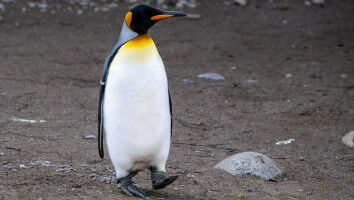
The consequences of a sedentary lifestyle are difficult to investigate in human studies. For this reason, an international research team involving the University of Hamburg has now investigated them in king penguins. The result: an abundant food supply in protected living conditions promotes rapid growth, but ultimately leads to accelerated ageing.
Life Sciences - History & Archeology - 24.03.2026
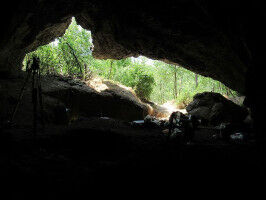
A recent study incorporating new DNA data and archaeological evidence has shown that the last Neanderthals in Europe experienced a major population turnover, resulting in little diversity in their gene pool prior to their disappearance some 40,000 years ago. In the study, an international research team led by Professor Cosimo Posth at the Senckenberg Center for Human Evolution and Palaeoenvironment at the University of Tübingen traced the dramatic genetic history of European Neanderthals.
Physics - Chemistry - 24.03.2026
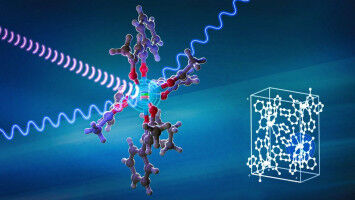
A research team at the Karlsruhe Institute of Technology (KIT) has made an important advance in quantum physics and materials research: For the first time, nuclear spins in a molecular material could be optically initialized, controlled and read out. Nuclear spins are considered to be particularly stable carriers of quantum information due to their low interaction with the environment.
Earth Sciences - Environment - 23.03.2026
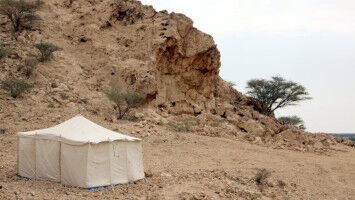
The expansion of modern humans out of Africa likely unfolded differently than previously thought: contrary to earlier assumptions, south-east Arabia was repeatedly inhabited by humans during the late Pleistocene. An international research team involving the Universities of Jena, Freiburg and Tübingen, as well as Oxford Brookes University (England), in collaboration with the Sharjah Archaeology Authority, has uncovered evidence of human settlement during excavations at the Buhais Rock Shelter in the Emirate of Sharjah (United Arab Emirates).
Chemistry - Physics - 23.03.2026

Chemistry: A sophisticated process stacks dye molecules in such a way that their luminosity increases significantly as their size grows - a significant step forward for the electronics of tomorrow. In nature, a certain size is often a prerequisite for biomolecules to perform their specific functions.
Environment - 20.03.2026
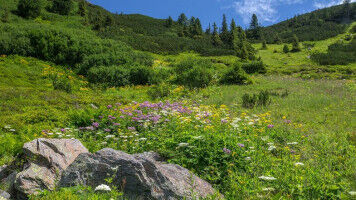
Biological communities in Europe are responding to climate change in markedly different ways, with clear contrasts between ecosystems, according to a new study published in Nature. Cold-adapted plant species in mountain regions are declining especially quickly, while plant communities in forests and grasslands are changing more slowly.
Environment - 18.03.2026

Biological communities in Europe are responding to climate change in markedly different ways, with clear contrasts between ecosystems, according to a new study published in Nature. Cold-adapted plant species in mountain regions are declining especially quickly, while plant communities in forests and grasslands are changing more slowly.
Environment - 17.03.2026

Bird communities in forests change significantly over the course of the year. Nevertheless, the differences between various forest types remain clearly discernible across the seasons. This is shown by a new study conducted by researchers from Friedrich Schiller University Jena, the German Centre for Integrative Biodiversity Research (iDiv) and the Northwest German Forest Research Institute.
Environment - 17.03.2026

Kitchen sponges are among the most frequently used household items - and may also represent a previously underestimated source of microplastics. Researchers led by the University of Bonn investigated how many plastic particles are released from sponges during dishwashing and their environmental impacts.
Computer Science - Microtechnics - 16.03.2026

Researchers at Leipzig University have achieved a success in microrobotics. They were able to show for the first time that tiny, synthetic microswimmers perceive their environment directly via their own body shape and adapt autonomously in strongly changing fluid currents. The work now published in Science Advances thus establishes a new paradigm for autonomous microsystems whose control functions in difficult environments where conventional sensors fail.
Chemistry - Physics - 16.03.2026

Researchers have produced exceptionally long chains of an electrically conductive polymer known as poly(p-phenylene) (PPP). The longest of these chains measure almost one micrometre in length - roughly one thousandth of a millimetre. This makes them nearly ten times longer than chains previously achieved.
Microtechnics - Computer Science - 16.03.2026

Researchers at Leipzig University have achieved a breakthrough in microrobotics. For the first time, they have shown that tiny synthetic microswimmers can perceive their surroundings directly through their own body shape and autonomously adapt to rapidly changing fluid flows. The study, now published in Science Advances, establishes a new paradigm for autonomous microsystems whose control functions reliably in challenging environments where conventional sensors fail.
Physics - Health - 13.03.2026
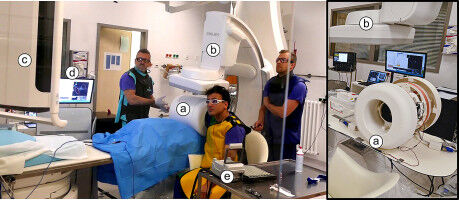
The University and University Hospital of Würzburg have demonstrated magnetic particle imaging on humans for the first time. The new procedure enables radiation-free visualisation of blood vessels in real time. 131 years ago, the physicist Wilhelm Conrad Röntgen discovered the rays named after him in Würzburg, enabling completely new methods for visualising the human body.
Environment - 12.03.2026

In Yellowstone National Park, birds primarily search for food in areas where wolves frequently hunt prey Ravens and wolves: Ravens are often seen flying with wolves, following their tracks, or gathering quickly at fresh carcasses A twist in the tale: New research reveals that ravens don't simply follow wolves, they remember common hunting grounds and regularly check back for fresh meat.
Health - Life Sciences - 11.03.2026

News from At Leipzig University Medicine, scientists are researching how bodies, organs, cells and microbes talk to each other. In an article in the newspaper "Die WELT", Dr. Rima Chakaroun and Veronica Witte, among others, show how close laboratory and life, molecules and people, stomach and brain really are - and what all this reveals about our health and the possibility of personalized therapies.
Environment - Life Sciences - 10.03.2026

A Europe-wide citizen science study reveals common buzzards are becoming more uniform in colour Mapping colour: Scientists used nearly 100,000 citizen science observations to map and track common buzzard plumage colour across Europe. Unexpected patterns: Buzzard colours vary geographically with patterns that defy theories linking colour to habitat and climate.
Life Sciences - 09.03.2026

Research team identifies new selectivity in mouse visual cortex using "digital twins" The visual cortex is the part of the brain that enables visual perception. In this area millions of nerve cells, called neurons, process stimuli from the outside world. They only react when objects with certain characteristics come into our field of vision.
Environment - Life Sciences - 06.03.2026
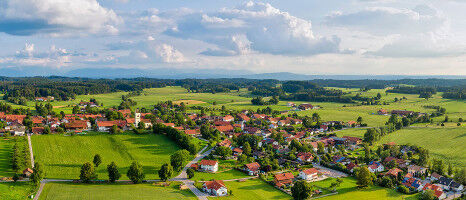
Villages can provide important habitats for insects. A new study by the University of Würzburg shows which areas in rural settlements are particularly rich in species - and where there is still room for improvement. When it comes to research on habitats for pollinating insects, villages have so far received relatively little attention.
Environment - Earth Sciences - 05.03.2026
Franconia’s agriculture of the future: olives and rice instead of barley and sugar beet?
A new study by the University of Würzburg shows that undamped climate change will radically change German agriculture by 2100 and could bring Mediterranean crops to Franconia. Against the backdrop of climate change, agriculture is facing an unprecedented transformation. While Germany was hardly affected by massive crop failures for decades, the picture has changed drastically since 2015.


