Quantum communication is considered a central pillar of modern IT security research. It provides the basis for secure digital infrastructures, the protection of sensitive data, and Germany’s technological sovereignty. The Hightech Agenda Germany, adopted by the Federal Cabinet in July 2025, identifies quantum technologies - and quantum communication in particular - as one of the key technologies of the future.
Quantum repeaters are indispensable for deploying and expanding high-performance quantum networks. They overcome the range limitations of optical communication channels and enable the low-loss transmission of quantum information over long distances. As a milestone, the Hightech Agenda defines the demonstration of first quantum repeater Technologies by 2028 - serving as the foundation for far-reaching quantum communication and, in the long term, a future quantum internet.
TD.QR is carried out by a consortium of eleven leading academic partners - including the University of Würzburg - at seven locations, working closely together in complementary subprojects. The overall coordination of
How Würzburg contributes to this
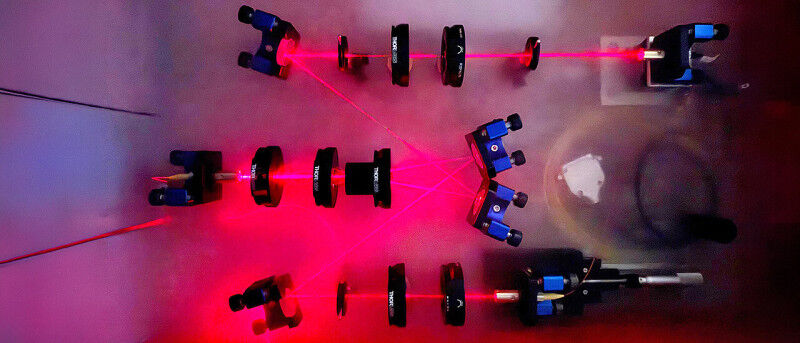
In Würzburg, Professor Sven Höfling is the lead project partner. Höfling heads the Chair of Technical Physics; together with his team, he is contributing expertise in the field of semiconductor quantum dots to the project. These quantum dots serve as quantum memory and as sources of quantum light. They are being used to develop semiconductor-based components for quantum repeaters. Höfling is receiving €2.3 million in funding for this work.The combination of fundamental research, technology development, and application-oriented perspectives enables the consortium to systematically address the central challenges of quantum repeater technology and translate research results into practical applications. Through its contribution to quantum communication within the framework of the Hightech Agenda, TD.QR strengthens Germany’s technological capabilities and sovereignty in this strategically important future field.
Further information about the project (only in German)