






news
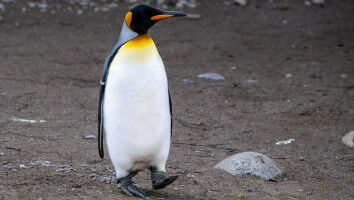
Well-fed penguins live longer, but age faster - similar to modern humans

The consequences of a sedentary lifestyle are difficult to investigate in human studies. For this reason, an international research team involving the University of Hamburg has now investigated them in king penguins. The result: an abundant food supply in protected living conditions promotes rapid growth, but ultimately leads to accelerated ageing.
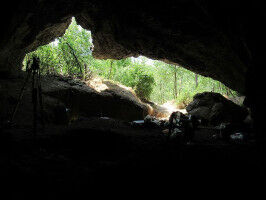
Europe’s Late Neanderthals descended from a single population
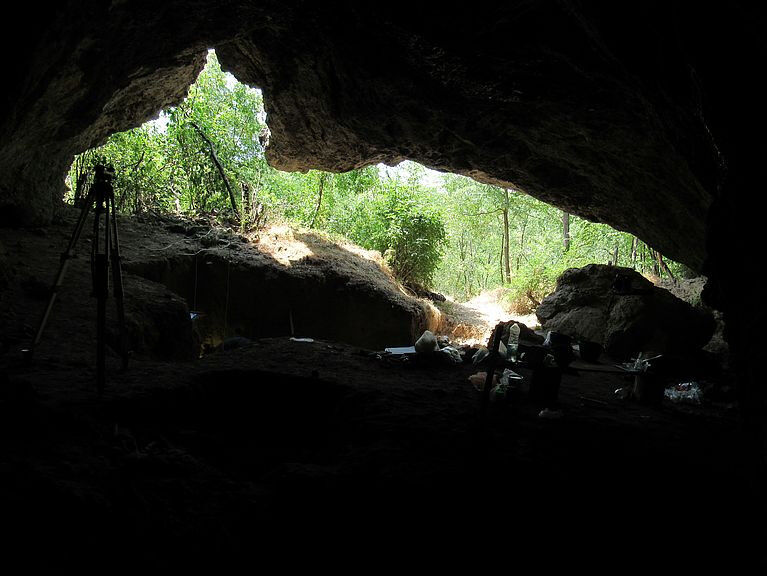
A recent study incorporating new DNA data and archaeological evidence has shown that the last Neanderthals in Europe experienced a major population turnover, resulting in little diversity in their gene pool prior to their disappearance some 40,000 years ago.
New discoveries cast doubt on old theory

The expansion of modern humans out of Africa likely unfolded differently than previously thought: contrary to earlier assumptions, south-east Arabia was repeatedly inhabited by humans during the late Pleistocene.
Europe’s ecosystems do not keep pace with climate warming at the same speed

Biological communities in Europe are responding to climate change in markedly different ways, with clear contrasts between ecosystems, according to a new study published in Nature.
Dishwashing with side effects: Kitchen sponges release microplastics

Kitchen sponges are among the most frequently used household items - and may also represent a previously underestimated source of microplastics.
Autonomous navigation of microrobots in complex flows demonstrated for the first time
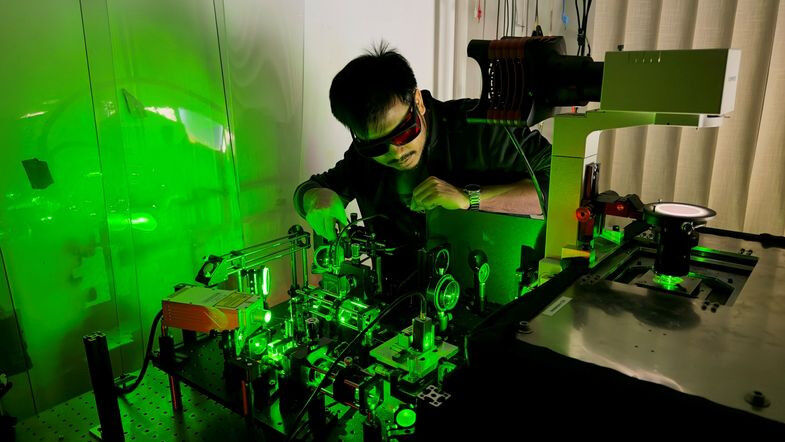
Researchers at Leipzig University have achieved a breakthrough in microrobotics. For the first time, they have shown that tiny synthetic microswimmers can perceive their surroundings directly through their own body shape and autonomously adapt to rapidly changing fluid flows.
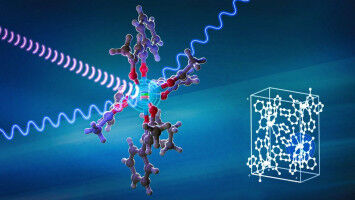
New paths for quantum technologies: Optical control of nuclear spins in molecules
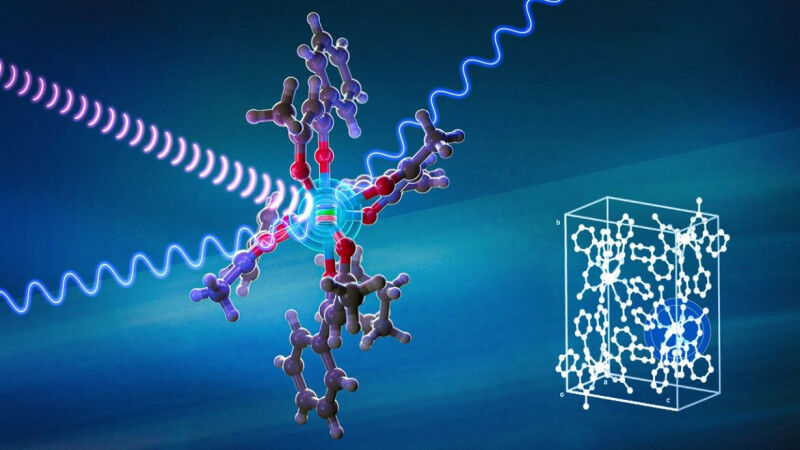
A research team at the Karlsruhe Institute of Technology (KIT) has made an important advance in quantum physics and materials research: For the first time, nuclear spins in a molecular material could be optically initialized, controlled and read out.
A sudden surge in luminosity: New method for stacking dyes

Chemistry: A sophisticated process stacks dye molecules in such a way that their luminosity increases significantly as their size grows - a significant step forward for the electronics of tomorrow.
Forest type shapes bird communities throughout the year

Bird communities in forests change significantly over the course of the year. Nevertheless, the differences between various forest types remain clearly discernible across the seasons.
Molecular chains with bite: Breakthrough in polymer research

Researchers have produced exceptionally long chains of an electrically conductive polymer known as poly(p-phenylene) (PPP).
Categories
2009 | 2010 | 2011 | 2012 | 2013 | 2014 | 2015 | 2016 | 2017 | 2018 | 2019 | 2020 | 2021 | 2022 | 2023 | 2024 | 2025 | 2026 |
Last News