



Specific activation instead of continuous operation: How bacteria save energy and what this means for antibiotic resistances

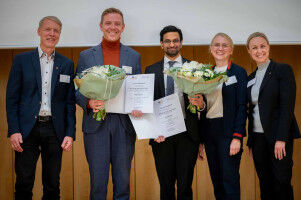
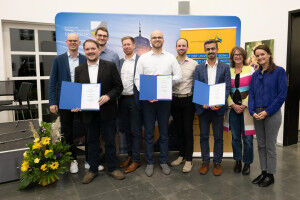
DFG Awards €1.25 Million in Funding for Reinhart Koselleck Project at the University of Bonn


Medicine and Life Sciences - Life Sciences
The human metaorganism: understanding obesity individually

News from At Leipzig University Medicine, scientists are researching how bodies, organs, cells and microbes talk to each other.
Europe’s buzzards are losing their colour diversity
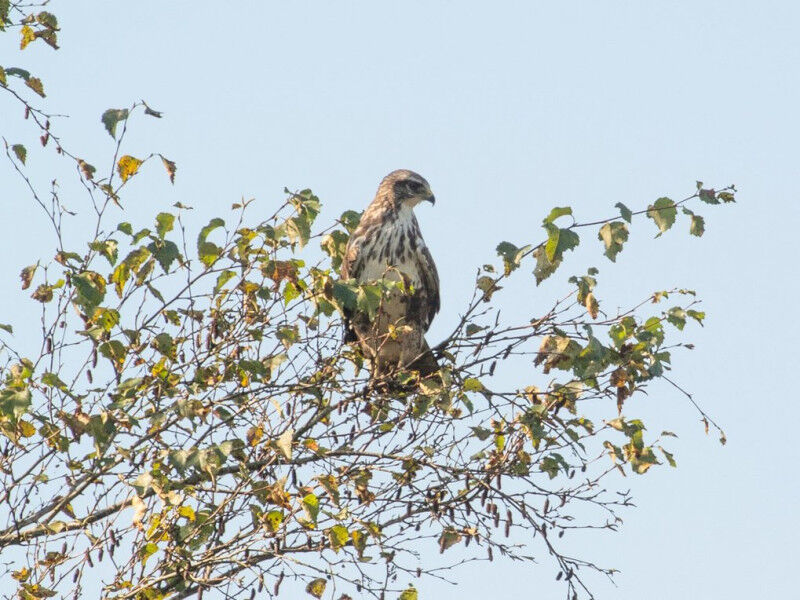
A Europe-wide citizen science study reveals common buzzards are becoming more uniform in colour. Mapping colour: Scientists used nearly 100,000 citizen science observations to map and track common buzzard plumage colour across Europe.
Villages: underestimated habitats with potential

Villages can provide important habitats for insects. A new study by the University of Würzburg shows which areas in rural settlements are particularly rich in species - and where there is still room for improvement.
Caught red-handed
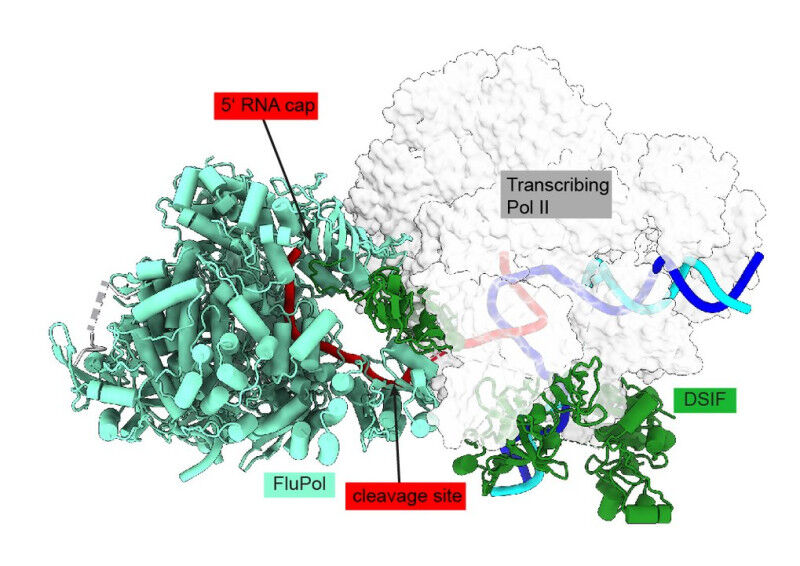
Researchers have deciphered the process by which the influenza virus steals the cap of the host RNA to replicate.
How mice see: newly discovered nerve cells perceive more than just edges

Research team identifies new selectivity in mouse visual cortex using "digital twins". The visual cortex is the part of the brain that enables visual perception.
Climate change pushes tropical insects to their heat limit

Up to half of the insects in the Amazon region could be exposed to life-threatening heat levels due to progressive, anthropogenic global warming. This is shown by a recent study by the universities of Würzburg and Bremen.
Did the first human ancestor originate in the Balkans? - New fossil shows evidence of bipedalism
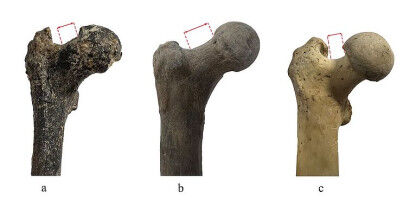
An international team of researchers say a newly discovered fossil thighbone from Bulgaria could rewrite the history of human origins.
Selected Jobs
Project Coordinator with QM responsibility (80–100%) CK-CARE AG, Davos Wolfgang
Collection Scientist and Curator (m/f/d) A13/14 100% Eberhard Karls Universität Tübingen
Postdoctoral Position in Experimental Neuroimmunology (100%) University of Basel
Mitarbeiter*in im Büromanagement am Botanischen Institut, unbefristet Christian-Albrechts-Universität zu Kiel
Akademische Rätin*Akademischer Rat auf Probe / Lebenszeit (w/m/d) Universität Freiburg im Breisgau
Wissenschaftliche Mitarbeiter / innen (Postdoc) (m/w/d), (E13 TV-G-U) Universität Frankfurt


Job Offers in this Category
- Life Sciences - 10.3
Project Coordinator with QM responsibility (80–100%)CK-CARE AG - Life Sciences - 24.2
Collection Scientist and Curator (m/f/d) A13/14 100%Eberhard Karls Universität Tübingen - Life Sciences - 17.3
Postdoctoral Position in Experimental Neuroimmunology (100%)University of Basel - Life Sciences - 17.3
Mitarbeiter*in im Büromanagement am Botanischen Institut, unbefristetChristian-Albrechts-Universität zu Kiel - Life Sciences - 17.3
Akademische Rätin*Akademischer Rat auf Probe / Lebenszeit (w/m/d)Universität Freiburg im Breisgau - Health - 17.3
Wissenschaftliche*r Mitarbeiter*in (PhD Candidate) (m/w/d)Universität Frankfurt - Chemistry - 17.3
Wissenschaftliche Mitarbeiter / innen (Postdoc) (m/w/d), (E13 TV-G-U)Universität Frankfurt - Health - 16.3
Medizinisch-Technischer Assistent (m/w/d/x)Universität Leipzig
Specific activation instead of continuous operation: How bacteria save energy and what this means for antibiotic resistances
DFG Awards €1.25 Million in Funding for Reinhart Koselleck Project at the University of Bonn