








news
Categories
Years
2009 | 2010 | 2011 | 2012 | 2013 | 2014 | 2015 | 2016 | 2017 | 2018 | 2019 | 2020 | 2021 | 2022 | 2023 | 2024 | 2025 | 2026 |
2009 | 2010 | 2011 | 2012 | 2013 | 2014 | 2015 | 2016 | 2017 | 2018 | 2019 | 2020 | 2021 | 2022 | 2023 | 2024 | 2025 | 2026 |
Last News
Results 21 - 40 of 182.
Paleontology - Life Sciences - 04.03.2026
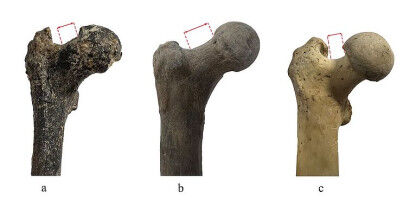
An international team of researchers say a newly discovered fossil thighbone from Bulgaria could rewrite the history of human origins. Walking on two legs has long been considered a milestone in human evolution and one of our most defining characteristics. Until now, researchers assumed that the first humans originated in Africa and that bipedalism developed there around six million years ago.
Physics - Life Sciences - 03.03.2026
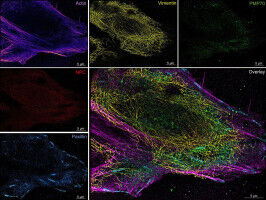
International research team led by Göttingen University design versatile imaging system Understanding how cells are organized and how their molecular components interact in a coordinated and cooperative manner is a central goal of modern life sciences. To answer these questions, researchers need to observe many structures inside the same cell at once and map how they are arranged and interact.
Environment - Agronomy & Food Science - 03.03.2026

Researchers at the University of Bonn have conducted a review study to examine the methods used to research consumer behaviour in supermarkets. WHAT IS IT ABOUT? Researchers from the University of Bonn have taken a comprehensive look at how scientists study consumer behavior in supermarkets. Their review covers everything from real-life grocery stores to lab-based shelves, online supermarkets, and virtual reality environments.
History & Archeology - Life Sciences - 02.03.2026
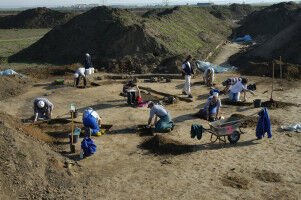
Insights into the lives of people in the Late Bronze Age: Interdisciplinary analyses (DNA, isotopes) shed light on the ancestry, mobility, diet, health, and burial practices of people in Central Europe during this period. Genetic ancestry: Genetic data reveal gradual, regionally varying changes in ancestry, along with growing ties to the Danube region, without replacing local traditions.
Environment - Life Sciences - 02.03.2026

To improve their chances of survival, animals must learn - and that can be dangerous. A new study from the University of Würzburg shows how gradual learning under parental supervision can reduce these risks. Adaptation is essential for survival. Across species, it occurs over many generations through evolution and natural selection.
History & Archeology - Social Sciences - 02.03.2026

A new interdisciplinary study published in Nature Communications provides the first detailed insights from a biomolecular and archaeological perspective into the lives of people in Central Europe during the Late Bronze Age (ca. BC), also known as the Urnfield Period. This period was characterised by cultural changes, such as the widespread and eponymous introduction of cremation burial.
Environment - Astronomy & Space - 27.02.2026

Particles in the atmosphere, known as aerosols, cool the climate by acting as cloud condensation nuclei. The more cloud droplets form around these particles, the less sunlight penetrates a cloud. This cools the climate, although this process is outweighed by the much stronger greenhouse effect. Until now, it has been difficult to provide a reliable global assessment of this impact on the climate and to measure the number of cloud condensation nuclei.
Life Sciences - 27.02.2026
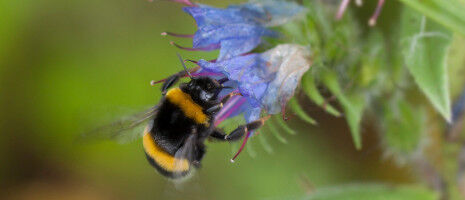
When searching for food, most insects specifically head for flowers that promise them the best yield. Researchers from the Universities of Konstanz and Würzburg have now shown how bumblebees orientate themselves. Which strawberries on the supermarket shelf might be the sweetest? Is it better to choose the deep red ones? The ones with the green spots? Or the ones with the most intense flavour? To make such decisions, we process vast amounts of information every day and use all'our senses to do so.
Pharmacology - Health - 26.02.2026

Adhesion G protein-coupled receptors (GPCRs) are implicated in numerous human diseases. However, to date, no medicinal product has been approved that specifically targets these signalling molecules. Researchers at Leipzig University and Shandong University have summarised the therapeutic potential of these receptors in a high-profile study.
Life Sciences - Health - 26.02.2026
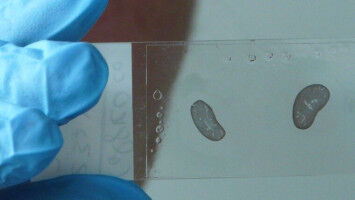
A functional disorder of the kidneys, usually caused by a genetic defect, leads to hyperacidity of the blood, which in turn impairs the recovery of important nutrients and minerals from the urine. An international research team led by Jena University Hospital has now been able to elucidate this disease mechanism in more detail, thereby contributing to a better understanding of chronic kidney failure, which is also associated with hyperacidity in its advanced stages.
Earth Sciences - Research Management - 26.02.2026

Cyanobacteria as they still exist today were the first organisms to carry out photosynthesis and release oxygen. Produced in primeval oceans around 2.5 billion years ago, this oxygen accumulated in the Earth's atmosphere on an immense scale. A research team led by University of Tübingen geomicrobiologist Professor Andreas Kappler has used laboratory experiments to investigate how this process was even possible, given that the iron dissolved in ocean water strongly inhibited the growth of cyanobacteria.
Health - Life Sciences - 26.02.2026

Researchers at the MPI of Biochemistry and TUM have examined the cerebrospinal fluid of 5,000 patients with neurological diseases and discovered new diagnostic and prognostic markers for multiple sclerosis.
Chemistry - Materials Science - 25.02.2026

A team from the University of Stuttgart and international researchers have succeeded in making perovskite solar cells more efficient and more resistant to environmental influences. This is another important step towards the application of a technology that holds great promise for photovoltaics. Optimal material mixture sought Perovskite solar cells are a promising technology for photovoltaics.
Environment - 25.02.2026
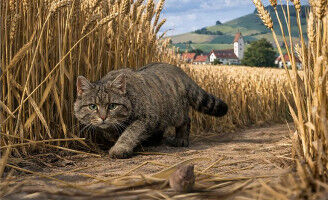
A research team led by Chris Baumann and Dorothée Drucker from the Senckenberg Centre for Human Evolution and Palaeoenvironment at the University of has found that the European wildcat is increasingly using agricultural land as hunting grounds in some parts of Germany, especially in summer when grain crops provide cover.
Physics - Innovation - 24.02.2026
AI develops easily understandable solutions for unusual experiments in quantum physics
Researchers at the University of Tübingen, working with an international team, have developed an artificial intelligence that designs entirely new, sometimes unusual, experiments in quantum physics and presents them in a way that is easily understandable for researchers. This includes experimental setups that humans might never have considered.
Innovation - Materials Science - 24.02.2026
Lithium and sodium-ion technologies are more closely linked than assumed
Study shows: "Switching to a new battery technology does not automatically open the door to new market players" Batteries are considered a key technology for the global energy and mobility transition. In addition to established lithium-ion batteries, sodium-ion batteries are becoming increasingly important, primarily due to their cost advantages and independence from scarce raw materials such as lithium or cobalt.
Environment - 24.02.2026

A team of scientists led by the German Centre for Integrative Biodiversity Research (iDiv), the Helmholtz Centre for Environmental Research (UFZ), and Leipzig University has developed a new method to track the Earth's greenness - a key indicator of vegetation health and activity - by calculating its centre of mass.
Life Sciences - Mathematics - 24.02.2026
Mate choice: How social trends influence mate diversity
Whether people follow a general trend when choosing a partner or consciously decide against it has a noticeable impact on the diversity of phenotypes to choose from. This is shown by a new study by the University of Würzburg. Why are there often many different types of males in an animal group? According to the theory of evolution, only the "best" should have prevailed over time.
Life Sciences - Environment - 20.02.2026
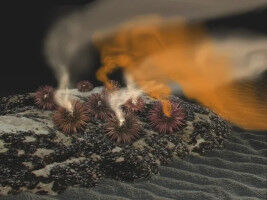
In sea urchin and salmon sperm, the pH value regulates whether they remain immotile or swim A study by the Max Planck Institute for Multidisciplinary Sciences and the University of Bonn has shown that pH value is crucial for sperm motility in sea urchins and salmon. An increase in pH activates the enzyme adenylyl cyclase (sAC), which produces the messenger substance cAMP, thereby regulating sperm motility.
Chemistry - 19.02.2026

Chemists synthesise high-tensile ring molecules through photocatalysis / Components for drug development When developing new drugs, one thing is particularly important: finding and producing the right molecules that can be used as active ingredients. The key elements of some drugs, such as penicillin, are small, trior quadripartite ring molecules.


