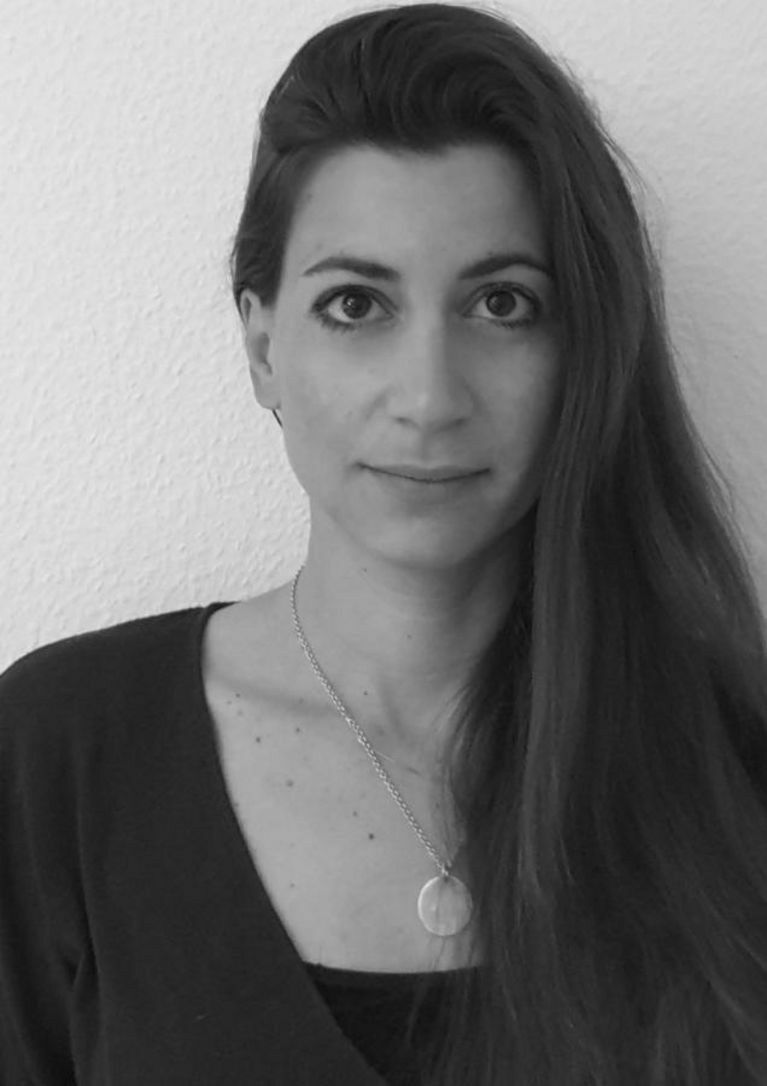
Paola Cerrito receives the 2024 Early Prehistory and Quaternary Ecology Prize.
Paola Cerrito receives the 2024 Early Prehistory and Quaternary Ecology Prize. The Tübingen Early Prehistory and Quaternary Ecology Prize this year goes to Dr. Paola Cerrito of Zürich University. She receives the award for her doctoral thesis, "Histological and elemental markers of physiological stressors in hard tissues" in which she investigates how events that influence the metabolism, such as reproduction, menopause and changes in lifestyle, are permanently recorded in the skeleton. This is regarded as the biological archive of a human life. Applied to fossil human remains, new insights can be gained into the life histories of individuals and the development of human traits, such as unusually short inter-birth intervals and an extended post-reproductive lifespan. Paola Cerrito (born 1990 in Italy) studied Biological Anthropology at the Sapienza University of Rome. She completed a Master's degree in Biological Anthropology at New York University, where she also completed her doctorate in 2022. She has been a visiting researcher at the University of Geneva, has worked as a postdoc at ETH Zurich and, since August 2023 has been a postdoc at the University of Zurich. From July 2024, she will be Assistant Professor of Evolutionary Anthropology at Duke University in Durham (USA). Cerrito is researching the question of how certain life patterns have developed during the evolution of Homo sapiens: At what age did women become pregnant for the first time in a particular era, at what interval did they bear children, how long did they live after menopause, and what changes occurred in human life histories?
UM DIESEN ARTIKEL ZU LESEN, ERSTELLEN SIE IHR KONTO
Und verlängern Sie Ihre Lektüre, kostenlos und unverbindlich.