










news
Max Plank Society
Results 461 - 480 of 486.
Paleontology - 31.05.2022
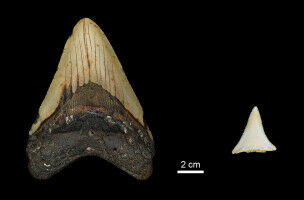
Using zinc isotopes, researchers investigated the diet of megalodon, the largest shark to have ever lived The diet of fossil extinct animals can hold clues to their lifestyle, behaviour, evolution and ultimately extinction. However, studying an animal's diet after millions of years is difficult due to the poor preservation of chemical dietary indicators in organic material on these timescales.
Computer Science - Innovation - 27.05.2022

The cooperation strengthens application-related research on artificial intelligence in Germany Amazon and the Max Planck Society today announced the establishment of the first German Science Hub in Tübingen. The main goal of this science cooperation is to advance research in Germany in subfields of artificial intelligence (AI), in particular causality, computer vision and machine learning, to develop secure and trustworthy concepts for the future and thus to strengthen Germany as a technology location.
Health - Life Sciences - 25.05.2022
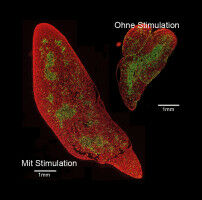
Max Planck researchers identify epithelial stem cells that control the growth of the thymus at different stages of life Many immune cells crucial for our immune system develop in a small organ next to our heart: the thymus. With age, however, the thymus shrinks, and the number of effective immune cells declines.
Computer Science - 25.05.2022

Intelligent reflecting surfaces can protect communication against attacks by adversarial wireless sensing The Internet of Things opens new gateways for eavesdroppers. The devices which are interconnected in more and more households communicate wirelessly. This can endanger privacy considerably: Passive eavesdroppers are able to obtain sensitive data through intercepted high-frequency signals.
Life Sciences - 23.05.2022
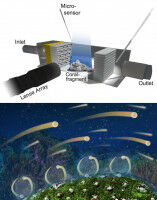
Researchers develop a new method to simultaneously measure flow and oxygen The surface of a coral is rugged. Its hard skeleton is populated by polyps that stretch their tentacles into the surrounding water to filter out food. But how exactly does the water flow over the coral surface, what eddies and flows develop, and what does this mean for the oxygen supply around the coral and its associated algae?
Life Sciences - Psychology - 19.05.2022
The fading of negative experiences
Active suppression weakens unwanted memories A natural disaster, a dented car, an injured person - memories of traumatic experiences can be controlled by deliberately suppressing the images that arise. Until now, however, it was unclear what happens to the memory in the process and how the process is reflected in the brain.
Health - Life Sciences - 19.05.2022
New method revolutionizes cancer diagnosis
"Deep Visual Proteomics" technology provides cell-specific, protein-based information and helps to analyze cancer diseases How does cancer arise? How does cellular composition influence tumor malignancy? These questions are profound and challenging to answer, but are crucial to understand the disease and find the right cure.
Life Sciences - Environment - 17.05.2022

A surface layer of bacteria, fungi and lichen amongst others reduces the amount of dust stirred up into the atmosphere When bacteria, fungi, mosses, lichens and algae combine on dry land, they form so-called biological soil crusts. These cover about twelve percent of the total global land surface, and up to one third of the surface in dry areas.
Life Sciences - Environment - 16.05.2022

Evidence of structured vocal sequences in wild chimpanzee communication provides insights into human language evolution Compared to the complex use of human language, the way animals communicate with each other appears quite simple. How our language evolved from such a simple system, remains unclear.
Astronomy & Space - Physics - 12.05.2022

Observation with the Event Horizon Telescope improves our understanding of the processes at the galactic centre It sits deep in the heart of the Milky Way, is 27,000 light years from Earth, and resembles a doughnut. This is how the black hole at the centre of our galaxy appears in the image obtained by researchers using the Event Horizon Telescope (EHT).
Astronomy & Space - Computer Science - 06.05.2022

The data of the space telescope contain the traces of many unknown celestial bodies With a sophisticated combination of human and artificial intelligence, astronomers uncovered 1701 new asteroid trails in archival data of the Hubble Space Telescope spanning the past 20 years. While about one third could be identified and attributed to known objects, more than 1000 trails probably correspond to previously unknown asteroids.
History & Archeology - Life Sciences - 03.05.2022

New research reveals how the black rat colonised Europe in the Roman and Medieval periods New ancient DNA analysis has shed light on how the black rat, blamed for spreading Black Death, dispersed across Europe - revealing that the rodent colonised the continent on two occasions in the Roman and Medieval periods.
Life Sciences - Environment - 02.05.2022

Scientists from the Max Planck Institute for Marine Microbiology now report that seagrasses release large amounts of sugar, largely in the form of sucrose, into their soils - worldwide more than one million tons of sucrose, enough for 32 billion cans of coke.
Life Sciences - Chemistry - 29.04.2022

More blood flow to the genitals, an increased pulse and dilated pupils: These physical characteristics reveal that a person is sexually aroused. But lust can also be detected in the breath, as a study of an international research team has now shown. According to the study, a characteristic signature of volatile molecules is found in the breath of sexually aroused people.
Materials Science - Health - 28.04.2022

Incorporating various minerals in collagen puts these composite materials under stress and makes them particularly hard and strong What engineers discovered only about 100 years ago has been used by nature for as long as vertebrates have existed. Just as steel wires under strain increase the fracture resistance of prestressed concrete, bones become particularly hard and strong because their collagen fibres are under stress due to embedded mineral nanoparticles.
Environment - History & Archeology - 26.04.2022
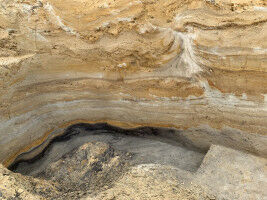
A multidisciplinary research team from the Max Planck Institute for Evolutionary Anthropology in Leipzig, the Friedrich Alexander University Erlangen-Nuremberg, the Leuphana University Lüneburg, the Leibniz Institute for Applied Geophysics and other partner institutions investigated whether Neanderthals were well adapted to life in the cold or preferred more temperate environmental conditions.
Environment - Life Sciences - 20.04.2022

In the race to avoid runaway climate change, two renewable energy technologies are being pushed as the solution to powering human societies: wind and solar. But for many years, wind turbines have been on a collision course with wildlife conservation. Birds and other flying animals risk death by impact with the rotor blades of turbines, raising questions about the feasibility of wind as a cornerstone of a global clean energy policy.
Astronomy & Space - Physics - 14.04.2022

The MAGIC telescopes have observed the nova RS Ophiuchi shining brightly in gamma rays at extremely high energy. The Gamma rays emanate from protons that are accelerated to very high energies in the shock front following the explosion. This suggests that novae are also a source of the ubiquitous cosmic radiation in the universe which consists mainly of protons rich in energy, which race through space at almost the speed of light.
Life Sciences - Agronomy & Food Science - 07.04.2022

At the beginning of the development of useful and cultivated plants by humans about 10,000 years ago was the domestication of wild plants. From the multitude of wild plants in a region, humankind selected those that apparently possessed special properties useful to them, e.g. cereal plants whose seeds remain on the plant longer instead of falling out, or those plants that have more or larger seeds.
History & Archeology - Life Sciences - 01.04.2022

Multidisciplinary research team sheds light on the 1,400-year-old mystery about the genetic origins of the Avar elite Less known than Attila's Huns, the Avars were their more successful successors. They ruled much of Central and Eastern Europe for almost 250 years. We know that they came from Central Asia in the sixth century CE, but ancient authors and modern historians debated their provenance.


