









news
Max Plank Society
Results 421 - 440 of 484.
Life Sciences - Social Sciences - 21.09.2022

Archaeogenetic study reveals large-scale continental migration into the East of England during the early Medieval Period In the largest early-medieval population study to date, an interdisciplinary team consisting of geneticists and archaeologists - led by the Max Planck Institute for Evolutionary Anthropology and the University of Central Lancashire - analysed over 400 individuals from ancient Britain, Ireland, Germany, Denmark and the Netherlands.
Life Sciences - Environment - 19.09.2022
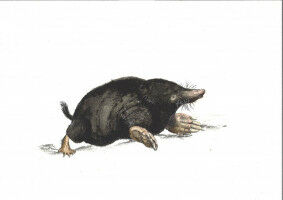
A study of moles reveals that cold weather - not lack of food - drives the rare phenomenon of reversible brain shrinkage in mammals In the depths of winter, European moles face an existential problem. Their metabolisms - close to the upper limit of any mammal - require more food than is available during the coldest months.
Life Sciences - Psychology - 15.09.2022
The hemispheres are not equal
A study analyzes differences in brain asymmetry among different individuals Although the brain is divided into two halves, it is not exactly a mirror image. Some functions are processed more on the left side, others more on the right - and each person's processing is a little different. Scientists at the Max Planck Institute for Human Cognitive and Brain Sciences and Forschungszentrum Juelich, together with an international team of neuroscientists, have now discovered heritable underpinnings of brain asymmetry - and - how much we share with monkeys.
Life Sciences - Health - 15.09.2022

Researchers discover simultaneous evolutionary history of gut microbes with their human hosts over hundreds of thousands of years The human gut microbiome is composed of thousands of different bacteria and archaea that vary widely between populations and individuals. Scientists from the Max Planck Institute for Biology in Tübingen have now discovered gut microbes that share a parallel evolutionary history with their human hosts: the microorganisms co-evolved in the human gut environment over hundreds of thousands of years.
Environment - Social Sciences - 12.09.2022

In Australia, cockatoos and humans are in an arms race over garbage access Residents of southern Sydney, Australia have been in a long-term battle over garbage - humans want to throw it out, and cockatoos want to eat it. The sulphur-crested cockatoos that call the area home have a knack for getting into garbage bins, and people have been using inventive devices to keep them out.
Life Sciences - 08.09.2022
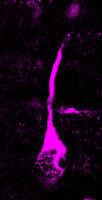
Due to the change of a single amino acid, brain evolution has proceeded differently While both Neandertals and modern humans develop brains of similar size, very little is known about whether modern human and Neandertal brains may have differed in terms of their neuron production during development.
Life Sciences - Environment - 05.09.2022

Study shows that a one-hour walk in nature reduces stress-related brain activity After a 60-minute walk in nature, activity in brain regions involved in stress processing decreases. This is the finding of a recent study by the Lise Meitner Group for Environmental Neuroscience at the Max Planck Institute for Human Development, published in Molecular Psychiatry .
Chemistry - Environment - 02.09.2022

People generate their own oxidation field and change the indoor air chemistry around them People typically spend 90 percent of their lives inside, at home, at work or in transport. Within these enclosed spaces, occupants are exposed to a multitude of chemicals from various sources, including outdoor pollutants penetrating indoors, gaseous emissions from building materials and furnishings, and products of our own activities such as cooking and cleaning.
Earth Sciences - Environment - 02.09.2022

Earth's past warm periods witnessed the shrinkage of the open ocean's oxygen-deficient zones. According to a new study from an international team led by researchers from the Max Planck Institute for Chemistry, the oxygen-deficient zones that occur in the open ocean shrank in long warm periods of the past.
Life Sciences - 01.09.2022
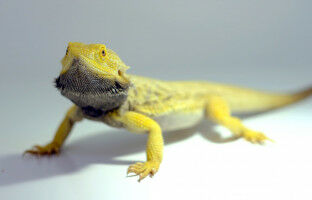
A molecular atlas of an Australian dragon's brain sheds new light on over 300 million years of brain evolution These days, dragons are keeping Game of Thrones fans on their toes. But they are also providing important insights into vertebrate brain evolution, as revealed by the work of Max-Planck scientists on the brain of the Australian bearded dragon Pogona vitticeps .
Astronomy & Space - Physics - 25.08.2022
Carbon dioxide in an exoplanet atmosphere
The James-Webb-Telescope provides insights into the composition and formation of planets outside our solar system. Using the James Webb Space Telescope, an international collaboration of astronomers with Laura Kreidberg of the Max Planck Institute for Astronomy has captured infrared light filtered through the atmosphere of a hot gas giant 700 light-years away.
Environment - 23.08.2022
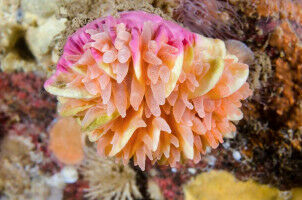
Stony corals use a refined built-in ventilation system to protect themselves from environmental stressors Dying reefs and once-vibrant corals that have since lost all colour: climate change is having massive effects on the architects of undersea cities. As waters grow warmer, the phenomenon of "coral bleaching" continues to spread.
Life Sciences - 18.08.2022
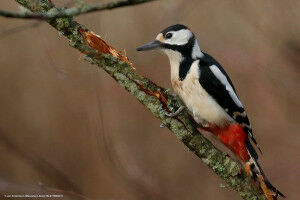
Woodpeckers taste sweet, but wrynecks-unusual woodpeckers that specialize on ants-lost the ability to taste sugars Many mammals have a sweet tooth, but birds lost their sweet receptor during evolution. Although hummingbirds and songbirds independently repurposed their savory receptor to sense sugars, how other birds taste sweet is unclear.
Life Sciences - Environment - 08.08.2022

By flying with hawkmoths during migration, scientists reveal the insects employ sophisticated flight strategies similar to vertebrates Insects are the world's smallest flying migrants, but they can maintain perfectly straight flight paths even in unfavorable wind conditions, according to a new study from the Max Planck Institute of Animal Behavior and the University of Konstanz.
Life Sciences - 04.08.2022
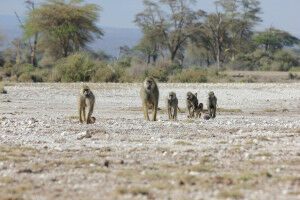
Baboons borrowed a third of their genes from a closely related species New genetic analyses of wild baboons in southern Kenya reveals that most of them carry traces of hybridization in their DNA. As a result of interbreeding, about a third of their genetic makeup consists of genes from another, closely-related species.
Health - Life Sciences - 04.08.2022

In frontotemporal dementia, the same brain networks can be affected as in schizophrenia Researchers for the first time compared schizophrenia and frontotemporal dementia, disorders that are both located in the frontal and temporal lobe regions of the brain. The idea can be traced back to Emil Kraepelin, who coined the term "dementia praecox" in 1899 to describe the progressive mental and emotional decline of young patients.
Environment - History & Archeology - 01.08.2022
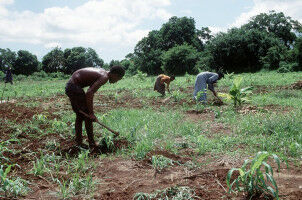
Early Bantu speakers crossed through the dense Central African Rainforest 4,000 years ago The study used novel computational approaches and linguistic data from more than 400 Bantu languages to reconstruct the historic migration routes. The project was a collaboration between scientists from the Max Planck Institute for Evolutionary Anthropology in Leipzig, Germany, and researchers at the University of Auckland in New Zealand.
Life Sciences - 29.07.2022
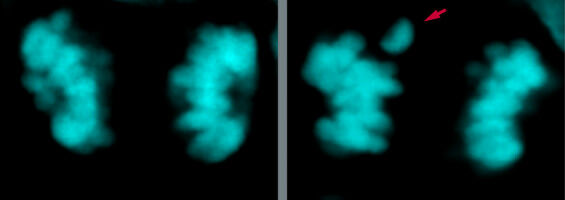
Brain stem cells of modern humans make fewer mistakes in the distribution of their chromosomes to the daughter cells Neanderthals are the closest relatives to modern humans. The neocortex, the largest part of the outer layer of the brain, is unique to mammals and crucial for many cognitive capacities.
Physics - Chemistry - 28.07.2022

A new method to cool gases of polar molecules to near absolute zero paves the way for studying quantum effects of exotic forms of matter Researchers at the Max Planck Institute of Quantum Optics have developed a novel cooling technique for molecular gases. It makes it possible to cool polar molecules down to a few nanokelvin.
Life Sciences - 28.07.2022
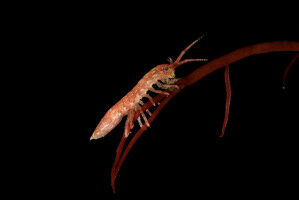
Bee of the sea: A small marine isopod aids in pollinating red algae Until recently, pollination was thought to be exclusive to land plants. An international team of researchers has now discovered that small crustaceans improve the reproduction rate of red algae by transporting the sperm from the male to the female algae.


