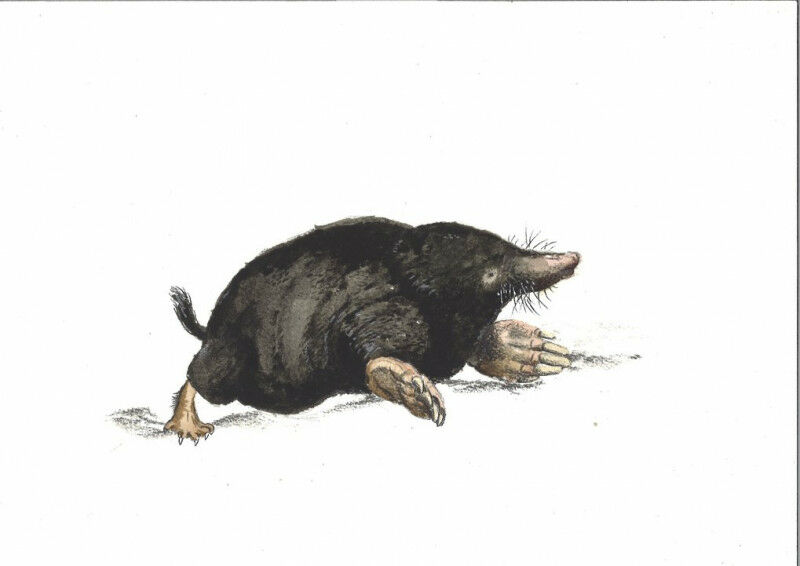
 European moles are the latest species of mammal known to reversibly shrink their brains before winter.
A study of moles reveals that cold weather - not lack of food - drives the rare phenomenon of reversible brain shrinkage in mammals. European moles are the latest species of mammal known to reversibly shrink their brains before winter. Javier Lázaro - In the depths of winter, European moles face an existential problem. Their metabolisms - close to the upper limit of any mammal - require more food than is available during the coldest months. Instead of solving this seasonal dilemma through migration or hibernation, moles have dug into an unusual energy-saving tactic: shrinking their brains. In a new study, a team led by Dina Dechmann from the Max Planck Institute of Animal Behavior reports that European moles reduce their brains by eleven percent in time for winter, and regrow them by four percent by summer. They represent a new group of mammal known to reversibly shrink their brain through a process known as Dehnel's phenomenon.
UM DIESEN ARTIKEL ZU LESEN, ERSTELLEN SIE IHR KONTO
Und verlängern Sie Ihre Lektüre, kostenlos und unverbindlich.
Ihre Vorteile
- Zugang zu allen Inhalten
- Erhalten Sie Newsmails für Neuigkeiten und Jobs
- Anzeigen veröffentlichen