









news
Max Plank Society
Results 341 - 360 of 484.
Life Sciences - Chemistry - 04.05.2023

Scientists are rebuilding microbial natural products up to 100,000 years old using dental calculus of humans and Neanderthals Breakthroughs in ancient genome reconstruction and biotechnology are now revealing the rich molecular secrets of Paleolithic microorganisms. In a new study, a transdisciplinary team of researchers led by the Leibniz Institute for Natural Product Research and Infection Biology, the Max Planck Institute for Evolutionary Anthropology, and Harvard University reconstructed bacterial genomes of previously unknown bacteria dating to the Pleistocene.
Life Sciences - 04.05.2023

Migratory locusts release a toxic substance to fend off their own conspecifics In a new study in the journal Science, researchers from the Max Planck Institute for Chemical Ecology, together with partners from China and the University of Halle, Germany, show that the migratory locust Locusta migratoria produces the compound phenylacetonitrile (PAN) to defend itself against feeding attacks by conspecifics as population density increases.
Life Sciences - Social Sciences - 03.05.2023

An international research team led by the Max Planck Institute for Evolutionary Anthropology in Leipzig, Germany, has for the first time successfully isolated ancient human DNA from a Paleolithic artefact: a pierced deer tooth discovered in Denisova Cave in southern Siberia. To preserve the integrity of the artefact, they developed a new, nondestructive method for isolating DNA from ancient bones and teeth.
Politics - 02.05.2023

Anti-corruption can start with education about stereotypes, an international study shows For transnational bribery, the decision to offer bribes strongly depends on the national background of one's partner. One's own nationality, on the other hand, plays only a secondary role. This is shown by a large-scale experiment conducted by researchers from the University of Cologne, the University of Amsterdam and the Max Planck Institute for Human Development in Berlin.
Physics - Materials Science - 28.04.2023

When fossil fuels, but also biofuels, are burned, large amounts of the energy are lost as waste heat. Thermoelectric materials could convert this heat into electricity, but they are not yet efficient enough for technical application. A team from the Max Planck Institut für Eisenforschung has now increased the efficiency of a thermoelectric material by elucidating the influence of the microstructure on the material and optimizing the material's properties by adding titanium.
Life Sciences - Physics - 27.04.2023

Tiny pores in the cell nucleus play an essential role for healthy aging by protecting and preserving the genetic material. A team in Germany from the Department of Theoretical Biophysics at the Max Planck Institute of Biophysics in Frankfurt am Main and the Synthetic Biophysics of Protein Disorder Group at Johannes Gutenberg University Mainz has literally filled a hole in the understanding of the structure and function of these nuclear pores.
Life Sciences - Health - 26.04.2023
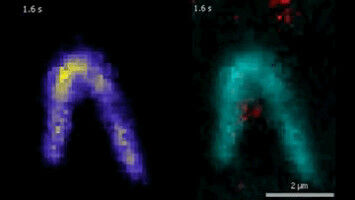
The entire genetic information of living organisms is stored in the form of DNA in the tiny nuclei of their cells. How a protein called Smc5/6 controls the safe packaging of genetic material in chromosomes by extruding loops from the DNA has now been revealed by an international team of researchers from Eugene Kim's group at the Max Planck Institute of Biophysics in Frankfurt am Main and from the Karolinska Institute in Sweden.
Astronomy & Space - Physics - 25.04.2023

A few years ago, the image of an orange glowing donut caused a sensation. For the first time, researchers have captured an image of the immediate vicinity of a supermassive black hole at the centre of the galaxy M87. This galaxy is known for a jet that accelerates matter far out of the galaxy, driven by the central black hole.
Linguistics & Literature - 19.04.2023

An international team has created a new database that documents patterns of grammatical variation in over 2400 of the world's languages What shapes the structure of languages? In a new study, an international team of researchers reports that grammatical structure is highly flexible across languages, shaped by common ancestry, constraints on cognition and usage, and language contact.
Life Sciences - 18.04.2023
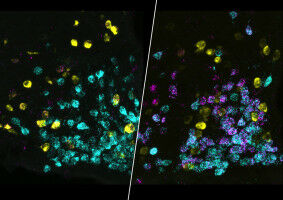
The brain releases the hormone corticosterone after short fasting that boosts autophagy Fasting triggers autophagy in our body. The body switches on the waste disposal system in the cells and gains new energy. Researchers at the Max Planck Institute for Metabolism Research in Cologne have now shown in mice that the brain plays a decisive role in this process.
Agronomy & Food Science - Health - 18.04.2023

Children will eat more fruits and vegetables if families take more time to eat meals. This is the result of a new study led by researchers at the University of Mannheim and the Max Planck Institute for Human Development in Berlin. Their experiment shows that children will eat significantly more fruits and vegetables if they on average stay at the table for only ten minutes more - 30 minutes in total.
Astronomy & Space - Environment - 18.04.2023

A star's chemical composition strongly influences the chances for life on planets in its neighbourhood Stars that contain comparatively large amounts of heavy elements provide less favourable conditions for the emergence of complex life than metal-poor stars, as scientists from the Max Planck Institutes for Solar System Research and for Chemistry as well as from the University of Göttingen have now found.
Chemistry - Environment - 17.04.2023

Ammonia synthesized in sun-rich countries could facilitate sustainable ironand steelmaking When it comes to sustainability and green steel, everybody talks about hydrogen. But current means of storing and transporting hydrogen request high pressures and low temperatures, which are both energetically and economically costly.
Life Sciences - Social Sciences - 14.04.2023

The Xiongnu dominated the Eurasian steppes two millennia ago and foreshadowed the rise of the Mongol Empire The Xiongnu, contemporaries of Rome and Egypt, built their nomadic empire on the Mongolian steppe 2,000 years ago, emerging as Imperial China's greatest rival and even inspiring the construction of China's Great Wall.
Life Sciences - Health - 13.04.2023
The thrombosis paradox
Scientists decipher a mechanism that may help prevent the formation of blood clots Bears in hibernation and also paraplegic people spend months or even years lying almost motionless. In healthy people, however, bedriddenness is always accompanied by the risk of thrombosis. A paradox, but nevertheless an everyday occurrence.
Health - Psychology - 13.04.2023
High blood pressure affects mental health
New approaches to therapy and prevention could focus on the interplay between mental and physical health Our mental health and that of our cardiovascular system have a complex interaction. A recent study from the Max Planck Institute for Human Cognitive and Brain Sciences in Leipzig, Germany, now shows the links between higher blood pressure and depressive symptoms, well-being and emotion-related brain activity that may be relevant to the development of hypertension.
Psychology - 05.04.2023
How distrust harms society
Populists and adherents of conspiracy theories have something in common: According to a new publication by Isabel Thielmann and Benjamin Hilbig, both have a high tendency for distrust. To arrive at this finding, Isabel Thielmann (a researcher at the Max Planck Institute for the Study of Crime, Security and Law and a doctor of psychology) and Benjamin Hilbig (Professor of Psychology at Rheinland-Pfälzische Technische Universität Kaiserslautern-Landau) conducted three studies in Germany and the United Kingdom.
Health - Life Sciences - 27.03.2023

Previously, it was believed that a germ-free environment was the most critical factor in preventing postoperative infections. However, a recent study by Mercedes Gomez de Agüero's team from the Max Planck Research Group for Systems Immunology in Würzburg, Germany, in collaboration with the University Hospital of Bern, Switzerland, has revealed that the source of the danger is apparently entirely different: the patients' intestines.
Life Sciences - 24.03.2023

Many people who have dieted are familiar with the yo-yo effect: after the diet, the kilos are quickly put back on. Researchers from the Max Planck Institute for Metabolism Research and Harvard Medical School have now shown in mice that communication in the brain changes during a diet: The nerve cells that mediate the feeling of hunger receive stronger signals, so that the mice eat significantly more after the diet and gain weight more quickly.
Life Sciences - Health - 22.03.2023

Scientists have sequenced the composer's genome using five genetically matching hair locks The study shows Beethoven was predisposed to liver disease, and infected with Hepatitis B, which - combined with his alcohol consumption - may have contributed to his death. Furthermore, DNA from modern relatives points to an extramarital 'event' in Beethoven's paternal line.


