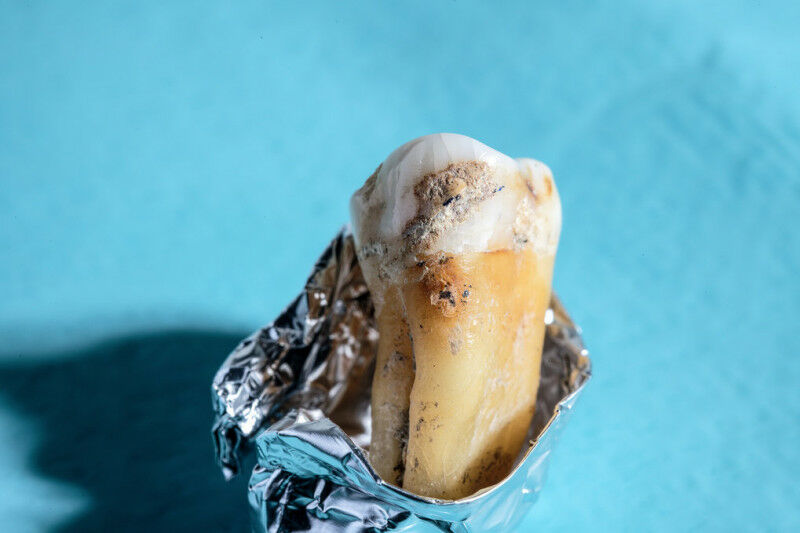
 Dental calculus (tooth tartar) preserves DNA over millennia, providing unprecedented information about the biodiversity and functional capabilities of ancient microbes.
Scientists are rebuilding microbial natural products up to 100,000 years old using dental calculus of humans and Neanderthals. Dental calculus (tooth tartar) preserves DNA over millennia, providing unprecedented information about the biodiversity and functional capabilities of ancient microbes. Werner Siemens Foundation, Felix Wey - Breakthroughs in ancient genome reconstruction and biotechnology are now revealing the rich molecular secrets of Paleolithic microorganisms. In a new study, a transdisciplinary team of researchers led by the Leibniz Institute for Natural Product Research and Infection Biology, the Max Planck Institute for Evolutionary Anthropology, and Harvard University reconstructed bacterial genomes of previously unknown bacteria dating to the Pleistocene. Using their genetic blueprints, they built a biotechnology platform to revive the ancient bacteria's natural products. Microbes are Nature's greatest chemists, and among their creations are a large number of the world's antibiotics and other therapeutic drugs. Producing these complicated chemical natural products is not straightforward, and to do so bacteria rely on specialized kinds of genes that encode enzymatic machinery capable of making such chemicals.
UM DIESEN ARTIKEL ZU LESEN, ERSTELLEN SIE IHR KONTO
Und verlängern Sie Ihre Lektüre, kostenlos und unverbindlich.
Ihre Vorteile
- Zugang zu allen Inhalten
- Erhalten Sie Newsmails für Neuigkeiten und Jobs
- Anzeigen veröffentlichen