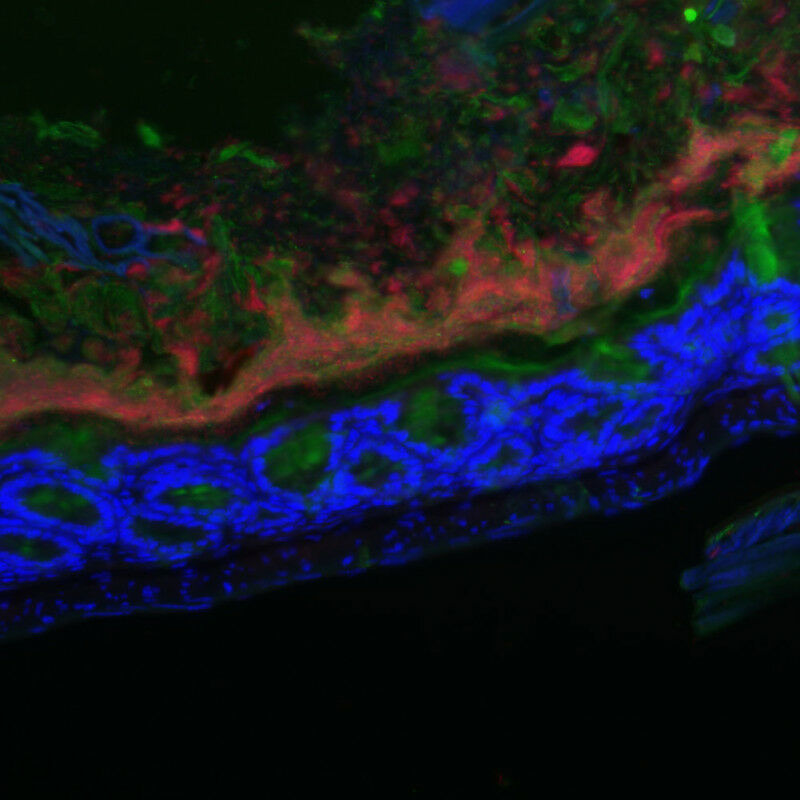
 Stained intestinal bacteria (red: bacteria, blue: nucleus, green: mucus)
Stained intestinal bacteria (red: bacteria, blue: nucleus, green: mucus) © Max Planck Research Group for Systems Immunology - Previously, it was believed that a germ-free environment was the most critical factor in preventing postoperative infections. However, a recent study by Mercedes Gomez de Agüero's team from the Max Planck Research Group for Systems Immunology in Würzburg, Germany, in collaboration with the University Hospital of Bern, Switzerland, has revealed that the source of the danger is apparently entirely different: the patients' intestines. Hospitals have traditionally sought to prevent infections after surgical procedures by maintaining a germ-free environment. It has long been established that concomitant infections during invasive procedures increase mortality rates. For this reason, extensive sterilization measures are implemented to eliminate microorganisms during surgery. The research team's study shows that the causative agents of these infections have a microbial signature from the intestine. In nearly all patients, the pathogens were intestinal bacteria such as Enterococcus, Escherichia coli, and Clostridium.
TO READ THIS ARTICLE, CREATE YOUR ACCOUNT
And extend your reading, free of charge and with no commitment.
Your Benefits
- Access to all content
- Receive newsmails for news and jobs
- Post ads