












news
Max Plank Society
Results 221 - 240 of 484.
Health - History & Archeology - 12.06.2024

Scientists reconstruct ancient genomes of the two most deadly malaria parasites, Plasmodium vivax and Plasmodium falciparum In a new study, an international team of researchers led by the Max Planck Institute for Evolutionary Anthropology in Leipzig, Germany, reconstructed the evolutionary history and global spread of malaria over the past 5,500 years, identifying trade , warfare, and colonialism as major catalysts for its dispersal.
Social Sciences - Career - 10.06.2024

Significant differences in the working lives of mothers and fathers in Italy - Finland, on the other hand, balanced A study by the Max Planck Institute for Demographic Research shows that, in contrast to Finland, from midlife mothers in Italy and the US work significantly fewer years than fathers, especially if they have two and more children.
Physics - Materials Science - 07.06.2024

Researchers discover an iron-containing material in the outer enamel of rodent teeth that could also make human teeth more resistant Rodents such as beavers, nutrias (coypu) , squirrels and rats have particularly strong, elongated front teeth that grow continuously over the course of their lives. Using state-of-the-art imaging techniques, researchers at the Max Planck Institute for Solid State Research in Stuttgart have now elucidated the tooth structure of various rodent species at the nanometre scale.
Life Sciences - 07.06.2024
Dancers are less neurotic
Amateur and professional dancers are less neurotic than people who do not dance. A new study shows A study led by researchers at the Max Planck Institute for Empirical Aesthetics in Frankfurt am Main, Germany, has shown that both amateur and professional dancers are less neurotic than people who do not dance.
Health - 04.06.2024

Living bone is fascinating because of its unique ability to adapt to mechanical stress and regenerate without scarring. During fracture healing, blood vessels and bone cells work closely together to gradually replace the initial cartilaginous wound tissue with ingrowing blood vessels and new bone tissue.
Life Sciences - History & Archeology - 03.06.2024

Genetic analyses of Celtic burial mounds from 500 BCE reveal close relationships and provide new insights into the power structures of early Celtic elites The Celtic culture of the pre-Roman Iron Age in Western and Central Europe has left numerous traces to this day, not least in the form of enormous burial mounds and spectacular archaeological artifacts.
Life Sciences - 29.05.2024

Why do primates have big brains? In the Panamanian rainforest, scientists pitted large-brained primates against smaller-brained mammals to find out who was the smartest forager Primates, including humans, have larger brains than most other mammals, but why? Scientists searching for the answer have long followed a trail pointing to diet-specifically fruit-as the reason for why primates evolved larger brains.
Astronomy & Space - Physics - 23.05.2024

New scientific data from the Euclid Space Telescope reveals the mystery of the faint glow in the Perseus galaxy cluster The Perseus galaxy cluster was one of the first targets of ESA's Euclid space telescope. It contains thousands of brilliant galaxies, as heavy as 650 trillion suns, held together by their own gravity.
Life Sciences - 22.05.2024
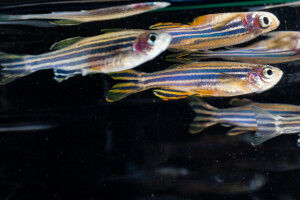
Virtual Reality experiments have illuminated the rhythmic glue that could keep animals moving in synchrony Across nature, animals from swarming insects to herding mammals can organize into seemingly choreographed motion. Over the last two decades, scientists have discovered that these coordinated movements arise from each animal following simple rules about where their neighbors are located.
Health - Life Sciences - 22.05.2024

Dynamic structure of FLVCR proteins and their function in nutrient transport in our cells revealed It is known that malfunctions of the proteins FLVCR1 and FLVCR2 lead to rare hereditary diseases in humans that cause motor, sensory and neurological disorders. However, the biochemical mechanisms behind this and the physiological functions of the FLVCR proteins have been unclear to date.
Life Sciences - Health - 17.05.2024

Marine microbes control the flux of matter and energy essential for life in the oceans. Among them, the bacterial group SAR11 accounts for about a third of all the bacteria found in surface ocean waters. A study by researchers from the Max Planck Institute for Marine Microbiology in Bremen, Germany, now reveals that at times nearly 20 percent of SAR11 cells are infected by viruses, significantly reducing total cell numbers.
Life Sciences - 16.05.2024

Genetic analyses show how the metabolic capacities of symbiotic bacteria in the gut of termites have changed over the course of evolution Researchers at the Max Planck Institute for Terrestrial Microbiology in Marburg, Germany, have analysed the evolutionary development of symbiotic bacteria in the intestines of termites with regard to their metabolic capabilities.
Life Sciences - Agronomy & Food Science - 13.05.2024

Researchers breed tomato plants that contain the complete genetic material of both parent plants In a new study, led by Charles Underwood from the Max Planck Institute for Plant Breeding Research in Cologne, Germany, scientists established a system to generate clonal sex cells in tomato plants and used them to design the genomes of offspring.
Linguistics & Literature - 13.05.2024

Linguistic analysis provides insight into the vocabularies for body parts in more than a thousand languages Human bodies have similar designs. However, languages differ in the way they divide the body into parts and name them. A team of linguists from the Max Planck Institute for Evolutionary Anthropology in Leipzig and the University of Passau conducted a comparison of body part vocabularies to shed light on the interplay between language, culture, and perception of the human body.
Life Sciences - Earth Sciences - 09.05.2024

Newly discovered symbiosis probably plays a major role in marine nitrogen fixation Scientists from the Max Planck Institute for Marine Microbiology have discovered a new partnership between a marine diatom and a bacterium that can account for a large share of nitrogen fixation in vast regions of the ocean.
Astronomy & Space - Physics - 30.04.2024

High temperatures and extreme wind speeds influence the chemistry inside the planet's atmosphere. Using the James Webb Space Telescope (JWST), a team of astronomers, including scientists from MPIA, constructed a global temperature map of the hot, gas giant exoplanet WASP-43b.
Chemistry - 29.04.2024
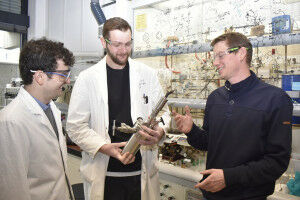
For over 100 years, the chemical industry has been using explosive aryl diazonium salts to produce paints, for example. A team from the Max Planck Institute for Coal Research has now discovered a safer alternative for the processes in which the chemical is used. The researchers are mimicking a reaction that plants use to reduce nitrate, using chemicals that the chemical industry uses to produce fertilizers - which could also make the processes more cost-effective.
Life Sciences - 25.04.2024
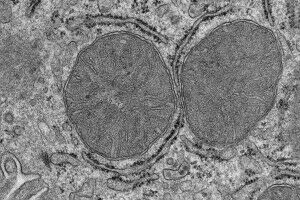
What happens in the body when we are hungry and see and smell food? A team of researchers at the Max Planck Institute for Metabolism Research has now been able to show in mice that adaptations in the liver mitochondria take place after only a few minutes. Stimulated by the activation of a group of nerve cells in the brain, the mitochondria of the liver cells change and prepare the liver for the adaptation of the sugar metabolism.
Astronomy & Space - Physics - 16.04.2024

Magnetic fields spiral around the mass monster Sagittarius A* and form up for a restart The Event Horizon Telescope, a network of individual radio telescopes located all'over the world, has once again observed the centre of our galaxy, the Milky Way. Using the polarised part of the radio light, the researchers discovered strong magnetic fields that spiral out from the edge of the supermassive black hole Sagittarius A*.
Astronomy & Space - Physics - 16.04.2024

The BepiColombo space probe measures carbon ions escaping from the atmosphere of Venus and thus helps to decipher the special development of Venus During its flyby of Venus, the European-Japanese space probe Bepi Colombo for the first time found carbon ions escaping from the planet's atmosphere into space in a previously unexplored region on the night side of the planet.


