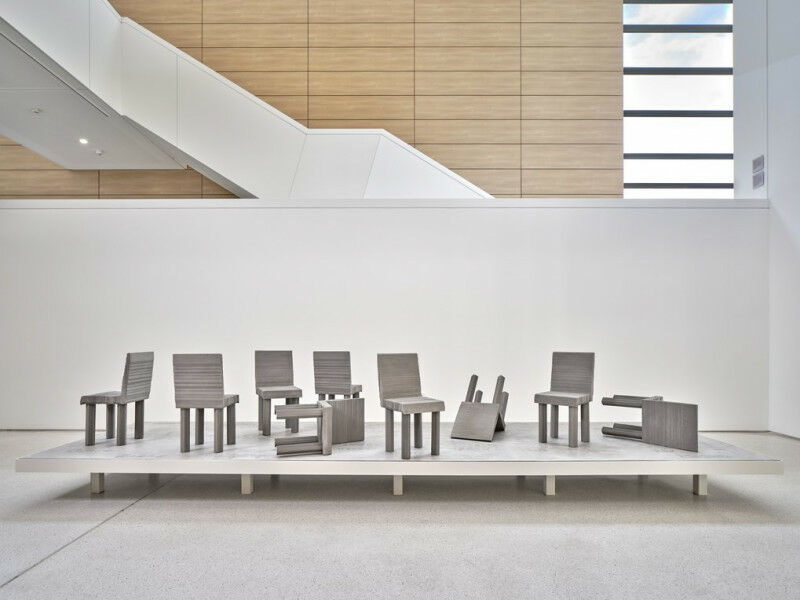
 Never Forget - a memorial sculpture at the Max Planck Institute for Brain Research commemorates the tragic history of the predecessor institute during the Third Reich. © Norbert Miguletz Never Forget - a memorial sculpture at the Max Planck Institute for Brain Research commemorates the tragic history of the predecessor institute during the Third Reich.
Never Forget - a memorial sculpture at the Max Planck Institute for Brain Research commemorates the tragic history of the predecessor institute during the Third Reich. Norbert Miguletz Never Forget - a memorial sculpture at the Max Planck Institute for Brain Research commemorates the tragic history of the predecessor institute during the Third Reich. Norbert Miguletz A memorial sculpture at the Max Planck Institute for Brain Research commemorates the tragic history of the predecessor institute during the Third Reich During the Third Reich, the Kaiser Wilhelm Institute (KWI) for Brain Research, then in Berlin-Buch, was the largest brain research institution in the world. Among its directors were Hugo Spatz and Julius Hallervorden, who took part in the taking of innocent lives, exploiting and promulgating the Nazi agenda. For many years, scientists used parts of the brains of these innocent victims, including those of cognitively disabled children for their research. On May 24, 2022, the current directors (Gilles Laurent, Erin Schuman, and Moritz Helmstaedter) and emeritus directors (Heinz Wässle and Wolf Singer) of the Max Planck Institute for Brain Research in Frankfurt inaugurated a memorial sculpture, called "Never Forget". The memorial evokes the horrific memories of a particularly brutal October day in 1940, when 58 children were removed from their institution for the mentally-disabled and executed in the name of science.
UM DIESEN ARTIKEL ZU LESEN, ERSTELLEN SIE IHR KONTO
Und verlängern Sie Ihre Lektüre, kostenlos und unverbindlich.
Ihre Vorteile
- Zugang zu allen Inhalten
- Erhalten Sie Newsmails für Neuigkeiten und Jobs
- Anzeigen veröffentlichen