Research team advances environmentally friendly battery production
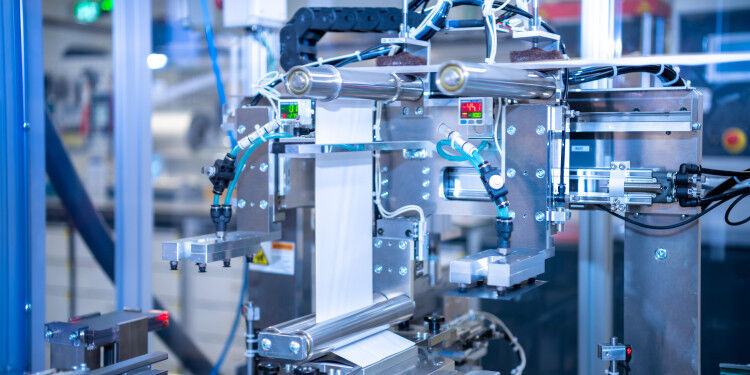
"The recycling can be successfully implemented and scaled up dry mechanically using mills," says Maike Michelle Gnutzmann, PhD candidate at MEET Battery Research Center and international Graduate School BACCARA. For dry-processed cathodes, the mills separate the cathode composite from the current collector and granulate it. As a result, all components, such as active material, PTFE binder and conductive carbon black, are available in their original form.
"Since the materials involved are not degraded by the recycling process, they can be directly reused," says Maike Michelle Gnutzmann. In addition, the Institute of Business Chemistry evaluated the profitability of the procedure through a life cycle cost assessment (LCCA). The results show that the recycling process is attractive for industrial applications not only for sustainability considerations but also for cost efficiency.
Original publication
M. M. Gnutzmann, S. Raffenberg, M. Gutsch, M. Winter, M. Börner, and J. Kasnatscheew, "A Dry-Mechanical Approach for Scrap Recycling of Dry-Processed Lithium Ion Battery Cathodes." Adv. Energy Mater. (2025): e03459. https://doi.org/10.1002/aenm.202503459