




news
Friedrich Schiller University Jena
Results 121 - 140 of 237.
Physics - Innovation - 12.01.2023

An international team of researchers, including scientists from Jena, has succeeded in developing a new and particularly precise type of measurement in tiny quantum systems. Applications are conceivable in semiconductor manufacturing, for example, but also in mobile radio technology or microscopy in the future.
Health - Pharmacology - 06.01.2023

Oliver Werz from the Institute of Pharmacy at Friedrich Schiller University Jena. Chronic inflammatory processes are the most common causes of a variety of widespread diseases. They play a role in arthritis, asthma, Parkinson's disease and Alzheimer's disease, but also in arteriosclerosis, diabetes and cancer.
Physics - Materials Science - 23.11.2022

A team from the Friedrich Schiller University Jena has set up a new streak camera on ID16B, which can measure very fast kinetic phenomena present in light emission after receiving an X-ray pulse. The camera is now available to the user community to study complex carrier dynamics with spatio-temporal resolutions.
Astronomy & Space - Physics - 18.11.2022

Numerical simulation representing the curvature of spacetime during the merger of the two black holes. When black holes collide in the universe, the clash shakes up space and time: the amount of energy released during the merger is so great that it causes space-time to oscillate, similar to waves on the surface of water.
Physics - 07.11.2022

Physicists from Friedrich Schiller University Jena, together with colleagues from Düsseldorf, Gothenburg, Lyngby and Trieste have developed an ingenious solution for separating bonded nano-components. Their idea is to immerse the nano-components in a solvent near its critical point. In the experimental setup, they succeeded in separating the components in a controllable fashion by only changing the temperature of the solvent.
Life Sciences - Health - 21.09.2022
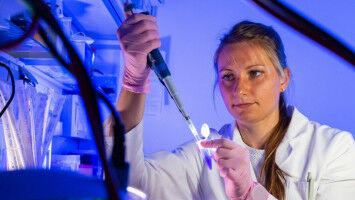
Together with researchers from University Hospital Mainz, the University of Regensburg and the IRCM in Montreal (Canada), a research team from Friedrich Schiller University Jena has discovered a novel therapeutic approach for treating malignant tumours of the lymphatic system. The team led by Dr Christian Kosan from Jena University's Institute of Biochemistry and Biophysics shows that treating certain B-cell lymphomas with the enzyme inhibitor "Marbostat 100" leads to significantly slowed growth of the tumour cells.
Pharmacology - Health - 08.09.2022
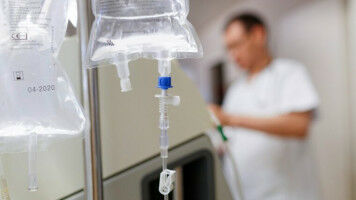
The Target trial of Jena University Hospital (UKJ) tested the effect of therapeutic drug monitoring for antibiotics in patients with sepsis.
Astronomy & Space - History & Archeology - 05.09.2022

Life Sciences - 01.09.2022
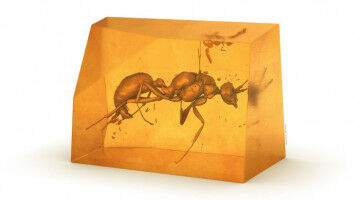
An international team of scientists has discovered a previously unknown extinct ant species encased in a unique piece of amber from Africa. Using the X-ray light source PETRA III at the German Electron Synchrotron (DESY) in Hamburg the researchers, from Friedrich Schiller University Jena, the University of Rennes in France, the University of Gdansk in Poland, as well as the Helmholtz-Zentrum Hereon in Geesthacht, Germany, had examined the critical fossil remains from 13 individual animals in the amber and realised that they could not be attributed to any previously known species.
Life Sciences - Physics - 01.09.2022
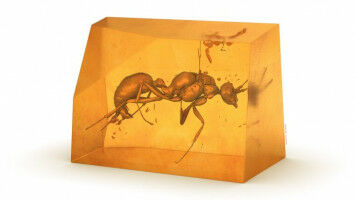
An international team of scientists has discovered a previously unknown extinct ant species encased in a unique piece of amber from Africa. Using the X-ray light source PETRA III at the German Electron Synchrotron (DESY) in Hamburg the researchers, from Friedrich Schiller University Jena, the University of Rennes in France, the University of Gdansk in Poland, as well as the Helmholtz-Zentrum Hereon in Geesthacht, Germany, had examined the critical fossil remains from 13 individual animals in the amber and realised that they could not be attributed to any previously known species.
Life Sciences - 16.08.2022
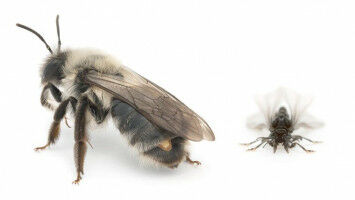
Reproduction in the insect order Strepsiptera - also known as twisted-wing parasites - is not for the fainthearted. To inseminate the eggs of its partner, the male partner injures the "neck" of the female with its hook-shaped penis and injects the seminal fluid directly into the body cavity. This traumatic insemination is risky for the female.
Environment - 15.08.2022
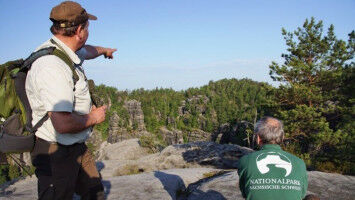
How effective is biodiversity conservation of European and African national parks? This seems to be strongly associated with societal and economic conditions. But even under the most favourable conditions, conservation efforts cannot completely halt emerging threats to biodiversity if conditions outside of the parks do not improve.
Pharmacology - Health - 21.07.2022

Because modern medicine enables the treatment of seriously ill and severely immunocompromised patients, severe fungal infections are occurring with increasing frequency in intensive care units. Due to their weakened immune system and the often required broad spectrum antibiotic therapy, sepsis patients in the ICU are at particular risk for invasive infections by Candida, a yeast which is harmless to healthy people.
Environment - Earth Sciences - 30.06.2022

Microorganisms in aquifers deep below the earth's surface produce similar amounts of biomass as those in some marine waters. This is the finding of researchers led by the Friedrich Schiller University Jena and the German Centre for Integrative Biodiversity Research (iDiv), both Germany. Applying a unique, ultra-sensitive measurement method using radioactive carbon, they were able to demonstrate for the first time that these biotic communities in absolute darkness do not depend on sunlight.
Chemistry - Life Sciences - 10.06.2022

The chemical precursors of present-day biomolecules could have formed not only in the deep sea at hydrothermal vents, but also in warm ponds on the Earth's surface. The chemical reactions that may have occurred in this "primordial soup" have now been reproduced in experiments by an international team led by researchers of Friedrich Schiller University Jena.
Environment - Life Sciences - 01.06.2022
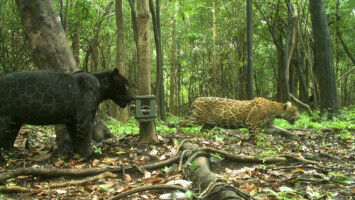
An international team of researchers has published the largest collection of data from camera traps on Amazonian rainforest animals. The collection currently encompasses over 120,000 registers, plus information on time and location. It will improve research on the abundance, diversity and habitat conditions of jaguars, toucans, harpy eagles and many other endangered rainforest species and contribute to their protection.
Chemistry - Computer Science - 06.04.2022

A bioinformatics research team from Friedrich Schiller University Jena has won the 2022 Thuringian Research Prize for applied research, Thuringia's Science Minister Wolfgang Tiefensee announced today (06 April) in a video presentation. The prize of 12,500 euros, awarded for the development of machine learning methods for identifying small molecules, went to the team comprising Prof. Sebastian Böcker, Dr Kai Dührkop, Dr Markus Fleischauer, Dr Marcus Ludwig and Martin Hoffmann.
Life Sciences - Chemistry - 05.04.2022

Life on Earth runs in 24-hour cycles. From tiny bacteria to human beings, organisms adapt to alterations of day and night.
Chemistry - 22.03.2022

A research team from Friedrich Schiller University Jena has developed a molecular photosystem inspired by nature that generates hydrogen under visible light irradiation. In contrast to other existing systems of this type, it functions without the use of precious or heavy metals.
Health - Pharmacology - 18.03.2022
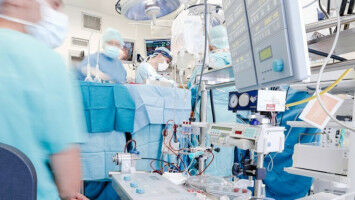
In a controlled multicenter trial, a research team from Jena University Hospital investigated the benefit of hemoadsorption during cardiac surgery, aimed at reducing blood levels of inflammatory mediators, on clinical outcome. The study, now presented in Circulation, shows that hemoadsorption reduced plasma cytokines during surgery, but did not affect any of the clinically relevant outcomes.


