











news
Max Plank Society
Results 241 - 260 of 484.
Environment - 12.04.2024
Storks fly with a little help from their friends
With long legs and large wings, the white stork is a prominent star of the pageant that is animal migration. Flying from Europe towards Africa in autumn, and then back again in spring, birds can be seen taking to the sky in conspicuous flocks that herald the changing of the seasons. Now, a study from the Max Planck Institute of Animal Behavior in Konstanz, Germany, has an explanation for how this collective phenomenon forms: the storks are choosing to fly together.
Life Sciences - Environment - 11.04.2024
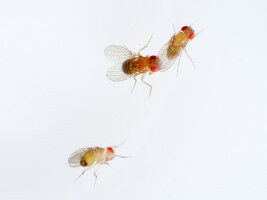
The oxidant pollutant removes mating barriers between fly species and increases the occurrence of sterile hybrids In a recent study, researchers from the Max Planck Institute for Chemical Ecology in Jena, Germany, show that ozone levels, such as those found in many places on hot summer days today, destroy the sex pheromones of fruit fly species.
Life Sciences - Chemistry - 10.04.2024

Scientists found for the first time a natural protein that follows a mathematical pattern of self-similarity An international team of researchers led by groups from the Max Planck Institute in Marburg and the Philipps University in Marburg has stumbled upon the first regular molecular fractal in nature.
Astronomy & Space - Physics - 05.04.2024

On May 29, 2023, the LIGO Livingston detector observed a mysterious signal, called GW230529. It originated from the merger of a neutron star with an unknown compact object, most likely an unusually light-weight black hole. With a mass of only a few times that of our Sun, the object falls into the "lower mass gap" between the heaviest neutron stars and the lightest black holes.
Life Sciences - 02.04.2024

New study suggests animals can live alongside humans-if they are risk-analysis experts New research suggests animals can thrive in human-dominated environments by being expert judges of risk.
History & Archeology - Life Sciences - 02.04.2024

New research reveals that chickens were widely raised across southern Central Asia from 400 BCE through medieval periods and likely dispersed along the ancient Silk Road In a new study published by Nature Communications , an international team of scholars present the earliest clear archaeological and biomolecular evidence for the raising of chickens for egg production, based on material from 12 archaeological sites spanning one and a half millennia.
Life Sciences - Health - 28.03.2024

Satiety, nausea or anxiety can all lead to a loss of appetite. Delaying eating can be a healthy move by the body to prevent further damage and to gain time for regenerating. Researchers at the Max Planck Institute for Biological Intelligence now identified the circuit in the brain that prevents mice from eating when they feel nauseous.
Media - 26.03.2024
Do food and drink preferences influence migration flows?
Researchers at the Max Planck Institute for Demographic Research used Facebook data to investigate the influence of cultural similarities on migration flows and found that cultural proximity plays as important a role in the choice of destination country as shared language and history. When people migrate, many factors play a role in their choice of destination: How well do you speak the new country's language?
Environment - Chemistry - 20.03.2024

Researchers gain new insights into how the first cells on Earth were able to use hydrogen gas as an energy source Hydrogen gas (H2) is seen as a key to sustainable energy for the future. Yet it is an ancient form of energy. Even the very first cells on earth lived on H2, which was produced in hydrothermal vents.
Life Sciences - Health - 18.03.2024

UV radiation in the sunlight causes sunburn and increases the risk of skin cancer by damaging our DNA but also our RNA. Researchers at the Max Planck Institute of Immunobiology and Epigenetics in Freiburg, Germany, have now unveiled a cellular shield that protect cells from the harmful effects of damaged RNA caused by ultraviolet radiation.
Social Sciences - 15.03.2024
Do school grades influence parental support?
The Max Planck Institute for Demographic Research in Rostock, Germany, has researched parents' support behavior in relation to school grades. The study shows that low-income families support their children equally regardless of grades, while parents from higher income groups tend to give more support to children with lower grades.
Life Sciences - 06.03.2024
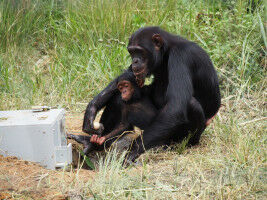
Chimpanzees that are unable to figure out a complex puzzle on their own, are capable of learning the solution from other chimps that were trained to solve it. This is the conclusion reached by an international research team from Utrecht University, the University of St Andrews and the Max Planck Institute for Evolutionary Anthropology as part of a study conducted with groups of chimpanzees in Zambia.
Life Sciences - Health - 05.03.2024

Study shows multiple pathways connect early life adversity to later life health Early experiences in an animal's life can have a significant impact on its capacity to thrive, even years or decades later, and DNA methylation may help record their effects. In a study of 256 wild baboons, researchers from the Max Planck Institute for Evolutionary Anthropology and Duke University found that resource limitation during early life was associated with many differences in DNA methylation, a small chemical mark on the DNA sequence that can affect gene activity.
Forensic Science - 21.02.2024
More Problems, More Fear
People react differently to becoming a victim of crime when they live in disadvantaged neighborhoods: Their fear of crime increases more strongly compared to victims from privileged neighborhoods. This is the finding of a study involving over 3,000 participants from the German cities of Cologne and Essen, conducted by Florian Kaiser and Dietrich Oberwittler from the Max Planck Institute for the Study of Crime, Security and Law in Freiburg, Germany.
Life Sciences - Social Sciences - 20.02.2024

Burials show that children with Down Syndrome and Edwards Syndrome were recognized as members of their communities An international team of researchers has analysed the DNA from a world-wide sample of nearly 10,000 ancient individuals to search for cases of Down Syndrome, an uncommon genetic condition caused by the presence of an additional copy of Chromosome 21.
Psychology - Health - 19.02.2024

In an uniquely extensive study, researchers were able to demonstrate the clinical benefits of schema therapy in the context of inpatient treatment. This therapy is therefore a promising alternative for the treatment of severe depression. Schema therapy is increasingly being used as a psychotherapeutic method.
Environment - 19.02.2024

The evolution of sustainable institutions critically depends on clearly defined and enforced access rights Common pool resources comprise around 65 percent of Earth's surface and vast tracts of the ocean. While examples of successful governance of these resources exist, the circumstances and mechanisms behind their development have remained unclear.
Life Sciences - 14.02.2024

Babies playfully tease others as young as eight months of age. Since language is not required for this behavior, similar kinds of playful teasing might be present in non-human animals. Now cognitive biologists and primatologists from the University of California Los Angeles, the Max Planck Institute of Animal Behavior , Indiana University, and the University of California San Diego have documented playful teasing in four species of great apes.
Health - 08.02.2024
More heart attacks in rural areas
Core problem of urban-rural divide is not a lack of emergency care for heart attacks, but poorer disease prevention in rural areas In Germany, more people aged 65 and over die from heart attacks in rural areas than in cities. Contrary to popular belief, this is probably not due to poorer emergency medical care, but because more people suffer heart attacks in rural areas. However, the protection of patients' personal data makes it difficult to announce specific recommendations for action in Germany.
Forensic Science - 08.02.2024
What Might Reduce Crime Does Not Reduce Fear of Crime
Criminologists use Virtual Reality to assess the impact of street lighting and watching-eyes interventions In a virtual reality study, a team of researchers - including criminologists from the Max Planck Institute for the Study of Crime, Security and Law - find environmental crime reduction interventions may not be effective or may even be counterproductive when it comes to reducing fear of crime.


