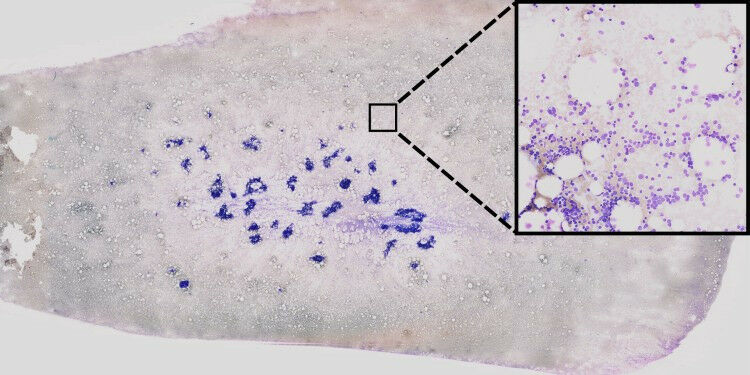
 AI-based processing of bone-marrow smears to support leukaemia diagnosis. Using so-called unsupervised learning methods, single-cell images (centre) are extracted from extremely high-resolution image data (left). Then, using neural networks, these cell images are examined to check for any visual anomalies which might have a genetic origin. Areas which are important for the decision of the neural network are highlighted in colour by using so-called ’explainable AI’ strategies (right).
IT specialists and physicians develop new method for recognising genetic aberrations. AI-based processing of bone-marrow smears to support leukaemia diagnosis. Using so-called unsupervised learning methods, single-cell images ( centre ) are extracted from extremely high-resolution image data ( left ). Then, using neural networks, these cell images are examined to check for any visual anomalies which might have a genetic origin. Areas which are important for the decision of the neural network are highlighted in colour by using so-called 'explainable AI' strategies ( right ). AG Risse Decisions on treatment for patients with acute myeloid leukemia (AML) - a highly aggressive form of leukemia - are based, among other things, on a series of certain genetic features of the disease; but at the time when a diagnosis is made, this information is not available. However, evidence of these genetic anomalies is crucial in providing targeted treatment for patients at an early stage.
TO READ THIS ARTICLE, CREATE YOUR ACCOUNT
And extend your reading, free of charge and with no commitment.
Your Benefits
- Access to all content
- Receive newsmails for news and jobs
- Post ads