





wire - news in brief
Friedrich Schiller University Jena
Results 351 - 400 of 459.
Life Sciences - 05.04.2022
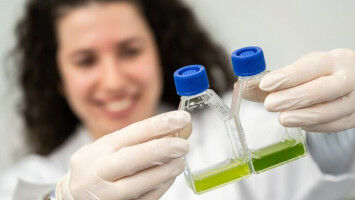
Life on Earth runs in 24-hour cycles. From tiny bacteria to human beings, organisms adapt to alterations of day and night. External factors, such as changes in light and temperature, are needed to entrain the clock. Many metabolic processes are controlled by the endogenous clock. Scientists at the University of Jena have now studied the molecular rhythms of the endogenous clock in the "green lineage".
Environment - 31.03.2022

Life Knowledge Transfer and Innovation Published: National biodiversity monitoring programmes in Europe face many challenges: too little coordination, inadequate technical and financial resources as well as unclear targets.
Materials Science - Chemistry - 28.03.2022

The "FuncHeal" project of the University of Jena has been awarded funding by the German Research Foundation worth more than 3.5 million euros over the next four years.
Physics - Research Management - 17.03.2022
Astronomy & Space - Physics - 17.03.2022
Environment - Event - 15.03.2022

Campus - 24.02.2022
Social Sciences - 21.02.2022

Event - History & Archeology - 10.02.2022

Art & Design - 10.02.2022

Astronomy & Space - 09.02.2022

Health - 03.02.2022
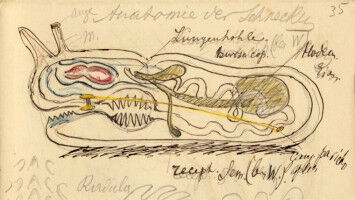
Knowledge Transfer and Innovation Published: Nikolai Miklucho-Maclay drew this representation of a human skull to illustrate notes of a lecture by Carl Gegenbaur.
Campus - 01.02.2022

Health - 01.02.2022

Economics - 21.01.2022

History & Archeology - 13.01.2022

A research team from Friedrich Schiller University Jena, Germany and the German Archaeological Institute (GAI) will be compiling an "Ethiopian Heritage Digital Atlas" (EHDA) over the next two years.
Chemistry - Research Management - 10.01.2022
History & Archeology - Social Sciences - 07.01.2022

Knowledge Transfer and Innovation Published: A scalp from Namibia and skulls from Tanzania and Papua New Guinea: these are examples of human remains from University of Jena collections that found their way to Germany during the colonial period. Extensive research has been necessary to uncover the precise origins and history of these human remains, as identification is nearly always difficult and labour-intensive.
Health - Psychology - 09.12.2021

Three in four sepsis survivors experience new-onset memory problems, psychological impairments or physical diagnoses. This also applies to more than half of sepsis survivors under the age of 40 at the time of their discharge from hospital. These are just two of the findings of a retrospective analysis of anonymized health claims data conducted by a team of researchers from Jena University Hospital, Charité - Universitätsmedizin Berlin and the Research Institute of the Local Health Care Funds (AOK).
History & Archeology - 30.11.2021

Environment - 26.11.2021

Knowledge Transfer and Innovation Published: To achieve global goals for biodiversity conservation, national level implementation must be significantly improved.
Life Sciences - Environment - 25.11.2021

Health - Life Sciences - 19.11.2021
Understanding how bacteria grow, survive or die in different environments can be a real game-changer in the way bacterial infections are dealt with.
Life Sciences - Health - 17.11.2021

Young scientists will investigate the mechanisms of the "gut-brain-axis" to make use of them in diagnose and prevention of cognitive functional decline Science calls the interaction between digestive and thinking organ the "gut-brain axis" and is only just beginning to understand its complexity.
Life Sciences - Earth Sciences - 17.11.2021

Researchers of the University of Jena involved in Citizen Science project on the Bromacker The Tambach sandstones are covered with thin clay skins on which ripple marks, raindrop impressions, dry cracks and many traces of worms, insects and vertebrates (so-called tracking plates) are preserved.
Campus - Politics - 17.11.2021
Social Sciences - 22.10.2021

Environment - Politics - 04.10.2021
Life Sciences - Health - 15.09.2021

Environment - Social Sciences - 03.09.2021

Psychology - Health - 27.08.2021
First aid for mental health problems
Working in science can lead to a high level of psychological stress. A large study from Belgium, for example, showed that the risk of doctoral researchers developing depression or other mental illnesses is significantly increased.
Physics - Innovation - 29.07.2021
Campus - Pedagogy - 16.07.2021
Environment - Research Management - 06.07.2021

Materials Science - Chemistry - 16.06.2021

The energy density of traditional lithium-ion batteries is approaching a saturation point that cannot meet the demands of the future - for example in electric vehicles. Lithium metal batteries can provide double the energy per unit weight when compared to lithium-ion batteries. The biggest challenge, hindering its application, is the formation of lithium dendrites, small, needle-like structures, similar to stalagmites in a dripstone cave, over the lithium metal anode.
Pedagogy - Health - 15.06.2021

Educational scientists at Friedrich Schiller University Jena are working on a new project studying how virtual reality can enrich teacher training - and thus also enhance teaching in schools.
Environment - 31.05.2021

Researchers record adaptability of 158 butterfly species to urbanisation Life Rapidly expanding urban habitats are likely to endanger a large number of butterfly species in the long term. This is reported by scientists from the German Centre for Integrative Biodiversity Research (iDiv), the Martin Luther University Halle-Wittenberg (MLU) and the Friedrich Schiller University Jena in the scientific journal Global Change Biology .
Innovation - Physics - 31.05.2021
Life Sciences - 27.05.2021
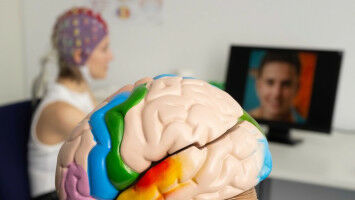
People remember faces better from personal meetings than through still or moving media images The human brain remembers faces better after a personal meeting than by looking at photos or videos, according to findings by neuroscientists at Friedrich Schiller University Jena.
Research Management - Campus - 26.05.2021

Environment - Life Sciences - 25.05.2021

Collaborative Research Centre "AquaDiva" granted funding for third phase worth 11 million euros by German Research Foundation Life The " Critical Zone", as it is called, is the porous skin of the Earth, where air, water, rock and organisms interact. It extends from the vegetation, through the soil and rock, down to the groundwater that is sometimes several hundreds of metres deep, and these layers are connected by liquid flows and the transport of materials.
Chemistry - Pharmacology - 25.05.2021
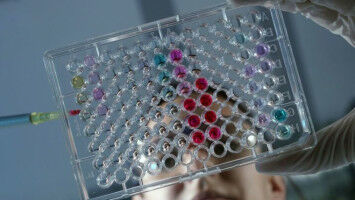
Collaborative Research Centre "PolyTarget" receives German Research Foundation funding for second phase worth close to 15 million euros Life Medicines usually have side effects because they have to be administered in higher doses to make sure that the active substance reaches the place where it is needed.
Event - 14.05.2021

Career - 29.04.2021

Campus - 26.04.2021

Health - Environment - 14.04.2021

- 14.04.2021
Life Sciences - 17.03.2021
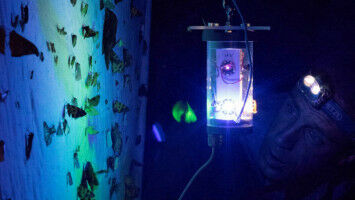
Biologists from the University of Jena publish study on the relationship between flying insects and light pollution Jena, the "city of light", has its dark sides.
Social Sciences - Campus - 23.02.2021

Chemistry - Physics - 20.01.2021
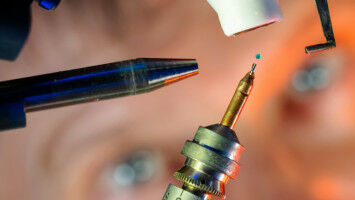
Chemists at University of Jena harness synergy effect of gallium Chemists at the Friedrich Schiller University Jena have demonstrated the value of "teamwork" by successfully harnessing the interactio


