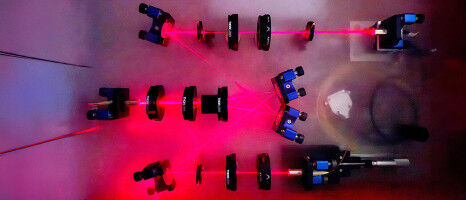
Dr Helmar Görls studies single crystals of novel compounds using a X-ray diffractometer. Image: Jens Meyer (University of Jena)
Dr Helmar Görls studies single crystals of novel compounds using a X-ray diffractometer. Image: Jens Meyer (University of Jena) - Chemists at University of Jena harness synergy effect of gallium Chemists at the Friedrich Schiller University Jena have demonstrated the value of "teamwork" by successfully harnessing the interaction between two gallium atoms in a novel compound to split the particularly strong bond between fluorine and carbon. The gallium compound is also cheaper and more environmentally friendly than conventional alternatives. Sustainable and inexpensive. "Such reactions are usually carried out using transition metals, such as nickel or iridium," explains Prof. Robert Kretschmer, Junior Professor of Inorganic Chemistry at the University of Jena, whose work has been published in the prestigious Journal of the American Chemical Society. "However, transition metals are expensive and harmful to the environment, both when they are mined and when they are used. Therefore, we are trying to find better alternatives." That two metals can do more than one is already known in the case of transition metals.
TO READ THIS ARTICLE, CREATE YOUR ACCOUNT
And extend your reading, free of charge and with no commitment.