









news
University of Tübingen
Results 101 - 120 of 153.
Paleontology - Life Sciences - 08.09.2022

When they re-analyzed a skeleton that was discovered in Trossingen in 1922, consisting mainly of the rear of the body, Regalado Fernandez and Werneburg established that many of the bones were not the same as a typical Plateosaurus . For instance, the partial skeleton displayed, among other derived characters, broader and more strongly-built hips with fused sacral vertebrae as well as unusually large and robust long bones - both features implied locomotion on four legs.
Life Sciences - Paleontology - 05.09.2022

Many people living today have a small component of Neanderthal DNA in their genes, suggesting an important role for admixture with archaic human lineages in the evolution of our species. Paleogenetic evidence indicates that hybridization with Neanderthals and other ancient groups occurred multiple times, with our species- history resembling more a network or braided stream than a tree.
Life Sciences - Psychology - 30.08.2022

Although visual perception might seem as easy as just opening our eyes and reporting what is out there, the underlying computations are surprisingly complex. One of the more revealing ways to study these computations is by using inputs that are ambiguous or even impossible under normal circumstances (for instance with radically different pictures seen by the two eyes).
Health - Life Sciences - 18.08.2022
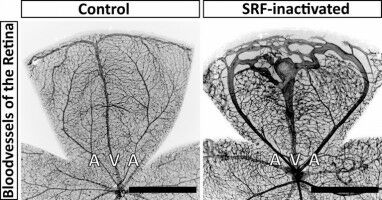
The heart pumps blood through the vascular system, supplying cells with oxygen and energy Smooth muscle cells in the vessels finely regulate the blood flow. If they cannot perform their task, malformations and dilations of the vascular system may occur, according to a research team led by Professor Alfred Nordheim from the Interfaculty Institute of Cell Biology at the University of Tübingen, together with scientists from Tübingen, Münster and Uppsala, Sweden.
Environment - Life Sciences - 09.08.2022
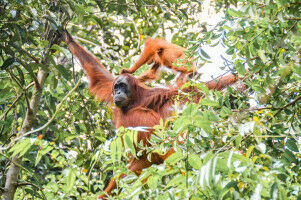
An international research team around Hervé Bocherens of the Senckenberg Centre for Human Evolution and Palaeoenvironment at the University of Tübingen and his PhD candidate Sophie G. Habinger has reconstructed the habitat of the ancestors of orangutans in present-day Myanmar as part of the collaborative project EVEPRIMASIA between the Universities of Tübingen, Germany, and Poitiers, France.
Environment - Paleontology - 13.07.2022

An international team of researchers reports that at least 20 species of carnivorous mammals lived 11.5 million years ago in what is now the Hammerschmiede fossil site in southern Germany. The site has been a focus of attention since the 2019 discovery of the first known ape to walk upright, Danuvius guggenmosi .
Astronomy & Space - 06.07.2022
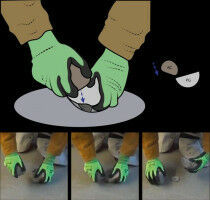
Archaeologically excavated stone tools - some as much as 2.6 million years old - have been hailed as evidence for an early cultural heritage in human evolution. But are these tools proof that our an-cestors were already becoming human, both mentally and culturally? Dr. Claudio Tennie und William Snyder from the Department of Early Prehistory and Quaternary Ecology at the University of Tü-bingen have tested this traditional interpretation in a study funded by the European Re-search Council.
Earth Sciences - Physics - 24.06.2022

Global warming and a progressively drier climate in many parts of the world are causing more dust storms. To predict how these storms are caused, researchers are looking into the past to understand where the dust came from, for how long, and over what distances it was transported. An international research team led by Dr. Aditi K. Dave and Professor Kathryn Fitzsimmons from the Department of Geosciences at the University of Tübingen, along with colleagues from Romania, Brazil, Kazakhstan and Tajikistan, have now developed a new method of doing this.
Social Sciences - Event - 20.06.2022
’I never knew there were people like me at university’
Surveys of participants in the -Native Schools- project show that knowledge communication may be a key to overcoming social injustice, inequality and exclusion. In particular, direct interactions between researchers and disadvantaged groups have the potential to increase knowledge about and enthusiasm for research in all parts of society.
Life Sciences - Health - 20.06.2022
Protein changes in the liquor indicate inflammatory processes in the brain
Alzheimer's, Parkinson's and other neurodegenerative diseases are associated with inflammatory processes in the brain. German researchers have succeeded in identifying a group of proteins in the liquor that could provide information about such inflammatory processes. As so-called biomarkers, the proteins could help to better understand disease processes in the future and to test the effect of potential drugs against brain inflammation.
Life Sciences - History & Archeology - 09.06.2022

The Wallacean islands of present-day Eastern Indonesia have a long history of occupation by modern humans. Notably, the maritime expansion of Austronesian speakers into Wallacea left archaeological traces of a Neolithic lifestyle and a genetic imprint still detectable in Eastern Indonesians today.
Paleontology - History & Archeology - 07.06.2022
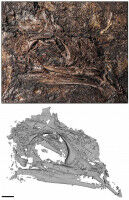
Geckos lived in Europe as early as 47 million years ago, say palaeontologists who have examined a nearly complete fossil gecko skull from central Germany. This previously unknown species was found in a former coalmining area - Geiseltal - and was described by a research team led by Dr. Andrea Villa of the Catalan Institute of Palaeontology Miquel Crusafont in Barcelona and biogeologist Dr. Márton Rabi of the University of Tübingen and Martin Luther University Halle-Wittenberg.
Life Sciences - Health - 31.05.2022
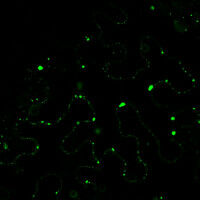
Many disease-causing bacteria are able to inhibit the defense mechanisms in plants and thus escape dissolution by the plant cell, a process known as xenophagy. Animal and human cells have a similar mechanism whereby the cell's defenses -eat- invading bacteria - yet some bacteria can inhibit the process.
History & Archeology - Environment - 30.05.2022
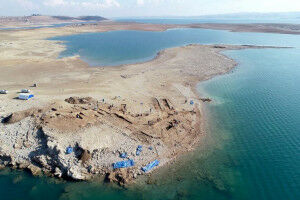
A team of German and Kurdish archaeologists have uncovered a 3400-year-old Mittani Empire-era city once located on the Tigris River. The settlement emerged from the waters of the Mosul reservoir early this year as water levels fell rapidly due to extreme drought in Iraq. The extensive city with a palace and several large buildings could be ancient Zakhiku - believed to have been an important center in the Mittani Empire (ca. BC).
Paleontology - 18.05.2022
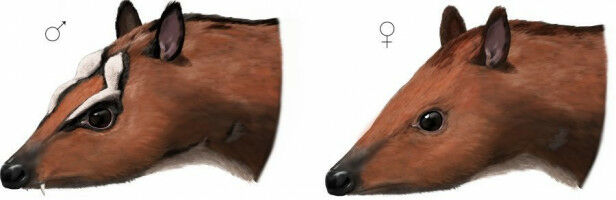
Mouse deer are among the smallest ruminants in the world. Today, they live in the tropics of Africa and Asia and are barely larger than hares. Males and females differ little in appearance. But that was not the case about eleven million years ago. Josephina Hartung and Professor Madelaine Böhme from the Senckenberg Centre for Human Evolution and Palaeoenvironment at the University of Tübingen came across a previously unknown difference between the sexes while examining two fossil mouse deer skulls from the Hammerschmiede clay pit in the Allgäu region of Germany.
History & Archeology - 17.05.2022
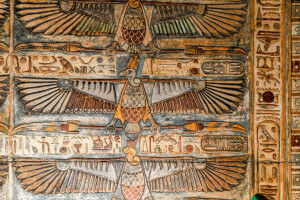
German and Egyptian researchers have uncovered a series of colourful ceiling paintings in the temple of Esna in Upper Egypt. As Professor Christian Leitz of the University of Tübingen reported, the relief-like images of the central ceiling section are a total of 46 depictions of the Upper Egyptian crown goddess Nechbet and the Lower Egyptian crown goddess Wadjet.
History & Archeology - 17.05.2022

In the Temple of Khnum at Esna, Upper Egypt, German and Egyptian researchers have uncovered a series of vibrantly-colored ceiling frescoes. The relief images in the central section of the ceiling, Professor Christian Leitz from the University of Tübingen reports, make up a total of 46 depictions of the Upper-Egyptian vulture goddess Nekhbet and the Lower-Egyptian serpent goddess Wadjet.
Mathematics - Campus - 04.05.2022
Algorithm predicts which students will drop out of Math courses
In the subjects of science and technology, engineering and mathematics - known collectively as STEM subjects - up to 40 percent of students drop out of their studies in the entry phase. A research team from the University of Tübingen's Methods Center at the Faculty of Economics and Social Sciences has now developed a statistical method that can be used to predict on average eight weeks in advance whether students will terminate their studies.
Environment - 28.04.2022

Early-flowering plants in European forests today start their flowering season on average a week earlier than they did a hundred years ago. This is reflected by herbarium specimens, as Dr. Franziska Willems and Professor Oliver Bossdorf from the Institute of Evolution and Ecology at the University of Tübingen, together with Professor J. F.
Health - Life Sciences - 22.04.2022

Around 2 billion people worldwide are overweight. Obesity increases the risk of developing high blood pressure, heart attack or type 2 diabetes mellitus and can cause inflammation in the body that weakens the immune system through an accumulation of specific memory T and B cells. This process is called immune senescence, an age-related change in the immune system.


