





news
University of Münster
Results 321 - 340 of 363.
Life Sciences - Mechanical Engineering - 27.11.2018

When an organism develops, masses of cells combine to form different types of tissue, all of which have different functions. In order to be able to form and to move, a cell needs to generate mechanical forces by remodelling its cytoskeleton, which consists of various filaments. Filaments from the actin protein, for example, contract and expand.
Physics - Chemistry - 23.11.2018

'Key-and-lock recognition' through co-assembling points of contact on a nanoscale / Potential for diagnostics, imaging and active ingredients in medicines A new method of selectively binding proteins to nanoparticles has been described by a team of German and Chinese researchers headed by Prof. Bart Jan Ravoo, a chemist at the "Center for Soft Nanoscience" at the University of Münster.
Life Sciences - Health - 02.10.2018

Crops such as wheat and maize have undergone a breeding process lasting thousands of years, in the course of which mankind has gradually modified the properties of the wild plants in order to adapt them to his needs. One motive was, and still is, higher yields. One "side effect" of this breeding has been a reduction in genetic diversity and the loss of useful properties.
Physics - 20.09.2018
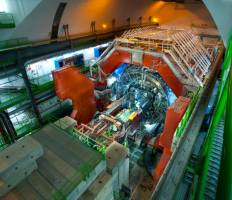
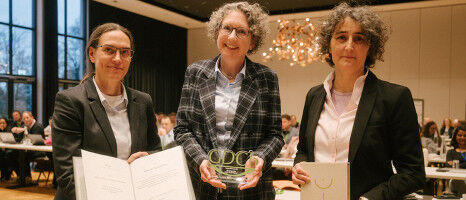
New findings published in ''Nature' on the formation of matter / Experiments provide information on the beginnings of the universe The building blocks of matter in our universe were formed in the first 10 microseconds of its existence, according to the currently accepted scientific picture. After the Big Bang about 13.7 billion years ago, matter consisted mainly of quarks and gluons, two types of elementary particles whose interactions are governed by quantum chromodynamics (QCD), the theory of strong interaction.
Life Sciences - 11.09.2018
Precursors of genes constantly emerge
As most of us have learned at school, organisms evolve gradually due to the accumulation of many small genetic changes known as point mutations. Over millions of years, these mutations occur in the duplicated copies of established genes, occasionally contributing useful properties of their own. For decades it was considered inconceivable that completely novel genes could emerge spontaneously.
Life Sciences - Health - 10.09.2018

New researchers join the Cells-in-Motion Cluster of Excellence at the University of Münster: this September, Dr. Noelia Alonso Gonzalez, a biologist, and Dr. Maria Bohnert, who studied molecular medicine, have started working as junior research group leaders. The researchers previously worked in Israel and the USA, among other countries, and now have the opportunity in Münster to build up their own research groups.
Physics - Mathematics - 10.09.2018

Something everyone learns in Physics lessons at school is that light is refracted and reflected at the interface between air and water. The reason for this is the different refractive indices which the two mediums have - an optical property which is characteristic of each material. There are also materials with so-called negative refraction indices.
Chemistry - Physics - 07.08.2018
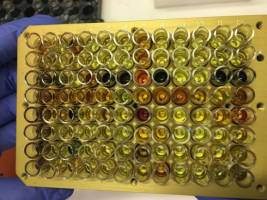
A team of researchers led by Prof. Frank Glorius and Michael Teders from the University of Münster and by Prof. Dirk Guldi from the University of Erlangen-Nuremberg have presented a new chemical reaction path which may prove to be of interest both for research and for the production of active ingredients in medicines.
Mathematics - Physics - 06.08.2018
"No one can be this lucky": Mathematician Prof. Raimar Wulkenhaar talks about solving a seemingly unsolvable equation
After ten years, Prof. Raimar Wulkenhaar from the University of Münster's Mathematical Institute and his colleague Dr. Erik Panzer from the University of Oxford have solved a mathematical equation which was considered to be unsolvable. The equation is to be used to find answers to questions posed by elementary particle physics.
Life Sciences - Chemistry - 05.02.2018
One phenomenon that fascinated Charles Darwin and many other researchers since, is the emergence of huge, complex insect societies. Even more exciting is that the societies of termites and ants evolved independently from each other. Although unrelated, termites and ants are very similar: They both have a so-called "eusocial" way of living.
Life Sciences - Chemistry - 02.02.2018
Key enzyme in citrate cycle also functions "backwards": Study published in "Science" journal disproves conventional wisdom: citrate synthase can also cleave citrate and not only build it up
The citrate cycle: most people will probably remember this metabolic pathway from biology lessons at school. It provides numerous organisms with energy by breaking down organic substances, thereby enabling them to live. Organisms ranging all the way from bacteria to humans use this pathway, consuming oxygen in the process.
Life Sciences - Administration - 26.01.2018

Some animals are naturally capable of something that remains merely an aspiration for humans - restoring lost body parts. In order to understand the mechanisms behind regenerative programs, researchers are studying such animals and have observed two types of healing processes. Some wounds, for example a scratch in the skin, resolve by wound healing.
Physics - Chemistry - 29.12.2017
"Failure is not an option": A lab visit to Prof. Friedemann Kiefer
Prof. Kiefer, what scientific topic are you working on right now? My group is investigating how lymphatic vessels form and how they are preserved in a functional state. During development, the lymphatic vessel system adopts a characteristic structure and we would like to understand, which molecular mechanisms are responsible for the formation of the prototypic shape of this vessel tree.
Life Sciences - Philosophy - 27.12.2017
Behind the scenes: journalists visit animal testing lab: "An unusual step": press event to launch the "Principles on the Ethical Treatment of Animals
The white mouse has been anaesthetized. Its little legs have been affixed to a heating plate by means of adhesive strips, and a large amount of gel has been spread over its clean-shaven breast. An ultrasound probe is positioned overhead, and Richard Holtmeier, a member of the team at the European Institute for Molecular Imaging (EIMI) at the University of Münster is using this to study how the mouse copes with a plastic catheter which has been inserted into its carotid artery.
Life Sciences - Physics - 19.12.2017

When an embryo develops, single cells acquire specific fates that allow them to perform specific tasks in the adult organism. The primordial germ cells are formed very early in embryonic development and migrate within the embryo to the developing testis or the ovary, where they give rise to sperm and egg cells.
Life Sciences - Physics - 02.11.2017

Researchers at the universities of Münster, Exeter and Oxford have developed a miniature "abacus" which can be used for calculating with light signals. With it they are paving the way to the development of new types of computer in which, as in the human brain, the computing and storage functions are combined in one element - in contrast to conventional computers, in which the two are separated in line with the so-called Von Neumann Principle.
Life Sciences - Health - 01.09.2017
New method of analysing lymphoedema: Münster researchers develop a new diagnostic imaging technique for lymphoedema
When researchers and physicians analyse tissue, for example in order to investigate any pathological changes, they often look at the tissue samples under the light microscope. However, producing meaningful images is not always easy. Researchers at the Cells-in-Motion Cluster of Excellence at the University of Münster and at the Max Planck Institute for Molecular Biomedicine in Münster have now developed a new method which, in the case of lymphoedema, can create digital 3D images of blood vessels and lymphatic vessels of entire tissue biopsies.
Life Sciences - 13.07.2017

For plants, seed dormancy has a particular importance. It ensures that a seed does not germinate outside season - for example during warm weather in winter - but only when the environmental conditions enable the seedlings to survive.
Astronomy & Space - 13.06.2017

Jupiter is not only the largest planet of the Solar System, but it is also the oldest, say researchers from the University of Münster. They, for the first time, determined a precise age of Jupiter, which was previously only approximately known. One problem has always been that there are no samples from Jupiter and, therefore, that no direct measurements were possible.
Life Sciences - Health - 30.05.2017

With their long processes - the axons and dendrites - nerve cells connect with each other and thus pass on signals. These connections can degenerate - not only in the case of diseases of the nervous system, but also when an organism develops normally. But what are the mechanisms behind this' Researchers at the Cells-in-Motion Cluster of Excellence have now discovered a physiological process which plays an important role in the degeneration of neuron cell processes.


