





news
Max Plank Society
Results 401 - 420 of 484.
Astronomy & Space - Physics - 23.11.2022

International team observes the innermost structure of the jet of 3C 273 At the core of almost every galaxy is a supermassive black hole. But there are many different types. Quasars, for example, are one of the brightest and most active varieties of galactic centers. An international group, including researchers from the Max Planck Institute for Radio Astronomy in Bonn, Germany, presents new observations of the first quasar ever identified.
Life Sciences - Health - 22.11.2022
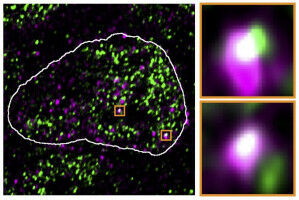
Ancient dormant sequences in the genome impact embryonic development in unexpected ways The mammalian genome contains retroviral sequences that are in an undead but mostly "harmless" state. An international research team recently discovered how some of these retroviral gene fragments affect embryonic cells if they are unleashed.
Life Sciences - Linguistics & Literature - 21.11.2022

A global database helps explore the complex history of our genes and languages Does the history of our languages match the history of our genes? Charles Darwin thought yes, others said no. An interdisciplinary team of researchers from the Max Planck Institute for Evolutionary Anthropology, the University of Zurich and Harvard University has put together GeLaTo, a global database linking linguistic and genetic data.
Politics - 07.11.2022

New systematic review in Nature Human Behaviour summarizes studies conducted worldwide One of the most contentious questions of our time is whether the rapid global uptake of digital media is contributing to a decline in democracy. While discussions on the risks of social media have recently received a great deal of media coverage, tech companies argue that findings are not conclusive.
Astronomy & Space - 04.11.2022
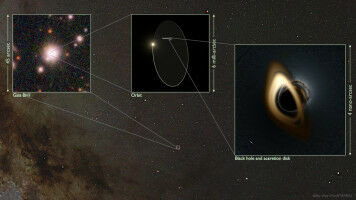
The finding promises numerous similar discoveries Using data from ESA-s Gaia astrometry mission, astronomers have identified the closest known black hole, less than 1600 light-years away from Earth, and determined its mass. The black hole is orbiting a star similar to our Sun, and was identified by tracking the star that the black hole is orbiting.
Life Sciences - 27.10.2022

The behavioral strategy allows for mistakes and thus promotes cooperation Understanding mutual cooperation is a key element in understanding how people work together. Whether it is friends doing favors for each other, animals exchanging food or aid, or nations coordinating policies, these are all essentially cooperative interactions.
Life Sciences - Psychology - 20.10.2022

A large-scale gene study identifies series of DNA variants linked to dyslexia An international team of scientists, including researchers at the University of Edinburgh and the Max Planck Institute for Psycholinguistics in Nijmegen (Netherlands), has for the first time pinpointed a large number of genes that are reliably associated with dyslexia.
Astronomy & Space - 20.10.2022
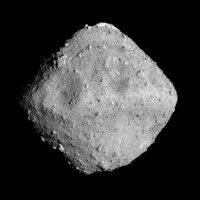
Iron isotopes in samples from asteroid Ryugu suggest its origin to lie beyond the orbits of Jupiter and Saturn The asteroid Ryugu likely formed at the outer edge of the Solar System beyond the orbits of Jupiter and Saturn, as high-precision measurements that determine the ratio of iron isotopes in rock samples from Ryugu suggest.
Life Sciences - Social Sciences - 19.10.2022

Ancient genomes of thirteen Neandertals provide a rare snapshot of their community and social organization For the first time, an international team led by researchers from the Max Planck Institute for Evolutionary Anthropology have managed to sequence multiple individuals from a remote Neandertal community in Siberia.
Environment - Life Sciences - 18.10.2022

Chicks are intimidated by eyespots that appear to gaze at them, providing an explanation for why eyespots are often symmetrical The eyespots of many prey animals deter predators from attacking, like those of the peacock butterfly. In a new study, researchers from the Max Planck Institute for Chemical Ecology and the University of Newcastle show that the configuration of eyespots have an impact on the prey's survival.
Psychology - Environment - 17.10.2022

Study investigates the influence of birdsong on mood, paranoia, and cognition When you next hear cheerful twittering of birds, you should stop and listen. Researchers from the Max Planck Institute for Human Development and the Universitätsklinikum Hamburg-Eppendorf have shown that birdsong reduces anxiety and irrational thoughts.
Health - 17.10.2022
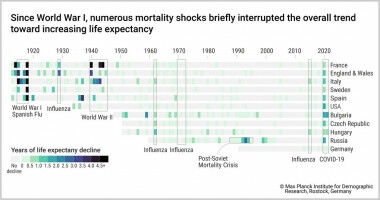
Shift in deaths from the very old to people in middle age Globally, life expectancy did not recover last year after the mortality shock due to the 2020 pandemic. At the same time, differences between countries are widening. A historical comparison of data, however, offers hope for rapid improvement.
Environment - Psychology - 13.10.2022

Study examines influence of birdsong on mood, paranoia and cognition If you hear chirpy birdsong coming soon, you should stop and listen. Because birdsong has been shown to alleviate anxiety and irrational thoughts. This is what researchers at the Max Planck Institute for Human Development and the University Medical Center Hamburg-Eppendorf have discovered.
Materials Science - Computer Science - 11.10.2022

In a pilot project, machine learning is helping to develop materials for hydrogen storage, for example. Artificial intelligence is opening up new possibilities in the development of new materials. Particularly in the search for materials for special applications such as high-entropy alloys, which contain several components in roughly equal proportions, machine learning could support research.
Life Sciences - Environment - 10.10.2022
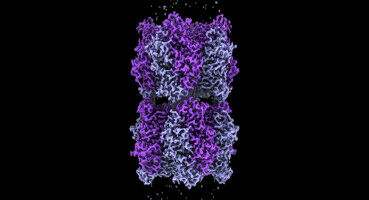
Resurrecting billon-year-old enzymes reveals how photosynthesis adapted to the rise of oxygen The central biocatalyst in Photosynthesis, Rubisco, is the most abundant enzyme on earth. By reconstructing billion-year-old enzymes, a team of Max Planck Researchers has deciphered one of the key adaptations of early photosynthesis.
Life Sciences - Health - 28.09.2022

First-of-its-kind study identifies physiological changes in the transition to siblinghood In any family, the birth of a child is a transformative event, often greeted with positive feelings from parents-and mixed feelings from siblings. The arrival of a new brother or sister, and the loss of parental attention that comes with it, is stressful for any first-born child.
Music - Health - 28.09.2022
Wind music causes less transmission than singing
Playing wind instruments spreads more viruses than breathing, but less than speaking or singing A relatively large number of viruses can emerge from the clarinet. It releases considerably more aerosols, which can contain pathogens such as Sars-CoV-2, compared to other instruments such as the flute. However, the risk of transmission from an infected person playing a wind instrument is generally much lower than for people who sing or speak, provided that one spends the same amount of time in their vicinity.
Life Sciences - Health - 22.09.2022
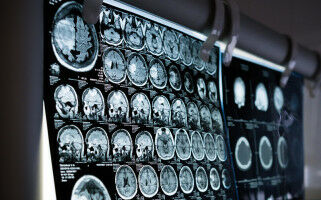
Electronic comparison of MRI images opens up new possibilities for early detection of diseases The biological age of a person can be accurately determined from brain images using the latest AI technology, so-called artificial neural networks. Until now, however, it was unclear which features these networks used to infer age.
Astronomy & Space - Physics - 22.09.2022

Researchers discover a hot spot near the Sagittarius A* black hole with the Alma radio telescope. There is a black hole in the center of our Milky Way. In the immediate vicinity of this mass monster called Sagittarius A*, things are turbulent. Now, an international group led by Maciek Wielgus of the Max Planck Institute for Radio Astronomy in Bonn has discovered an object that orbits the black hole on a very narrow path in only about 70 minutes.
Astronomy & Space - Physics - 22.09.2022

Researchers discover a hot spot near the black hole Sagittarius A* with the radio telescope ALMA There is a black hole in the centre of our Milky Way. In the immediate vicinity of this mass monster called Sagittarius A*, things are turbulent. Now an international group led by Maciek Wielgus from the Max Planck Institute for Radio Astronomy in Bonn has discovered an object that orbits the black hole on a very narrow path in only about 70 minutes.


