










news
Max Plank Society
Results 381 - 400 of 484.
Health - Life Sciences - 27.01.2023

Researchers find serotonin transporter in the brain increased Scientists led by Julia Sacher from Max Planck Institute for Human Cognitive and Brain Sciences and Osama Sabri from the Leipzig University Hospital have discovered in an elaborate patient study that the transport of the neurotransmitter serotonin in the brain increases in women with premenstrual dysphoric disorder (PMDD) shortly before menstruation.
Life Sciences - Environment - 26.01.2023

A study reveals how cooperative hunting between dolphins and fishers can benefit both species-and why this behavior faces extinction In the city of Laguna on Brazil's southern coast, dolphins and humans have been helping each other hunt for over a century. In the practice, traditional net-casting fishers wait in the lagoon for wild bottlenose dolphins to appear.
Life Sciences - 18.01.2023

Sequestration of plant toxins by monarch butterflies leads to reduced warning signal conspicuousness An international research team including scientists from the Max Planck Institute for Chemical Ecology in Jena has discovered that the striking orange and black wings of monarch butterflies not only send the message to predators that these butterflies are highly toxic, but that the storage of toxins and development of the colourful wings come at a cost to the butterfly's body.
Life Sciences - History & Archeology - 16.01.2023

New archaeogenetic data allow exciting insights into the social order of the Aegean Bronze Age An international team of researchers from the Max Planck Institute for Evolutionary Anthropology in Leipzig, Germany, achieves completely new insights into Bronze Age marriage rules and family structures in Greece.
Life Sciences - 16.01.2023
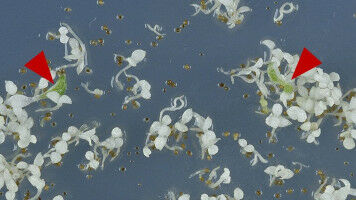
Under cold conditions, not only the mother plant but also the father plant can pass on its chloroplasts to the offspring Scientists at the Max Planck Institute of Molecular Plant Physiology in Potsdam analyzed for the first time the inheritance of chloroplasts under a wide range of environmental conditions.
Health - Life Sciences - 11.01.2023
AI detects rare forms of dementia
New findings enable early diagnosis and individual therapy Researchers at Max Planck Institute for Human Cognitive and Brain Sciences and University of Leipzig Medical Center have used new artificial intelligence (AI) and machine learning techniques to detect rare forms of dementia on MRI images. In their study, the researchers show that AI can automatically recognize patterns in patient imaging data that are specific to rare forms of dementia, enabling early diagnosis.
Life Sciences - Health - 06.01.2023
New insight into how harmless gut bacteria avoid triggering inflammation Researchers from the Max Planck Institute for Biology Tübingen address the long-standing question of how benign gut microbes evade the immune system. In doing so, they also reshape our understanding of how immune receptors interact with the bacterial motility protein flagellin.
Environment - Earth Sciences - 26.12.2022

Brown algae could remove up to 0.55 gigatons of carbon dioxide from the atmosphere every year Brown algae take up large amounts of carbon dioxide from the air and release parts of the carbon contained therein back into the environment in mucous form. This mucus is hard to break down for other ocean inhabitants, thus the carbon is removed from the atmosphere for a long time, as researchers at the Max Planck Institute for Marine Microbiology in Bremen now show.
Health - 20.12.2022

A comprehensive analysis on particle exhalation in adults and children Children exhale significantly fewer potentially infectious particles than adults - at least this is true for the small respiratory droplets that are predominantly produced in the lungs. This is a key finding of a study conducted by the Max Planck Institutes for Dynamics and Self-Organization and for Chemistry in collaboration with the University Göttingen Medical Center.
Physics - Astronomy & Space - 12.12.2022

In future it will be possible to incorporate data from deep space telescopes into the underlying atomic models with a high degree of reliability Very hot gas, as found in the sun's corona or in close proximity to black holes, emits very intense x-rays. It reveals the locally prevailing physical conditions, such as temperature and density.
Agronomy & Food Science - Life Sciences - 08.12.2022

How intensive agriculture turned a wild plant into a pervasive weed Agriculture is driving rapid evolutionary change, not just on farms, but also in wild species in the surroundings. New research shows how the rise of modern agriculture has turned a North American native plant, common waterhemp, into a problematic agricultural weed by mutations in hundreds of genes related to drought tolerance, rapid growth, and resistance to herbicides.
Health - Life Sciences - 07.12.2022

Absence of evidence for neurotropism and neuroinvasion of several SARS-CoV-2 variants including Omicron A common symptom of COVID-19 is a partial or complete loss of smell. The virus infects sustentacular cells in the olfactory epithelium and is thought to impair thereby the activity of the sensory neurons in this epithelium.
Social Sciences - 07.12.2022

Researchers showed participants videos of human, dog, and macaque pairs to determine how well humans assess social interactions As a species, humans are constantly interpreting signals to assess social situations and make predictions about what could happen next. Being able to tell if someone else, whether human or animal, is happy with us, about to get aggressive, or even paying attention, can have major evolutionary advantages.
Life Sciences - Environment - 05.12.2022

Miniature device enables scientist to record nerve cell activity in all cortical layers in lit environments Researchers of the Max Planck Institute for Neurobiology of Behavior have developed a miniature microscope small enough to be carried on the head of freely a moving mouse and capable of measuring neuronal activity in all cortical layers, even the deepest ones.
Environment - 02.12.2022

In the futuere the metal could store energy from renewable sources, for example for transportation Energy from sun or wind is weather-dependent and lacks an efficient way to store and transport it. Scientists from the Max-Planck-Institut für Eisenforschung and TU Eindhoven are investigating iron as a possible energy carrier.
Health - 29.11.2022
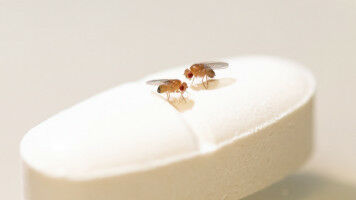
Studies in fruit flies reveal how the sex determines the responses to the anti-ageing drug rapamycin The effect of medicines on women and men can differ significantly. This also applies to the currently most promising anti-ageing drug rapamycin, as researchers from the Max Planck Institute for Biology of Ageing in Cologne and University College London have now shown.
Astronomy & Space - Physics - 28.11.2022

International team observes innermost structure of quasar 3C 273 At the core of almost every galaxy is a supermassive black hole. But there are many different types. Quasars, for example, are one of the brightest and most active types of galaxy centres. An international group, including researchers from the Max Planck Institute for Radio Astronomy in Bonn, presents new observations of the first quasar ever identified.
Environment - Life Sciences - 25.11.2022

By dispersing seeds, animals can rapidly reestablish plant diversity in degraded forests As UN climate talks close in Egypt and biodiversity talks begin in Montreal, attention is on forest restoration as a solution to the twin evils roiling our planet. Forests soak up atmospheric carbon dioxide and simultaneously create habitat for organisms.
Environment - 24.11.2022

Changes in the behavior of birds persist well after the fireworks end Scientists at the Max Planck Institute of Animal Behavior in Konstanz, Germany, and the Netherlands Institute of Ecology GPS tracked Arctic migratory geese in Germany, Denmark, and the Netherlands over the New Year period to examine the long-term impact of fireworks.
Astronomy & Space - Physics - 24.11.2022

Researchers discover an important clue as to what mechanism drives the solar wind Using observational data from the U.S. weather satellites GOES, a team of researchers led by the Max Planck Institute for Solar System Research (MPS) in Germany has taken an important step toward unlocking one of the Sun-s most persevering secrets: How does our star launch the particles constituting the solar wind into space? The data provide a unique view of a key region in the solar corona to which researchers have had little access so far.


