









news
Max Plank Society
Results 361 - 380 of 484.
Agronomy & Food Science - 22.03.2023

Why we can't keep our hands off candy bars and co. Chocolate bars, potato chips and chips - why can't we just leave them to the left in the supermarket? Researchers at the Max Planck Institute for Metabolic Research in Cologne, Germany, in collaboration with Yale University, have now shown that foods with a high fat and sugar content change our brain: If we regularly eat even small amounts of them, the brain learns to want to continue consuming precisely these foods.
Environment - Life Sciences - 14.03.2023

High levels of ozone destroy the chemical mating signal of the insects and may thus contribute to global insect decline A research team at the Max Planck Institute for Chemical Ecology in Jena, Germany, demonstrates that increased levels of ozone resulting from anthropogenic air pollution can degrade insect sex pheromones, which are crucial mating signals, and thus prevent successful reproduction.
Environment - Life Sciences - 09.03.2023

The plumes from hydrothermal vents provide an ecological link between the open ocean and the seafloor Disconnected from the energy of the sun, the permanently ice-covered Arctic deep sea receives miniscule amounts of organic matter that sustains life. Bacteria which can harvest the energy released from submarine hydrothermal sources could thus have an advantage.
Life Sciences - Health - 09.03.2023

Pushing the MINFLUX technique to higher spatial and temporal precision allows protein dynamics to be observed under physiological conditions Scientists led by Nobel Laureate Stefan Hell at the Max Planck Institute for Medical Research in Heidelberg have developed a super-resolution microscope with a spatio-temporal precision of one nanometer per millisecond.
Earth Sciences - Physics - 01.03.2023

Convection of salty water creates hexagonal patterns The honeycomb-like patterns that often occur in salt deserts, including Death Valley and Chile, look like something from another world. A team that included researchers from the Max Planck Institute for Dynamics and Self-Organization in Göttingen, Germany, explain the origin of the mysterious patterns for the first time.
Environment - Life Sciences - 01.03.2023

Large-scale genomic analysis documents the migrations of Ice Age hunter-gatherers over a period of 30,000 years With the largest dataset of prehistoric European hunter-gatherer genomes ever generated, an international research team has rewritten the genetic history of our ancestors. This study was led by researchers from the University of Tübingen and the Senckenberg Center for Human Evolution and Palaeoenvironment, Peking University and the Max Planck Institute for Evolutionary Anthropology in Leipzig, in collaboration with 125 international scientists.
Astronomy & Space - Physics - 24.02.2023

James Webb Space Telescope unveils star formation in gas and dust networks of other galaxies The first images of the James Webb Space Telescope are helping to uncover the missing pieces of the star formation puzzle in nearby galaxies. Data from the powerful infrared telescope are revealing previously hidden regions where new stars are born. These images provide the first clues as to how networks of gas and dust become the site of active star formation.
Astronomy & Space - 23.02.2023

Large-scale observing campaign provides new insights into black-hole pair at the center of active galaxy OJ 287. A long-term study using data from four telescopes ranging from the radio to the high energy frequency range penetrates to the core of the much-discussed active galaxy OJ 287, revealing more details about what is happening inside it.
Environment - Life Sciences - 23.02.2023

Tolerance to strong winds and storm avoidance strategy differs among seabird species Hurricanes are becoming more intense due to the climate crisis. Therefore, researchers from the Max Planck Institute for Animal Behavior in Germany and Swansea University in the United Kingdom have studied the wind speeds that different seabird species can withstand.
Astronomy & Space - 23.02.2023

Large-scale observational campaign provides new insights into an assumed black hole binary at the centre of the active galaxy OJ 287 A long-term study with data from four telescopes, ranging from radio to high energy frequencies, has penetrated to the core of the much-discussed active galaxy OJ 287, revealing further details about its interior.
Life Sciences - 23.02.2023
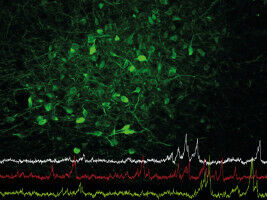
Priorities change depending on hunger level To eat or to mate-that is the question. And the answer is: moderately hungry mice choose to mate. Researchers from the Max Planck Institute for Metabolism Research and the Cluster of Excellence for Aging Research CECAD at the University of Cologne show that hungry mice prioritize interacting with members of the opposite sex over eating and drinking when their brains are stimulated with leptin, an appetite-suppressing hormone.
Environment - 22.02.2023

Daurian redstarts move closer to humans to protect their nests from brood parasitism Daurian redstarts move their nesting sites closer to or even inside human settlements when cuckoos are around. In doing so, they actively protect their nest against brood parasitism, as cuckoos avoid human settlements.
Life Sciences - Environment - 21.02.2023

When metabolizing spruce bark, the insect's fungal partners release volatile compounds that bark beetles recognize through specialized olfactory sensory neurons In a new study, an international research team led by the researchers from the Max Planck Institute for Chemical Ecology demonstrates that the European spruce bark beetle Ips typographus uses volatile fungal metabolites of plant defense substances as important chemical signals in their attack on spruce trees.
Astronomy & Space - Physics - 17.02.2023

The James Webb Space Telescope Reveals Star Formation in Gas and Dust Networks of Other Galaxies Even the first images from the James Webb Space Telescope are helping to clarify questions about how stars form in relatively nearby galaxies. Data from the powerful infrared telescope are revealing to scientists previously hidden regions where new stars are born.
Health - 13.02.2023

Study on the effectiveness of restrictions takes citizens' behavioral changes into account After about three years of the Covid-19 pandemic, policy makers and citizens alike are still struggling to find the best way to deal with the virus. Measures need to be effective, but also socially acceptable.
Physics - Life Sciences - 09.02.2023

Scientists assemble matter in 3D using sound waves for 3D printing Scientists from the Max Planck Institute for Medical Research and the Heidelberg University have created a new technology to assemble matter in 3D. Their concept uses multiple acoustic holograms to generate pressure fields with which solid particles, gel beads and even biological cells can be printed.
Life Sciences - Health - 08.02.2023

Malfunction of cellular condensates is a disease mechanism relevant for congenital malformations, common diseases, and cancer Most proteins localize to distinct protein-rich droplets in cells, also known as "cellular condensates". Such proteins contain sequence features that function as address labels, telling the protein which condensate to move into.
Politics - Media - 08.02.2023

Study reveals how people resolve dilemmas in online content moderation Online content moderation is a moral minefield, especially when freedom of expression clashes with preventing harm caused by misinformation. A study by a team of researchers from the Max Planck Institute for Human Development, University of Exeter, Vrije Universiteit Amsterdam, and University of Bristol examined how the public would deal with such moral dilemmas.
Astronomy & Space - Environment - 03.02.2023

Astronomers find rare Earth-mass rocky planet suitable for the search for signs of life A newly discovered exoplanet could be worth searching for signs of life. Analyses by a team led by astronomer Diana Kossakowski of the Max Planck Institute for Astronomy describe a planet that orbits its home star, the red dwarf Wolf 1069, in the habitable zone.
Materials Science - 31.01.2023

Stable boards can be made from a waste product of the wood industry without glue Tree bark may be suitable as a similarly versatile material as wood. A research team at the Max Planck Institute of Colloids and Interfaces in Potsdam has pressed tree bark into boards that have similar mechanical properties to particleboard, but do not contain any adhesive.


