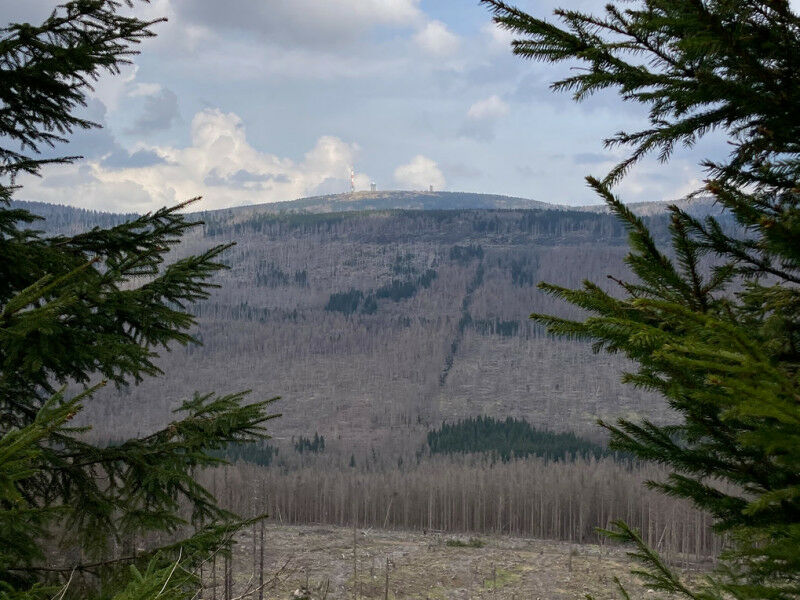
 Spruce monoculture on the Brocken in the Harz mountain range in May 2022. The trees in this area are increasingly weakened by high temperatures and extended periods of drought.
When metabolizing spruce bark, the insect's fungal partners release volatile compounds that bark beetles recognize through specialized olfactory sensory neurons. Spruce monoculture on the Brocken in the Harz mountain range in May 2022. The trees in this area are increasingly weakened by high temperatures and extended periods of drought. Angela Overmeyer - In a new study, an international research team led by the researchers from the Max Planck Institute for Chemical Ecology demonstrates that the European spruce bark beetle Ips typographus uses volatile fungal metabolites of plant defense substances as important chemical signals in their attack on spruce trees. The researchers also show that the insects have olfactory sensory neurons specialized for detecting these volatile compounds. The fungal metabolites likely provide important clues to the beetles about the presence of beneficial fungi, the defense status of the trees, and the population density of their conspecifics. The mass outbreaks of bark beetles observed in recent years have caused shocking amounts of forest damage throughout Germany.
UM DIESEN ARTIKEL ZU LESEN, ERSTELLEN SIE IHR KONTO
Und verlängern Sie Ihre Lektüre, kostenlos und unverbindlich.
Ihre Vorteile
- Zugang zu allen Inhalten
- Erhalten Sie Newsmails für Neuigkeiten und Jobs
- Anzeigen veröffentlichen