












news
Max Plank Society
Results 261 - 280 of 486.
Health - 08.02.2024
More heart attacks in rural areas
Core problem of urban-rural divide is not a lack of emergency care for heart attacks, but poorer disease prevention in rural areas In Germany, more people aged 65 and over die from heart attacks in rural areas than in cities. Contrary to popular belief, this is probably not due to poorer emergency medical care, but because more people suffer heart attacks in rural areas. However, the protection of patients' personal data makes it difficult to announce specific recommendations for action in Germany.
Forensic Science - 08.02.2024
What Might Reduce Crime Does Not Reduce Fear of Crime
Criminologists use Virtual Reality to assess the impact of street lighting and watching-eyes interventions In a virtual reality study, a team of researchers - including criminologists from the Max Planck Institute for the Study of Crime, Security and Law - find environmental crime reduction interventions may not be effective or may even be counterproductive when it comes to reducing fear of crime.
History & Archeology - Life Sciences - 31.01.2024

The arrival of Homo sapiens in cold northern latitudes took place several thousand years before Neanderthals disappeared in southwest Europe An international research team reports the discovery of Homo sapiens fossils from the cave site Ilsenhöhle in Ranis, Germany. Directly dated to approximately 45,000 years ago, these fossils are associated with elongated stone points partly shaped on both sides (known as partial bifacial blade points), which are characteristic of the Lincombian-Ranisian-Jerzmanowician (LRJ).
Life Sciences - Health - 31.01.2024
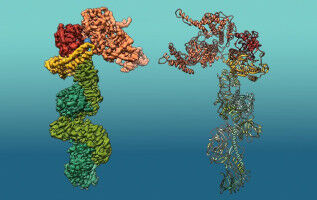
Max Planck researchers from Dortmund reveal the first-ever detailed structure of the bacterial toxin Mcf1 During infection insect-killing bacteria typically release toxins to slay their hosts. The bacterium Photorhabdus luminescens , for example, pumps insect larvae full of the lethal 'Makes caterpillars floppy 1' (Mcf1) toxin, leading them to first become droopy and then dead.
Environment - Chemistry - 30.01.2024

An economical process with green hydrogen can be used to extract CO2-free iron from the red mud generated in aluminium production The production of aluminium generates around 180 million tonnes of toxic red mud every year. Scientists at the Max-Planck-Institut für Eisenforschung, a centre for iron research, have now shown how green steel can be produced from aluminium production waste in a relatively simple way.
Astronomy & Space - 29.01.2024

Black hole at the centre of a galaxy in the early universe received less mass influx than expected With the upgraded GRAVITY-instrument at the Very Large Telescope Interferometer of the European Southern Observatory, a team of astronomers led by the Max Planck Institute for Extraterrestrial Physics has determined the mass of a Black Hole in a galaxy only 2 billion years after the Big Bang.
Astronomy & Space - Physics - 18.01.2024

Data from the MeerKAT radio telescope reveal an object at the boundary between a black hole and a neutron star When astronomers cannot explain something directly, it often becomes really exciting. An international team led by researchers from the Max Planck Institute for Radio Astronomy and with the participation of the Max Planck Institute for Gravitational Physics has now discovered a mysterious tandem that has never been observed before: a system consisting of a neutron star and an object that, at first glance, should not even exist.
Life Sciences - Health - 18.01.2024
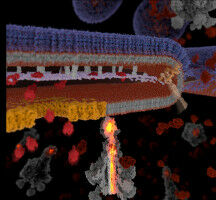
"Soldier" bacteria filled with toxins sacrifice themselves for the benefit of their conspecifics, giving them pathogenic properties For their invasion pathogenic bacteria target the host's defense mechanisms and vital cell functions with toxins. Before these deadly substances can attack host cells, bacteria must first export them from their production site - the cytoplasm - using dedicated secretion systems.
Environment - Earth Sciences - 16.01.2024

Microplastic fibers are settling substantially slower than spherical particles in the atmosphere How far microplastics travel in the atmosphere depends crucially on particle shape, according to a recent study by scientists at the University of Vienna and the Max Planck Institute for Dynamics and Self-Organisation in Göttingen: While spherical particles settle quickly, microplastic fibers stay in th eatmosphere much longer.
Astronomy & Space - 15.01.2024
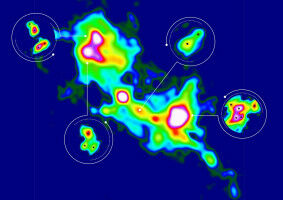
ALMA Radio observatory observes for the first time how double, triple, quadruple and quintuple star systems form simultaneously in a molecular cloud For humans, the chance of giving birth to multiples is less than two per cent. The situation is different with stars, especially with particularly heavy stars.
Health - Life Sciences - 12.01.2024
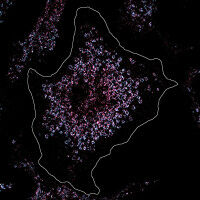
Researchers were able to trace a form of the autoimmune disease lupus back to a single mutation Sometimes a single mutation in our genetic make-up is enough to cause disease. This is also the case with the autoimmune disease lupus. Lupus causes severe inflammation throughout the body and can have a serious impact on the lives of those affected.
Life Sciences - Pharmacology - 12.01.2024
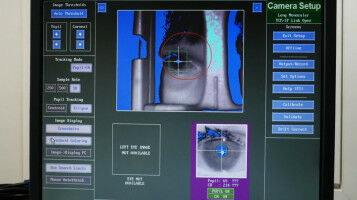
Lack of activation of the locus coeruleus in the brain inhibits the inner drive Researchers at the Max Planck Institute of Psychiatry in Munich, Germany, have discovered that the dilation of the pupil in response to an expected reward depends on whether a person can feel pleasure. This indicates that insufficient activity of the locus coeruleus in the brain is largely responsible for the lack of drive in people with depression.
Life Sciences - 08.01.2024

Learning a second language strengthens neural connections in the language network in the left hemisphere of the brain Scientists at the Max Planck Institute for Human Cognitive and Brain Sciences in Leipzig have unearthed fascinating evidence that the brain undergoes important changes in wiring when we embark on the journey of learning a new language in adulthood.
Physics - Astronomy & Space - 21.12.2023

International research team models the different signatures of a kilonova explosion simultaneously for the first time Neutron stars are the end products of massive stars and gather together a large part of the original stellar mass in a super-dense star with a diameter of only around ten kilometres.
Life Sciences - History & Archeology - 20.12.2023

Scientists have developed a new computational tool to detect up to second to third degree cousins using ancient genomes If two persons are biologically related, they share long stretches of DNA that they co-inherited from their recent common ancestor. These almost identically shared stretches of genomes are called IBD ("Identity by Descent") segments.
Life Sciences - 20.12.2023

Three modules forming a new-to-nature CO2 fixation cycle successfully implemented in E.coli Synthetic biology offers the opportunity to build biochemical pathways for the capture and conversion of carbon dioxide (CO2). Researchers at the Max-Planck-Institute for Terrestrial Microbiology have developed a synthetic biochemical cycle that directly converts CO2 into the central building block Acetyl-CoA.
Health - 14.12.2023

The pathogens want to benefit as long as possible from the food supply that life in the vector mosquitoes offers them Instead of being transmitted to humans as quickly as possible, malaria parasites develop in mosquitoes for up to twelve days and even run the risk of not being transmitted. Mathematical modelling allowed researchers from the Max Planck Institute for Infection Biology in Berlin to study the evolution of malaria parasites over hundreds of generations.
Life Sciences - Health - 12.12.2023

Researchers have identified the steps for the biosynthesis of the chemotherapeutic agent for cancer therapy Part of modern cancer therapy is the use of toxic chemicals, called chemotherapeutics, that kill the tumor. Unfortunately, these chemicals are often very complex, difficult to obtain and thus expensive.
Health - Life Sciences - 11.12.2023

Most diseases are caused by proteins that have spun out of control. Unfortunately, so far, conventional drugs have been able to stop only a fraction of these troublemakers. A new class of drugs known as Protacs holds great promise in pharmaceutical research. They mark proteins for targeted degradation by the cell's own protein disposal system.
Astronomy & Space - Computer Science - 08.12.2023

Discovery of giant exomoons around the planets Kepler-1625b and Kepler-1708b called into question Just as it can be assumed that the stars in our Milky Way are orbited by planets, moons around these exoplanets should not be uncommon. This makes it all the more difficult to detect them. So far, only two of the more than 5300 known exoplanets have been found to have moons.


