










news
Max Plank Society
Results 121 - 140 of 484.
Astronomy & Space - Physics - 19.03.2025

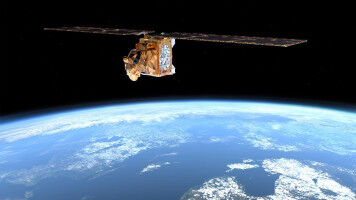
Comprehensive scientific dataset sets standards and provides insights into the depths of the universe - thanks in part to strong German participation First major data release: The European Space Agency has released the first major dataset from the Euclid space telescope, launched in July 2023. A record number of galaxies discovered: After only a few years of operation, Euclid has already found 26 million galaxies.
Earth Sciences - Environment - 12.03.2025

Contrary to previous claims, the ocean absorbs more microplastics from the atmosphere than it releases into it A sink for microplastics: contrary to previous claims, the ocean releases less microplastics into the atmosphere than it absorbs from it. The result of a model calculation: 15 percent of all the microplastics contained in the air are deposited in the oceans.
Health - Life Sciences - 06.03.2025

Did you know that a woman's heartbeat changes in subtle ways during her menstrual cycle? These rhythmic changes, triggered by hormonal fluctuations, offer a unique insight into the complex interactions between the female brain and heart. In a new paper published in Science Advances, Max Planck researchers Jellina Prinsen, Julia Sacher and Arno Villringer explain how these naturally occurring fluctuations could affect stress, mood and long-term cardiovascular and neurological health.
Life Sciences - 05.03.2025

Egg cells need stamina: They are formed in a women-s body before birth and have to be on standby for decades to possibly be fertilized one day. But as they age, they accumulate more and more DNA damage. Until now, it has been unclear why the cell-s repair mechanisms do not fix the damage. Researchers led by Melina Schuh and Ninadini Sharma at the Max Planck Institute (MPI) for Multidisciplinary Sciences have now shown in experiments with mice that aged egg cells repair their DNA less efficiently than young ones, and that repair becomes more error-prone with advancing maternal age.
Astronomy & Space - Physics - 05.03.2025

Neural network registers gravitational wave signal from neutron star collisions early on and shows telescopes where to find the subsequent kilonova explosion in the sky When two neutron stars merge, gravitational waves propagate into space. Shortly after this disturbance of space-time, a glistening explosion follows - a kilonova, in which, as in a cosmic goldsmith's, heavy atoms arise that stars can not form.
Architecture & Buildings - 05.03.2025

In both ancient Roman and modern cities, population size and the wealth of the elites are related The more people live in a city, the greater the wealth of the urban elite and the greater the social inequality. Researchers at the Max Planck Institute for Geoanthropology have identified this correlation in both ancient Roman and modern cities, suggesting that such disparities are inherent to urban environments, regardless of historical period or culture.
Physics - Mathematics - 28.02.2025

Until now, physics has distinguished between fermions and bosons, but now there are indications of a third type of particle At first glance, our world appears to be enormously complex. However, according to the laws of particle physics, it is strictly ordered. According to this, there are only two classes of particles, the matter particles and the force particles.
Physics - Mathematics - 28.02.2025

Until now, physics has differentiated between fermions and bosons, but now there is evidence of a third type of particle At first glance, our world appears to be enormously complex. However, according to the laws of particle physics, it is strictly organised. According to this, there are only two classes of particles, the matter particles and the force particles.
Life Sciences - Environment - 27.02.2025

For the first time, an international collaboration has demonstrated that synthetic carbon assimilation can operate more efficiently in a living system than its natural counterpart. Researchers in Tobias Erb-s lab at the Max Planck Institute for Terrestrial Microbiology engineered a synthetic metabolic pathway into a bacterium and showed in a direct comparison that it can generate significantly more biomass from the one-carbon compound formic acid and CO2 than the natural bacterial strain.
Life Sciences - Computer Science - 27.02.2025

Classical models of collective behavior fail to explain the mechanisms driving desert locust swarms Desert locust swarms affect millions of lives worldwide.
Life Sciences - Health - 27.02.2025

Researchers reveal new insights into the how the matrix layer of HIV-1 becomes mature Researchers from the Max Planck Institute of Biochemistry have discovered the mechanism behind an important step in the life cycle of HIV. Working together with teams at Heidelberg and Yale Universities, they found that the enigmatic -spacer peptide 2-, one of the virus components, plays a key role in converting immature HIV-1 particles into infectious particles.
Environment - Earth Sciences - 26.02.2025

Even after complete deforestation, the average annual precipitation would not change significantly - but its distribution over the year and the region would New evidence suggests that mean annual precipitation in the Amazon region is not going to change significantly even if it were completely deforested.
Innovation - Psychology - 20.02.2025

More than 10,000 respondents from 20 countries reveal their attitudes toward the use of AI in various occupations Fears about the use of artificial intelligence (AI) in the workplace vary substantially across occupations and countries, researchers led by the Max Planck Institute for Human Development have found in a representative study.
Life Sciences - 20.02.2025

A new study by researchers at the Max Planck Institute for Evolutionary Biology sheds fresh light on one of the most debated concepts in biology: evolvability. The work provides the first experimental evidence showing how natural selection can shape genetic systems to enhance future capacity for evolution, challenging traditional perspectives on evolutionary processes.
Life Sciences - 19.02.2025

Great apes, like humans, remember objects better when introduced by a social agent, but develop this skill only in adulthood Researchers from the Max Planck Institute for Evolutionary Anthropology in Leipzig, Germany, examined how social models influence memory in great apes. They presented young and adult apes with videos of either a human hand (a social model) or a mechanical claw (a non-social model) building a tower.
Astronomy & Space - 19.02.2025

Data from the former ROSAT X-ray satellite have revealed a network of 68 galaxy clusters in the nearby universe, stretching over 1.4 billion light-years. A team of scientists has found the largest superstructure ever reliably characterised in the universe. The discovery was made while mapping the nearby universe using galaxy clusters detected by the ROSAT X-ray satellite's survey of the sky.
Environment - Earth Sciences - 19.02.2025

The tiny ice inhabitants darken the glacier surface and can thus accelerate its melting. Tiny algae darken the surface of glaciers and thus accelerate their melting. This is the case, for example, on the Greenland Ice Sheet, which plays an important role in our climate and is already melting increasingly fast due to global warming.
Life Sciences - Health - 17.02.2025

Stress hormones, often prescribed after premature delivery, affect the brain development of the embryo Infections, chemicals, stress - these environmental factors influence the risk of developing psychiatric or neurological disorders, especially if they occur before birth. The biological mechanisms behind this are still not fully understood.
Life Sciences - Health - 12.02.2025

Utrophin increase in muscle cells after transcriptional adaptation normalises cell function in Duchenne muscular dystrophy Duchenne muscular dystrophy is a rare hereditary disease with severe consequences such as muscle atrophy. It is caused by some mutations in the dystrophin gene, which results in disrupted gene expression.
Health - Pharmacology - 06.02.2025

A large proportion of the approximately six million patients in Germany suffering from type 2 diabetes are overweight. The effect of insulin is impaired in these patients. The cause of this insulin resistance has been sought primarily in metabolically active organs for a long time. Researchers at the Max Planck Institute for Heart and Lung Research in Bad Nauheim have now shown that the effects of insulin on the innermost cell layer of blood vessels, the endothelium, are of great importance for insulin resistance in fat tissue and muscle.


