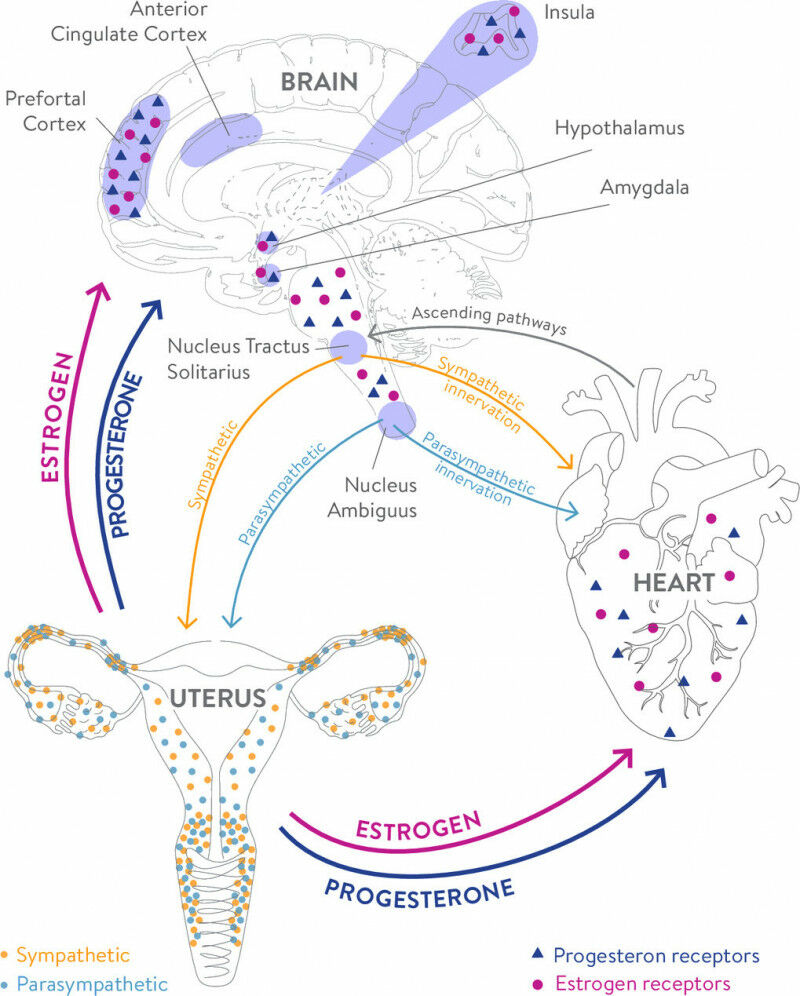
Did you know that a woman’s heartbeat changes in subtle ways during her menstrual cycle? These rhythmic changes, triggered by hormonal fluctuations, offer a unique insight into the complex interactions between the female brain and heart. In a new paper published in Science Advances, Max Planck researchers Jellina Prinsen, Julia Sacher and Arno Villringer explain how these naturally occurring fluctuations could affect stress, mood and long-term cardiovascular and neurological health.
For the more than two billion women worldwide who experience menstrual cycles, these findings could revolutionize clinical approaches to cardiovascular and mental health. -In the past, medical research has focused primarily on male physiology. This has led to critical gaps in our understanding of factors specific to women, such as how the menstrual cycle can impact diagnosis and treatment," says Julia Sacher, research group leader in the Department of Neurology at the Max Planck Institute for Human Cognitive and Brain Sciences and Cognitive Neuroendocrinology at Leipzig University’s Faculty of Medicine.
-For example, it’s important to remember that these physiological fluctuations in a woman’s heart rate can have a significant impact not only on her stress levels or mood, but also on long-term heart and brain health," explains Jellina Prinsen, first author of the study. -Women’s heart physiology is not static, it fluctuates with their natural hormonal rhythms. Such fluctuations in cardiac activity can affect how quickly a woman is diagnosed when something is wrong, such as a cardiac arrhythmia, which is more common in women. These complex cyclical interactions could also play a role in determining the right medication dosage and underscore the need for doctors to consider the menstrual cycle when assessing heart health and prescribing treatments. Ultimately, these findings would pave the way for personalized medicine that adapts to women’s natural hormonal rhythms.
Bridging the knowledge gap
The relevance and importance of Jellina Prinsen’s work was recently recognized with the prestigious Marie Sklodowska-Curie Postdoctoral Fellowship, which will allow her to further expand her efforts. Together with Julia Sacher, she is committed to pushing the boundaries of our knowledge and integrating women-specific factors into studies on cardiovascular and neurological health that are not limited to the phases of the menstrual cycle, but also take into account pregnancy, perimenopause and exogenous hormone use (e.g. contraception or gender reassignment therapy). The work is being carried out at the Leipzig Center for Women’s Health and Gender Medicine at Leipzig University Hospital, the Max Planck Institute for Human Cognitive and Brain Sciences and in collaboration with the KU Leuven (Belgium).