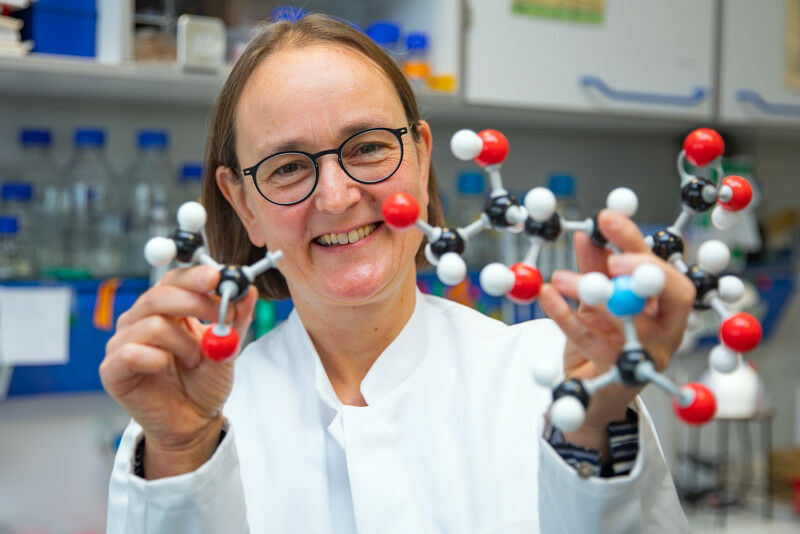
A small appendage can have a big effect: PD Dr. Martina Mühlenhoff with the molecular model of sialic acid and an acetyl group. Copyright: ,,Karin Kaiser / MHH’.
A small appendage can have a big effect: PD Dr. Martina Mühlenhoff with the molecular model of sialic acid and an acetyl group. Copyright: ,,Karin Kaiser / MHH'. DFG research group aims to elucidate the role of sialic acid as a regulator in developmental processes and diseases Sugar compounds from the glycan group play an important role in many biological processes in our body. By chemically combining with proteins and fats and thereby changing them, they regulate, for example, the maturation of the kidneys, the correct interconnection of nerve pathways in the brain or the function of the immune system. A research network of ten teams from Germany and Austria is working on the elucidation of these biochemical processes. The focus is on the group of so-called sialoglycans, which carry a sugar molecule called sialic acid. This plays an important role in many processes in immune defence and embryonic development.
TO READ THIS ARTICLE, CREATE YOUR ACCOUNT
And extend your reading, free of charge and with no commitment.