Researchers from the University of Münster analysed 202 fragments
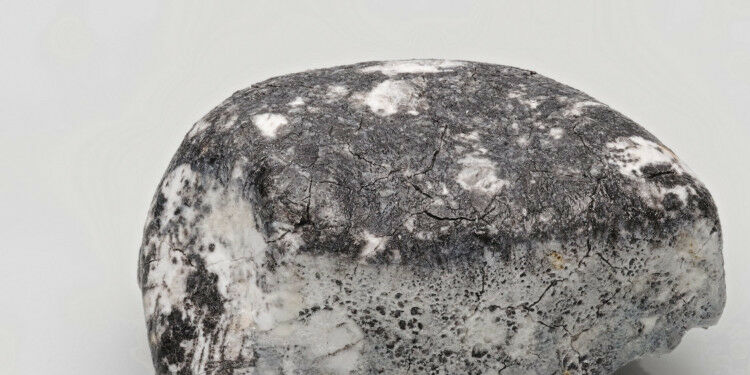
In their publication, the authors report that 202 fragments of the meteorite were found, with a total weight of 1.8 kilograms. The scatter field covered an area of 1.5 by 10 kilometres near the villages of Ribbeck, Berge and Lietzow. Thanks to the unusually quick and successful search, the team was able to begin their investigation just a few days after the crash. However, without realising it at the time, the searchers were presented with a special challenge. "When searching for meteorites, you usually look for black rocks. However, due to their mineralogy and composition, the Ribbeck fragments did not have a consistently dark fusion crust. This is probably why numerous fragments were missed in the first days of the search, until this peculiarity was recognised," explains Addi Bischoff, first author of the publication.
During the analysis, the scientists determined that the "Ribbeck" meteorite belongs to the rather rare meteorite class of aubrites. This class is named after the Aubres meteorite, which fell on France in 1936 and of which there are only twelve cases in the world. Aubrites are rich in magnesium and silicon. The "Ribbeck" meteorite, for its part, occupies a special position within its class, as the rock has an exceptionally high proportion of feldspar - a mineral belonging to the silicate group.
The researchers estimate that the parent body of the "Ribbeck" meteorite is around 4.5 billion years old and originates from the asteroid belt between the orbits of the planets Mars and Jupiter. "The intense brecciation of the rock indicates a turbulent past with devastating impacts on the parent body," explains Markus Patzek. Breccias are debris rocks that were formed by impacts on the parent body and whose debris, i.e. fragments, were solidified again by another impact. Small areas of melting within the fine-grained debris indicate that the "Ribbeck" meteorite underwent at least one subsequent impact process, which took place after the main fragmentation events and breccia formation.
When the meteorite fragments were found, they had an intense odour of hydrogen sulphide - similar to the smell of rotten eggs. Although the individual fragments had only been exposed to the damp environment of snow and subsequent thaw for a few days, chemical reactions between the mineral phases and the moisture took place immediately after the fall, causing the odour and altering the original mineralogy of the rock. Certain mineral phases in the meteorite cannot form under terrestrial conditions and are unstable, i.e. they react with the terrestrial moisture and water and disintegrate.
Original publication
Bischoff, Patzek et al., 2024: Cosmic pears from the Havelland : Ribbeck, the twelfth recorded aubrite fall in history. Meteoritics & Planetary Science; DOI: 10.1111/maps.14245.
The open access provision of the article is made possible by the DEAL project of the University of Münster and Wiley.