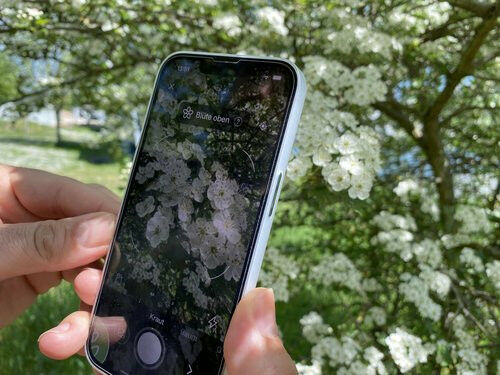
Plant identification with apps such as Flora Incognita enables phenological monitoring
Plant identification with apps such as Flora Incognita enables phenological monitoring Researchers at the Max Planck Institute for Biogeochemistry in Jena and the TU Ilmenau have shown that plant observations collected using plant identification apps such as Flora Incognita can provide information about the developmental stages of plants - both on a small scale and across Europe. "The snowdrops have never bloomed as early as this year, have they?" Many people who walk through nature with their eyes open are sure to have asked themselves these or similar questions. The German Weather Service (DWD) has already reported that the phenological first spring is already in full swing this year - three weeks earlier than the long-term average. Many plants in temperate latitudes go through the same cycle of flowering, leaf emergence, fruit formation, leaf coloration and leaf shedding every year. The recurring sequence of these events is known as phenology and is closely linked to the prevailing local climatic conditions. Climate changes influence these developmental phenomena and different plant species react differently to changes such as the arrival of an earlier spring. This has consequences for natural food chains, but also for the timing of certain agricultural operations.
UM DIESEN ARTIKEL ZU LESEN, ERSTELLEN SIE IHR KONTO
Und verlängern Sie Ihre Lektüre, kostenlos und unverbindlich.