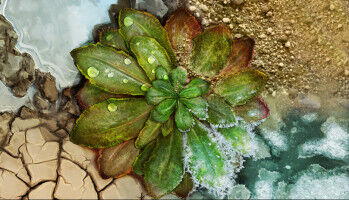
By mapping more than 18,000 proteins, TUM scientists have created an extensive molecular reference for the popular model plant Arabidopsis thaliana, which is freely accessible via the online database ’ProteomicsDB’. Image: Lehrstuhl für Proteomik und Bioanalytik
By mapping more than 18,000 proteins, TUM scientists have created an extensive molecular reference for the popular model plant Arabidopsis thaliana, which is freely accessible via the online database 'ProteomicsDB'. Image: Lehrstuhl für Proteomik und Bioanalytik First comprehensive map of the proteome of the model plant Arabidopsis thaliana Plants are essential for life on earth. They provide food for essentially all organisms, oxygen for breathing, and they regulate the climate of the planet. Proteins play a key role in controlling all aspects of life including plants. Under the leadership of the Technical University of Munich (TUM), a team of scientists has now mapped around 18,000 of all the proteins found in the model plant Arabidopsis thaliana. Every cell of any organism contains the complete genetic information, or the "blueprint", of a living being, encoded in the sequence of the so-called nucleotide building blocks of DNA. But how does a plant create tissues as diverse as a leaf that converts light into chemical energy and produces oxygen, or a root that absorbs nutrients from the soil' The answer lies in the protein pattern of the cells of the respective tissue.
UM DIESEN ARTIKEL ZU LESEN, ERSTELLEN SIE IHR KONTO
Und verlängern Sie Ihre Lektüre, kostenlos und unverbindlich.