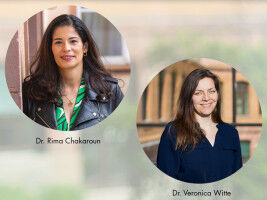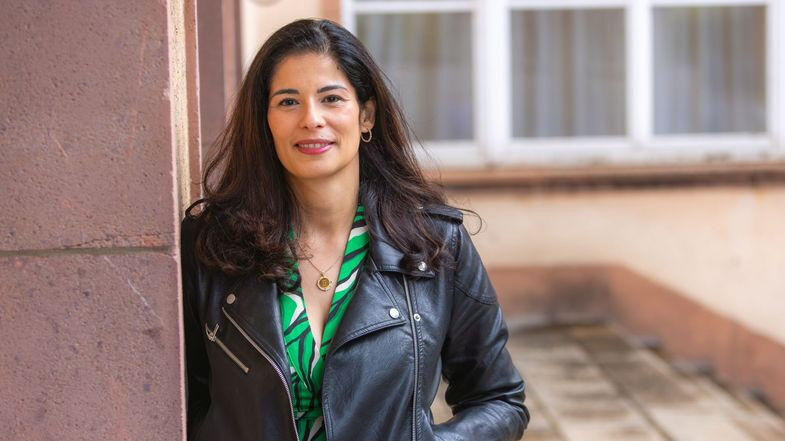
Dr Rima Chakaroun bridges clinical practice and laboratory research to better understand the interactions between organs and biological systems within the body. Her work focuses on the gut microbiome, adipose tissue and hormonal differences between the sexes, with the aim of tailoring treatments to the individual and placing particular emphasis on women’s health.
"By 2035, it is projected that half of the population will be living with obesity." A conversation with Dr Rima Chakaroun might begin with this sentence - not as an alarmist refrain, but as the point of departure for the work of a researcher who brings clinical practice and science together. As a clinician-scientist at the University of Leipzig Medical Center, she translates complex laboratory findings into concrete approaches to patient care. She pursues her goal with clear, almost understated determination: not only to treat obesity, but to understand it in all’its diversity - in sex-specific terms, at the level of organ systems, and in its close interplay with the gut microbiome.
A formative journey - from Saida to Leipzig
Rima Chakaroun grew up in Lebanon as the eldest of three children. In her family, education was considered fundamental. Her father completed his doctorate in France and returned as a professor of geography, while her mother worked as a physics teacher and fostered a strong sense of perseverance. The early loss of her father to political violence and growing up in a post-war environment left a profound mark and sharpened the sense of empathy that informs her work today. Her decision to move to Germany alone after finishing school to study medicine in Leipzig speaks to her courage and determination. Reflecting on the early influences on her current research, she says: "My interest in obesity research was first sparked during biochemistry lectures at the Faculty of Medicine, when I became fascinated by the insulin signal transduction pathway and glucose metabolism." Today, she is particularly committed to addressing questions of diversity, including sex-specific differences in obesity.
What exactly she studies - the microbiome as a hidden organ
At first glance, obesity appears to be a question of weight; on closer inspection, it is a highly complex, systemic condition. Chakaroun’s research begins at the cellular level with adipocytes and then expands to the biology of adipose tissue - and to the ways in which it communicates with other organs. Surgical interventions involving the gastrointestinal tract, designed not only to promote weight loss but also to improve metabolic function, also form part of her work. At the centre of her research, however, is the gut microbiome. She describes the microbiome as a key player - an "invisible ecosystem" that regulates metabolic processes, metabolises medication and is even involved in hormonal regulation.
"Over the course of my research, I have come to understand obesity not as an isolated disorder, but as a complex, interconnected condition with distinct metabolic phenotypes, shaped by the microbiota, environmental factors and individual susceptibility," she explains. Chakaroun supports her patients in making lasting lifestyle changes and is committed to challenging the stigma that frames obesity as a moral failing.
Elaborating on the evolution of her research focus, she adds: "My work has expanded beyond insulin resistance and the biology of adipose tissue to encompass the gut microbiome and the mechanisms by which bacteria, or their components, reach adipose tissue and trigger inflammation. Each of these levels has revealed deeper interconnections within the human system."
She places particular emphasis on the interplay between sex and the microbiome: "I investigate how sex - shaped by hormonal dynamics - and the microbiome, as an extension of the human genome and metabolic network, interact with systems such as adipose tissue and influence disease and its consequences. Insights from this work are intended to refine therapeutic strategies aimed at improving health."
In practical terms, this means that rather than pursuing a one-size-fits-all approach, the physician seeks to understand why obesity progresses differently in different individuals - and what role the microbiome plays in this variation. To this end, she uses multi-omics technologies - the parallel analysis of multiple layers of biological information - alongside international research collaborations and clinical studies to identify patterns that could enable more personalised approaches to treatment and prevention.
Embedded in a network of excellence
Chakaroun does not work in isolation. Her long-standing academic career in Leipzig closely connects her with the principal investigators of LeiCeM - including Matthias Blüher, Annette Beck-Sickinger, Julia Sacher, Peter Stadler, Michael Stumvoll, Arno Villringer and Veronica Witte - with whom she has published and led joint research projects. This creates synergies across diverse research areas, from the gut microbiome to the effects of sex, gender and sex hormones on metabolic health - synergies that feed directly into translational approaches.
LeiCeM spokesperson Professor Michael Stumvoll adds: "Looking ahead, LeiCeM will continue to grow beyond its current 25 principal investigators, in keeping with the true spirit of a Cluster of Excellence. In addition to the LeiCeM professorships already planned and funded through the Cluster, we aim to incorporate further outstanding positions secured through highly competitive national and international funding schemes - such as Heisenberg and Else Kröner-Fresenius professorships - as well as joint appointments with the Max Planck Society. Our ambition and guiding principle remain clear: excellence in research, collaboration and benefit for patients. With this in mind, we have succeeded in bringing an outstanding researcher back to Leipzig with Rima Chakaroun."
Why a focus on sex matters
Although men are often considered to be at greater risk of cardiovascular disease, Chakaroun points to a striking finding: women with obesity-related diabetes have a 50 per cent higher risk of dying from cardiovascular disease. Yet sex-specific biological factors are rarely taken into account in prevention strategies. Her research seeks to close this gap - with the aim of shaping clinical guidelines and preventive measures in a way that properly reflects sex differences.
"I believe we need a much better understanding of how obesity differs between men and women, particularly in terms of how diet and environmental factors affect each group - especially given that women today tend to develop obesity earlier in life than men." She also notes that translating such insights into practice requires recognising that women are often more willing to take an active role in managing their health, yet are frequently treated less comprehensively than men. She sees clear opportunities in addressing these differences: "This supports a shift towards personalised interventions, ranging from tailored dietary recommendations to microbiome-based therapies."
At the level of health policy and healthcare planning, she emphasises that her research "can provide sex-specific data to help policymakers better understand disease risks and develop targeted screening, prevention and treatment strategies - particularly in the area of women’s health".
Awards and support - raising the profile of translational research
The researcher’s work received several major distinctions in spring 2025. She was awarded the New Investigator Award from the European Association for She also completed the Leadership Academy of the Klaus Tschira Stiftung, a prestigious development programme for emerging research leaders. Most recently, she was appointed to an Else Kröner Clinician Scientist Professorship, a programme that provides clinician-scientists with greater flexibility to balance patient care and research. Such forms of support are not only prestigious; they also create platforms for dialogue with key stakeholders, helping to translate research findings into clinical practice more rapidly and to strengthen networks across Europe.
Looking ahead - putting patients at the centre
What can patients expect in practical terms? Chakaroun’s work seeks to better understand why obesity presents differently in different people and to tailor treatments accordingly, for example by adapting therapeutic approaches to specific microbiome signatures or by improving the prediction of side effects. For public health, this means more targeted prevention strategies, greater treatment effectiveness and a move away from one-size-fits-all thinking.
Listening to her, this sounds less like academic rhetoric and more like a clear sense of responsibility: research that explains disease in order to improve patient care. Working between clinic and laboratory, Chakaroun remains a bridge-builder. Her research demonstrates how modern medicine can look both deeply into molecular mechanisms and closely at the patient perspective - and how the invisible microbiome may hold answers to visible health challenges.