












news
Max Plank Society
Results 301 - 320 of 484.
Astronomy & Space - Physics - 20.09.2023

Before the light comes on and a new star shines, enough gas and dust must accumulate in a very small space for a star's energy source, nuclear fusion, to ignite. This by no means happens at rest. Matter swirls around, and before the star sees the light of day, violent birth labour is not uncommon. The new James Webb Space Telescope has turned its lens on such a spectacle, which reveals itself in unprecedented detail.
Life Sciences - Health - 18.09.2023

Language is one aspect that makes us human. The ability to produce an infinite number of utterances based on the words in the mental lexicon and a small number of syntactic rules is unique to humans. Other animals can learn words or calls and communicate, but the language ability of humans is unique.
Environment - Life Sciences - 12.09.2023

Carrying small sensors, they could be the most sensitive and informative weather instruments of all The world's scientists rely on an elaborate network of satellites, ocean buoys, weather stations, and balloons to help predict the weather and assess the impact of global climate change across land, air, and sea.
Computer Science - Physics - 08.09.2023

New physics-based self-learning machines could replace the current artificial neural networks and save energy Artifical intelligence not only affords impressive performance, but also creates significant demand for energy. The more demanding the tasks for which it is trained, the more energy it consumes.
Health - Pharmacology - 17.08.2023
Anti-obesity drug improves associative learning in people with obesity
Obesity leads to altered energy metabolism and reduced insulin sensitivity of cells. The so-called "anti-obesity drugs" are increasingly used to treat obesity and have caused tremendous interest, especially in the USA. Researchers at the Max Planck Institute for Metabolism Research in Cologne, Germany, have now shown in people with obesity that reduced insulin sensitivity affects learning of sensory associations.
Life Sciences - History & Archeology - 16.08.2023

Research team used advanced sequencing technology to analyze Ötzi's genome to obtain a more accurate picture of the Iceman's appearance and genetic origins Ötzi's genome was decoded for the first time more than ten years ago. This was also the first time the genome of a mummy had been sequenced. The results provided important insights into the genetic makeup of prehistoric Europeans.
Life Sciences - Chemistry - 16.08.2023

Using a metabolic pathway, energy-rich resources can be produced via the power of electricity When nature performs chemical reactions to create energy-rich compounds from simple molecules, it requires energy. So far, it has not been possible to use human-made electricity to drive these biochemical processes.
Social Sciences - 16.08.2023

A new study shows that changes in grammatical complexity are not shaped by social environments Many linguists have proposed that languages spoken by numerous non-native speakers tend to have simpler grammars. A new study led by researchers from the Max Planck Institute for Evolutionary Anthropology in Leipzig challenges this claim.
Life Sciences - Environment - 14.08.2023

An experiment, conducted on wild orangutans, uncovers the conditions that spark curiosity Humans like to discover. Presented with something we've never seen before, most of us will be compelled to explore and learn more about it. The same can't exactly be said for our closest living relatives - the great apes.
Computer Science - 02.08.2023

Researchers of the Max Planck Institute for Security and Privacy participate in innovative science communication In an era of increasing digitalisation, IT security is becoming an increasingly important issue, not only for large organisations but also for individuals. However, the complex science behind it often makes this abstract topic inaccessible.
Social Sciences - 01.08.2023

The decline in birth rates in many industrialized countries since the mid-1950s is partly due to a change in values. People decide more individually whether they want to have children or not. Steffen Peters of the Max Planck Institute for Demographic Research has investigated the role played by personality traits such as empathy or extroversion.
Innovation - Pharmacology - 31.07.2023

Pills could soon be produced in shapes that resemble design objects. And this would not be just an aesthetic gimmick, but would serve to release active medical ingredients in the body in a controlled manner. A group of computer scientists from the Max Planck Institute for Informatics in Saarbrücken and the University of California at Davis have developed a process that uses a combination of computation and 3D printing to produce tablets that dissolve in liquids over a specified period of time.
Linguistics & Literature - 27.07.2023

Throughout history, people have created different sign systems that correspond to the specifics of each language. The scripts have evolved in the process. Today, it is no longer possible to trace exactly how, since the development has usually been completed thousands of years ago. This is not the case with the West African Vai script, which did not come into being until the 1830s.
Life Sciences - Environment - 27.07.2023
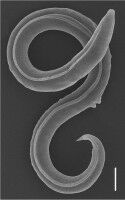
A newly discovered nematode species from the Pleistocene shares a molecular toolkit for survival with the nematode Caenorhabditis elegans Some organisms, such as tardigrades, rotifers, and nematodes, can survive harsh conditions by entering a dormant state known as "cryptobiosis." In 2018, researchers from the Institute of Physicochemical and Biological Problems in Soil Science RAS in Russia found two roundworms (nematode) species in the Siberian Permafrost.
History & Archeology - Life Sciences - 27.07.2023

Linguistics and genetics combine to suggest a new hybrid hypothesis for the origin of the Indo-European languages An international team of linguists and geneticists led by researchers from the Max Planck Institute for Evolutionary Anthropology in Leipzig has achieved a significant breakthrough in our understanding of the origins of Indo-European, a family of languages spoken by nearly half of the world's population.
Social Sciences - Life Sciences - 26.07.2023

The Neolithic burial site of Gurgy 'les Noisats' in France revealed two unprecedentedly large family trees which allowed a Franco-German team to explore the social organization of the 6,700-year-old community. Based on multiple lines of evidence, the team describes a close kin group which practiced monogamy and female exogamy, and experienced generally stable times.
Astronomy & Space - Physics - 24.07.2023

James Webb Space Telescope observations find water for the first time in the inner disk around a young star with giant planets. Using the James Webb Space Telescope, the MPIA-led MINDS research collaboration discovered water in the inner region of a disk of gas and dust around the young star PDS 70.
Astronomy & Space - Physics - 21.07.2023

The star could be a magnetar with properties that have yet to be explained A new type of stellar object could challenge our understanding of neutron stars. An international team, including researchers from the Max Planck Institute for Radio Astronomy in Bonn, Germany, has discovered a celestial body in the constellation Shield (Scutum) that could be an ultralong-period magnetar, a rare type of star with extremely strong magnetic fields that can produce violent bursts of energy.
Forensic Science - Environment - 21.07.2023
Short-term thinking, criminal action
People who have short-term mindsets (i.e., impulsivity, sensation-seeking, and low future orientation) are more likely to commit crime. In our research, we consider how adverse environments and experiences affect short-term mindsets. A research team at the Max Planck Institute for the Study of Crime, Security and Law found that harsh and unpredictable environments, victimization, and first-time and early police contact are each associated with more short-term thinking.
Life Sciences - 20.07.2023
New method brings breakthrough in the precise introduction of mutations in human genomes In a new study, researchers at the Max Planck Institute for Evolutionary Anthropology in Leipzig, Germany, describe improvements in the methods with which mutations can be introduced in human and other genomes - making these methods much more efficient and less error prone.


