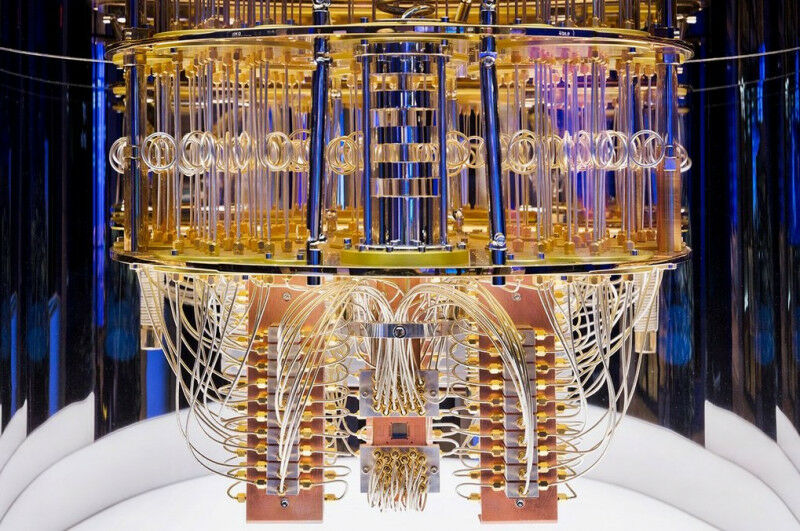
 Threat to today’s encryption: research institutions and companies are developing quantum computers, such as the IBM Quantum System One. As soon as the computers are as powerful as many hope they will be, they will be able to crack the cryptographic methods used in data traffic today. That is why the US National Institute for Standards and Technology (NIST) is already working on standardising new encryption methods. A Max Planck researcher has played a major role in three of the four candidates to be standardised.
Threat to today's encryption: research institutions and companies are developing quantum computers, such as the IBM Quantum System One. As soon as the computers are as powerful as many hope they will be, they will be able to crack the cryptographic methods used in data traffic today. That is why the US National Institute for Standards and Technology (NIST) is already working on standardising new encryption methods. A Max Planck researcher has played a major role in three of the four candidates to be standardised. IBM Research - Cryptographic systems that even quantum computers cannot crack will soon be standard in the USA Whenever you visit a website, send an email, or do your online banking in the future, in many cases algorithms developed with the participation of researchers at the Max Planck Institute for Security and Privacy in Bochum and the Ruhr University Bochum will be used to protect your data. The American National Institute for Standards and Technology (NIST) has now announced which cryptographic methods it will standardize to protect communications from future quantum computer cyberattacks. Peter Schwabe, Group Leader at the Max Planck Institute for Security and Privacy, was involved in the development of three of the selected procedures.
TO READ THIS ARTICLE, CREATE YOUR ACCOUNT
And extend your reading, free of charge and with no commitment.
Your Benefits
- Access to all content
- Receive newsmails for news and jobs
- Post ads