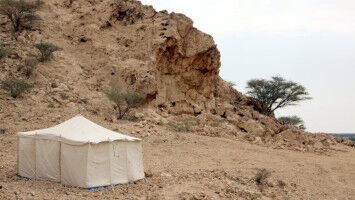
Climate station in the Bahnstadt adjacent to the Schwetzinger Terrace in summer 2018. The weather hut is equipped with a thermohygrograph with internal sensors for air temperature and relative humidity |
Climate station in the Bahnstadt adjacent to the Schwetzinger Terrace in summer 2018. The weather hut is equipped with a thermohygrograph with internal sensors for air temperature and relative humidity | © Kathrin Foshag - How do rising temperatures and more hot days affect cities, especially the heat stress on public squares? And what needs to be done in response to climate change? A team of Heidelberg University geographers led by Dr Kathrin Foshag investigated these questions using locations in the Heidelberg urban area. They collected local climate data and simulated various shading options using geoinformatics methods. They also surveyed users on their preferences and discussed design issues with local experts. To keep such public spaces usable in future, they need more greenery and variety, according to the interdisciplinary study. The results were published in the journal "Sustainable Cities and Society". The researchers investigated heat stress and possible countermeasures on University Square in Heidelberg's historic old town as well as the "Schwetzinger Terrasse" in Bahnstadt, the newly built passive house district.
TO READ THIS ARTICLE, CREATE YOUR ACCOUNT
And extend your reading, free of charge and with no commitment.
Your Benefits
- Access to all content
- Receive newsmails for news and jobs
- Post ads