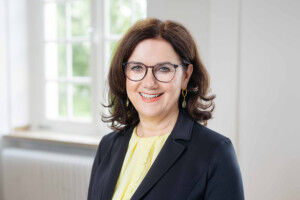
Keynote lecture, "Global Conservatism, Micropolitics, and World (Dis)Ordering," to be held by political scientist Ty Solomon at 6:00 p.m. on June 25, 2025, at Freie Universität Berlin

The decline of the liberal international order (LIO) is one of the most pressing debates in current international relations. While scholars have examined a wide range of causes and consequences, one crucial dimension often remains underexplored: the role of affect.
In his lecture, Solomon focuses on the rise of global conservative right-wing and reactionary movements as a key expression of the LIO’s fragmentation. While existing studies often rely on network analysis or intellectual histories to map their transnational spread, Solomon argues that we also need to understand how these movements are held together affectively - through shared emotions and resonances that sustain alliances across borders.
Bringing in a micropolitical perspective, Solomon shifts attention from large-scale structures to the small, everyday performances and spaces that carry global political significance. He contends that without accounting for these affective dynamics, we cannot fully grasp the transformations currently reshaping the international order.
Ty Solomon is professor of international relations at the School of Social and Political Sciences, University of Glasgow. His research interests include international relations theory, critical security studies, American foreign relations, affects and emotions in global politics, global social movements, and interpretative methods. He is the author of The Politics of Subjectivity in American Foreign Policy Discourses (University of Michigan Press) and has published in journals such as International Studies Quarterly, European Journal of International Relations, Review of International Studies, Cooperation and Conflict, Millennium, and others.
About CRC 1171 "Affective Societies"
Based at Freie Universität Berlin, CRC 1171 "Affective Societies" investigates affects and emotions as essential factors of coexistence in twenty-first century societies. The goal of the research center is to establish a new understanding of societies that emphasizes the fundamental importance of affects and emotions in the mobile, interconnected, and mediatized worlds of the global present. At the CRC, scholars from nine disciplines across the social sciences, cultural studies, and humanities are researching these questions in twelve sub-projects.Event Details
The Latin words veritas, justitia, and libertas, which frame the seal of Freie Universität Berlin, stand for the values that have defined the academic ethos of Freie Universität since its founding in December 1948.