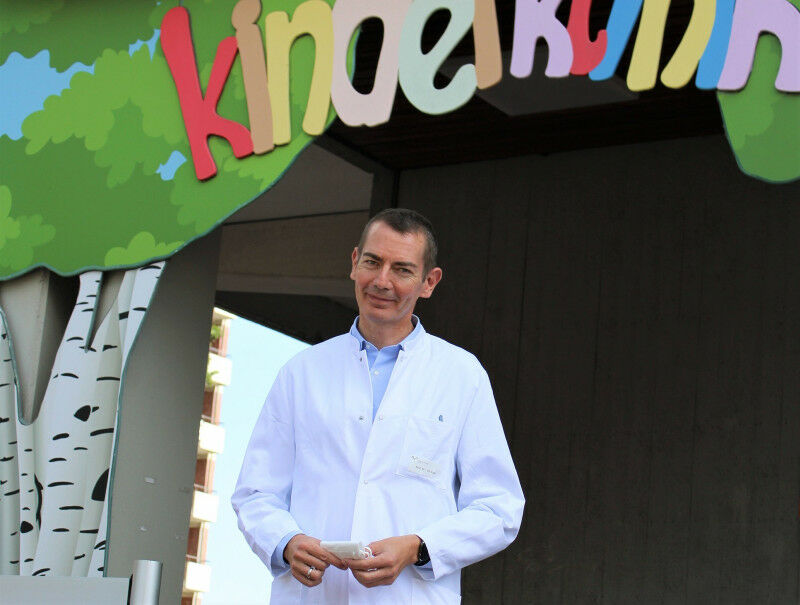
Professor Dr. Christian Kratz, initiator of the international study that investigated the cancer risk of disease-relevant variants in BRCA1/2 and MMR genes in children. Copyright: Maike Isfort/MHH
Professor Dr. Christian Kratz, initiator of the international study that investigated the cancer risk of disease-relevant variants in BRCA1/2 and MMR genes in children. Copyright: Maike Isfort/MHH - Genetic testing not recommended in healthy children Pathogenic variants in BRCA1/2 genes are associated with an increased risk of breast and ovarian cancer in adults and variants in mismatch repair (MMR) genes increase the risk of gastrointestinal and other cancers. Until now, the role of such variants in children and adolescents with cancer was unclear. An international study initiated by the Department of Paediatric Haematology and Oncology at Hannover Medical School (MHH) has now revealed that pathogenic variants in BRCA1/2 and the MMR genes may also contribute to the risk of cancer in individuals below age 18 years. "Children and adolescents with BRCA1/2 or MMR gene variants were mainly affected by brain tumours but also other solid tumours," says Professor Christian Kratz, initiator of the study published in the Journal of the National Cancer Institute. "A statistically significant association with malignant diseases of the blood system, such as leukaemias, could not be established so far," adds the Director of the MHH Clinic for Paediatric Haematology and Oncology. The international research team conducted a meta-analysis based on 11 studies that included results on germline testing of a total of 3,775 children and adolescents suffering from cancer.
TO READ THIS ARTICLE, CREATE YOUR ACCOUNT
And extend your reading, free of charge and with no commitment.