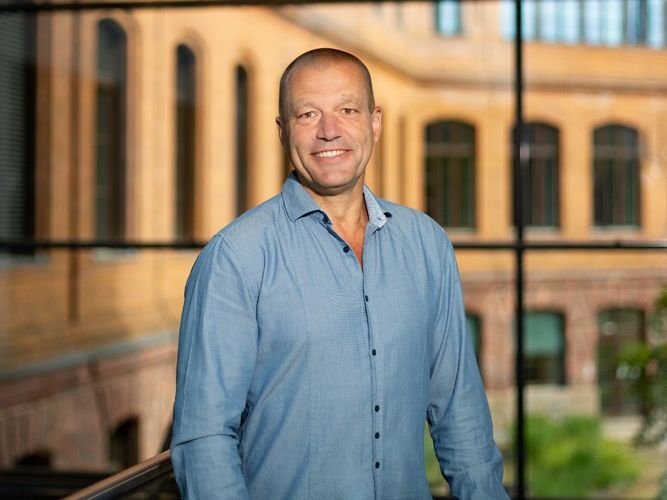
Professor Torsten Schöneberg, Professor of Molecular Biochemistry at Leipzig University, and his team at the Rudolf Schönheimer Institute of Biochemistry are investigating how genes, hormones and the environment regulate metabolism. His research shows why our bodies are often overwhelmed by modern diets and lifestyles - and how interdisciplinary, cutting-edge research can open up new ways of preventing and treating disease. Topics from the Leipzig Center of Metabolism (LeiCeM) Cluster of Excellence are also in the spotlight.
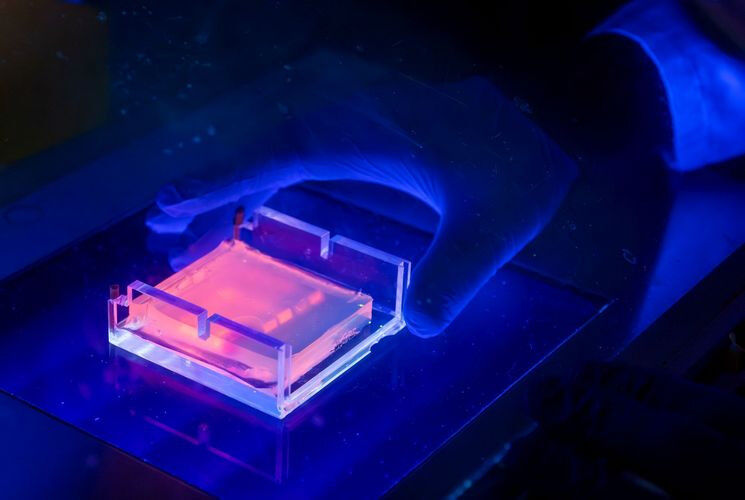
Torsten Schöneberg sits in his office on Johannisallee in Leipzig, surrounded by neighbouring laboratories. Only moments ago, he was examining a gel on a UV light box, where DNA had been made visible using an electrical technique; now he is talking about his research and what drives him. Schöneberg is a professor of molecular biochemistry and conducts interdisciplinary basic research in the fields of signal transduction and genetics: "We have relatively few direct clinical research questions, but we want to uncover fundamental mechanisms in molecular biology and metabolic diseases, for example - to answer the kinds of questions being asked within LeiCeM. Our institute works on hormones and their protein interactions, which also play a role in obesity and various other metabolic disorders. We are also trying to discover new hormones - and to understand how they function physiologically." To this end, the researchers design models in test tubes or cell cultures that replicate the situation in humans and use them to test their hypotheses.
Mismatch diseases as a key concept
Schöneberg illustrates this with an example: "Many scientists take the view that 90 per cent of today’s diseases are so-called mismatch diseases. In other words, today’s environment and lifestyle do not match our genetic design. This even includes mental health problems." The question, he says, is: "Why is that the case? And once you understand it, you can start to consider whether it is possible, in today’s environment, to change the factors that lead to this mismatch." One possible approach is the modulation of hormone-protein interactions.

Evolutionary perspectives are central to these questions. The researchers are seeking answers in collaboration with the Max Planck Institute for Evolutionary Anthropology (MPI EVA): more than two million years ago, humans migrated from Africa into colder regions of the world and had to adapt to entirely new conditions - through food storage strategies, for example, or through thermoregulation, such as clothing and the climate control of living spaces. "Were there genetic changes that helped us adapt to these new conditions? In nature, humans did not retain the ability to digest lactose beyond infancy. When did that change - and why? What enabled us to metabolise alcohol produced by the fermentation of fruit?" the scientist asks. "These developments took place over millions of years, whereas we have transformed our environment within just 100 years. This creates a conflict with that very environment: the energy density of our food has changed, its composition has changed, and so has our level of physical activity." As an example, Schöneberg points to chips or bread - foods with energy densities that did not exist in the past - as well as to a changed sense of hunger: "Humans used to consume much, much larger volumes than we do today. Certain hormonal systems were calibrated to very different satiety signals."
Interdisciplinary research into the complex human organism
The biochemist describes the collaboration with the MPI EVA as a gift. At Leipzig Zoo, a dedicated great ape facility means that humans’ closest living relatives are quite literally on the doorstep, and several members of his institute have worked for many years with Nobel laureate Svante Pääbo. For Schöneberg, international cooperation is immensely important for research. In Rwanda, for example, Schöneberg and his team conduct research on the ground: "In the capital, Kigali, there are population groups who live Western-style. They are familiar with fast food, bottled drinking water and Western medicine. Others, by contrast, suffer in part from malnutrition and are exposed to very different drinking water qualities and pathogens. These comparisons help us to understand how genes, environment and diet interact."
Investigating all these aspects comprehensively requires an interdisciplinary approach at his institute. Scientists from medicine, biology and biochemistry, as well as genetics, pharmacy and bioinformatics - right through to nutritional science - work together on fundamental research questions. "Only through this broad spectrum can we grasp the enormous complexity of the human organism," says the institute’s director.
Leipzig as a hub for cutting-edge research
In recent years, Leipzig has succeeded in attracting a large number of outstanding researchers in this field. A major milestone was the approval of Collaborative Research Centre (CRC) 1423, Structural Dynamics of GPCR Activation and Signaling. Among other things, CRC 1423 studies so-called adhesion G protein-coupled receptors - a group of signalling molecules that is still poorly understood, but which may play a decisive role in physiological processes such as cell growth and differentiation, as well as in diseases including diabetes, obesity and neurological disorders. "We are now one of the world’s leading research centres in this field," says Schöneberg, who serves as deputy spokesperson for CRC 1423 alongside Professor Annette Beck-Sickinger.
With the LeiCeM Cluster of Excellence, this leading role is now set to be further expanded. "Our aim is to decipher fundamental biological mechanisms. Because only those who understand how the human body works can find new ways to prevent and treat disease."