









news
University of Tübingen
Results 1 - 20 of 152.
Paleontology - 05.03.2026

A research team led by Dr. Márton Rabi from the Biogeology Department of the University of , together with Máté Szegszárdi and Professor Attila Osi from the Hungarian Eötvös Loránd University, is challenging the hypothesis that Europe remained connected to Africa during the age of the dinosaurs.
Paleontology - Life Sciences - 04.03.2026
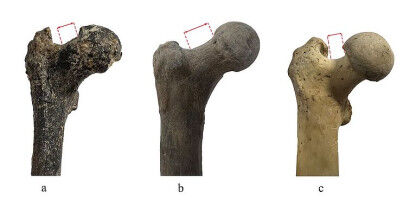
An international team of researchers say a newly discovered fossil thighbone from Bulgaria could rewrite the history of human origins. Walking on two legs has long been considered a milestone in human evolution and one of our most defining characteristics. Until now, researchers assumed that the first humans originated in Africa and that bipedalism developed there around six million years ago.
Earth Sciences - Research Management - 26.02.2026

Cyanobacteria as they still exist today were the first organisms to carry out photosynthesis and release oxygen. Produced in primeval oceans around 2.5 billion years ago, this oxygen accumulated in the Earth's atmosphere on an immense scale. A research team led by University of Tübingen geomicrobiologist Professor Andreas Kappler has used laboratory experiments to investigate how this process was even possible, given that the iron dissolved in ocean water strongly inhibited the growth of cyanobacteria.
Environment - 25.02.2026
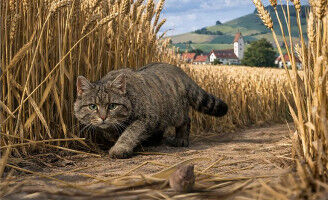
A research team led by Chris Baumann and Dorothée Drucker from the Senckenberg Centre for Human Evolution and Palaeoenvironment at the University of has found that the European wildcat is increasingly using agricultural land as hunting grounds in some parts of Germany, especially in summer when grain crops provide cover.
Physics - Innovation - 24.02.2026
AI develops easily understandable solutions for unusual experiments in quantum physics
Researchers at the University of Tübingen, working with an international team, have developed an artificial intelligence that designs entirely new, sometimes unusual, experiments in quantum physics and presents them in a way that is easily understandable for researchers. This includes experimental setups that humans might never have considered.
History & Archeology - 10.02.2026
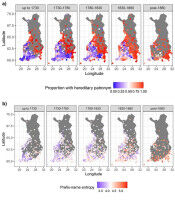
First names in Western countries today are more diverse than they were before early modern states evolved. This difference started to emerge in the 17th century in response to a change that took place in the naming system in large parts of Europe and the English-speaking world. Societies moved away from attributive last names - based on occupation or appearance like John (the) Short - to inherited surnames.
Paleontology - 26.01.2026
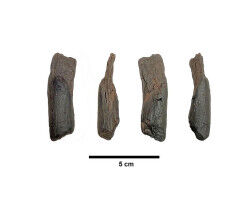
An international team led by researchers from Universities of and Reading and Senckenberg Nature Research Society has discovered the earliest known hand-held wooden tools used by humans. A study jointly led by Professor Katerina Harvati from the Senckenberg Centre for Human Evolution and Palaeoenvironment at the University of and Annemieke Milks at University of Reading describes discoveries from the Marathousa 1 site in Greece-s central Peloponnese which date back 430,000 years.
Environment - Chemistry - 13.01.2026
The bioconcentration factor shows the concentration of chemical substances in fish as compared to the surrounding water. It is the standard measure for determining the bioaccumulation of chemicals in the environment. Until now it was assumed that this factor, BCF for short, was a constant for each specific substance.
History & Archeology - Earth Sciences - 23.12.2025

Ceramics are one of the most important sources of information for archaeologists. Yet how these objects are produced, especially in the firing stage, has received little attention to date. The excavation of a well-preserved pottery workshop at one of the most significant archaeological sites in Iraq-s Kurdistan region now offers the opportunity for an integrated analysis of an entire local production chain.
Life Sciences - Health - 18.12.2025
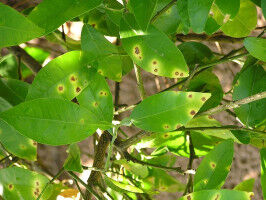
The bacterial pathogen Xanthomonas citri , which causes canker disease in citrus trees, activates selected parts of the fruit ripening program inside infected leaves. Normally, this program makes citrus fruits soften and sweeten as sugars are released. But the bacterium hijacks this fruit-specific machinery in infected leaf tissue, causing the host to unlock sugars that otherwise would not be accessible to Xanthomonas as a source of nutrients.
Life Sciences - Paleontology - 26.11.2025
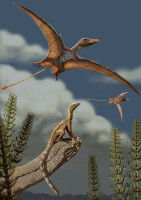
It has long been known that pterosaurs and birds acquired their ability to fly independently of each other. A new study has now revealed that there are no major similarities between the brains of ptero-saurs, which lived around 215 million to 66 million years ago, and those of today's birds; however, there are similarities with the brains of bird ancestors - certain species of dinosaurs that were unable to fly or had limited flying ability.
Life Sciences - Computer Science - 13.11.2025
A new software enables brain simulations which both imitate the processes in the brain in detail and can solve challenging cognitive tasks. The program was developed by a research team at the Cluster of Excellence 'Machine Learning: New Perspectives for Science' at the University of Tübingen. The software thus forms the basis for a new generation of brain simulations which allow deeper insights into the functioning and performance of the brain.
Life Sciences - Veterinary - 01.10.2025

For the first time, a research team from the Senckenberg Centre for Human Evolution and Palaeoenvironment at the University of Tübingen and the Schöningen Research Centre have reconstructed the genomes of an extinct horse species Equus mosbachensis from the archaeological site of Schöningen in Lower Saxony, approximately 300,000 years old.
Life Sciences - 10.09.2025
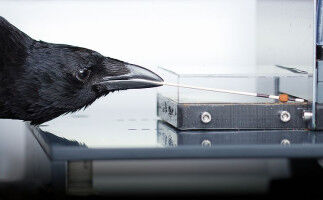
Animal training can teach carrion crows to use a stick tool to retrieve food. With increasing practice, they not only demonstrate great skill and achieve their objective in a few steps, they also respond flexibly to varying conditions in the experiment. These were the findings from behavioral experiments with tame birds by Felix Moll, Julius Würzler and Professor Andreas Nieder from the Institute for Neurobiology at the University of.
Life Sciences - 09.09.2025
Signals from the brain reveal what color a person is seeing
Visual areas of the brain can reveal the colors a person is seeing while watching moving color rings, even if the chromatic responses of their brain have not previously been studied. This was the result of a study by Michael Bannert and Professor Andreas Bartels from the Centre for Integrative Neuroscience at the University of.
History & Archeology - Social Sciences - 25.08.2025
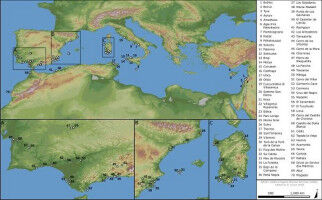
Pottery shards, coins, and bones can survive for millennia beneath the soil, but the scents of antiquity typically escape archaeological recovery. Now, for the first time, an interdisciplinary team of researchers has comprehensively analyzed the production, technology, and contents of 51 ceramic oil vessels from the Phoenician settlement of Motya, located on an island off the coast of Sicily.
Life Sciences - 22.08.2025

Tomato plants possess a sophisticated system to protect themselves against herbivores: the signaling peptide Systemin triggers a cascade of plant defense responses. A research team from the University of and the University of Hohenheim in has now discovered that tomato plants possess a previously unknown natural Systemin antagonist named antiSys .
Pharmacology - Life Sciences - 23.07.2025

Ingredients of our daily diet - including caffeine - can influence the resistance of bacteria to antibiotics. This has been shown in a new study by a team of researchers at the Universities of and Würzburg led by Professor Ana Rita Brochado. They discovered bacteria such as Escherichia coli (E. coli) orchestrate complex regulatory cascades to react to chemical stimuli from their direct environment which can influence the effectiveness of antimicrobial drugs.
Health - Pharmacology - 16.07.2025

The human intestine is home to a dense network of microorganisms, known collectively as the gut microbiome, which actively helps to shape our health.
Environment - History & Archeology - 10.07.2025

A new study has shown that as early as the Stone Age, people in Africa traveled long distances to procure colorful stone, forming the raw material for the manufacture of tools. The study was led by Gregor D. Bader from the Department of Early Prehistory and Quaternary Ecology and the Senckenberg Centre for Human Evolution and Palaeoenvironment at the University of.


