


news 2020
« BACK
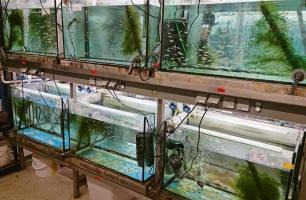 Antidepressants Make Fish Easy Prey: Loss of Natural Reaction to Stress
 Watching changes in plant metabolism - live
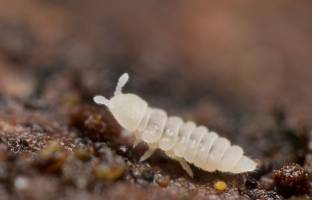 Chemicals Inhibit Decomposition Processes - by Damaging Biodiversity
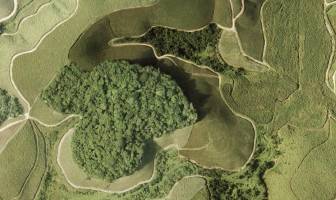 Smaller habitats worse than expected for biodiversity
 Restoring Nature
 Cavefish have fewer cells of the innate immune system
 Long-Term Consequences Difficult to Predict
 Root Economics - Between Do-It-Yourself Strategies and Fungal Outsourcing
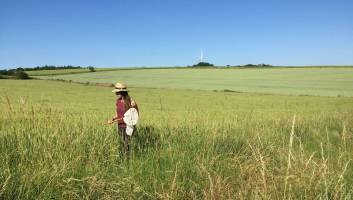 Wild bees depend on the landscape structure
 Super-Earths discovered orbiting nearby red dwarf
 No Space for Climate Change
 Impact of Microplastic in Soil on the Ecosystem: Research is entering a new phase
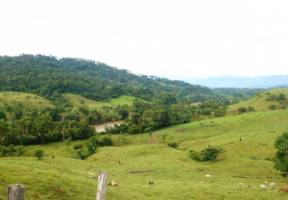 How much forest does biodiversity need in cultivated landscapes?
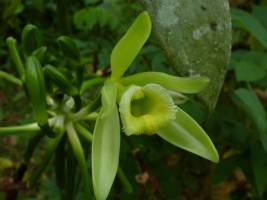 Coffee, cocoa and vanilla: an opportunity for more trees in tropical agricultural landscapes
 Protecting scientific diversity
 The forest is changing
 Sustainable palm oil? How environmental protection and poverty reduction can be reconciled
 Asteroid Triggered Mass Extinction at End of Cretaceous Period
 Eat or be eaten
 First research results on the "spectacular meteorite fall" of Flensburg
Environment
Results 41 - 60 of 64.
Environment - Life Sciences - 19.08.2020
Residues of pharmaceuticals in surface waters - in this case an antidiabetic and two antidepressants - also have effects on fish. Drugs for the treatment of depression have particularly strong effects, with fish losing their natural reaction to stress when substance concentration in the water is above a certain level.
Life Sciences - Environment - 14.08.2020
Young thale cress seedling (Arabidopsis thaliana) with the fluorescent biosensor in its cells. The false colour image shows the redox status of the NAD pool in the cells and tissue. Rainbow scale from blue (oxidized NAD pool) to red (reduced NAD pool). Almost all life on Earth, in particular our food and our health, depend on metabolism in plants.
Environment - 04.08.2020
Declines in the diversity and abundance of decomposers explain reductions in plant decay rates under the influence of chemical stressors, but not added nutrients. These are the new insights of a study published in the open access journal eLife. The global meta-analysis conducted by researchers at the German Centre for Integrative Biodiversity Research (iDiv), Leipzig University (UL) and the University of Namur in Belgium highlights the main anthropogenic effects on the biodiversity and functioning of ecosystems, and thus helps predicting the fate of different ecosystems around the world.
Environment - Life Sciences - 29.07.2020
New international research breaks ground for the next generation of biodiversity forecasts No 131/2020 from Jul 29, 2020 Biodiversity's ongoing global decline has prompted policies to protect and restore habitats to minimize animal and plant extinctions. However, biodiversity forecasts used to inform these policies are usually based on assumptions of a simple theoretical model describing how the number of species changes with the amount of habitat.
Environment - 22.07.2020
An abandoned space in the middle of Münster: in the historic medicinal plant garden, which hasn't been in use since 2016, nature can pretty much do what it likes. At least, it almost can - anyone who fights their way through an overgrown meadow between Einsteinstraße and Schlossgräfte will come across a clearing, about 50 square metres in size, on which meadow plants are arranged in rows of pots standing on black groundsheets.
Environment - Health - 21.07.2020
Adaptation of cavefish to low-parasite environment may provide autoimmune disease insight / Study published in "Nature Ecology & Evolution" Cavefish are small, live in tucked away places humans rarely go, and they're common enough that you can find them on every continent except Antarctica. But they also have another characteristic that seems surprising at first glance: They can tell researchers something about the occurrence of autoimmune diseases in humans.
Environment - Life Sciences - 10.07.2020
In a longitudinal study, an international research team led by Leipzig University has investigated the consequences of changes in plant biodiversity for the functioning of ecosystems. The scientists found that the relationships between plant traits and ecosystem functions change from year to year. This makes predicting the long-term consequences of biodiversity change extremely difficult, they write in "Nature Ecology & Evolution".
Economics - Environment - 02.07.2020
International group of researchers with members from Freie Universität Berlin describes the growth strategies of plant roots. No 115/2020 from Jul 02, 2020 An international group of researchers with members from Freie Universität Berlin, the German Center for Integrative Biodiversity Research (iDiv), and Wageningen University, among others, has been studying the complex belowground economy of roots.
Environment - 30.06.2020
Research team led by University of Göttingen investigates flower strips, organic farming and small crop fields Sowing strips of wildflowers along conventional cereal fields and the increased density of flowers in organic farming encourage bumblebees as well as solitary wild bees and hoverflies. Bumblebee colonies benefit from flower strips along small fields, but in organic farming, they benefit from large fields.
Astronomy & Space - Environment - 25.06.2020
International researchers led by University of Göttingen find multiple planet system orbiting Gliese 887 The nearest exoplanets to us provide the best opportunities for detailed study, including searching for evidence of life outside the Solar System. In research led by the University of Göttingen, the RedDots team of astronomers has detected a system of super-Earth planets orbiting the nearby star Gliese 887, the brightest red dwarf star in the sky.
Environment - Earth Sciences - 25.06.2020
How do rising temperatures and more hot days affect cities, especially the heat stress on public squares? And what needs to be done in response to climate change? A team of Heidelberg University geographers led by Dr Kathrin Foshag investigated these questions using locations in the Heidelberg urban area.
Environment - 25.06.2020
Scientists at Freie Universität Berlin are studying the effects of microplastics in the soil No 109/2020 from Jun 25, 2020 Ecologists at Freie Universität Berlin examine and evaluate the effects of microplastics in soils on terrestrial ecosystems.
Environment - 16.06.2020
Research team with Göttingen participation develops concepts to promote biodiversity Forests, especially in the tropics, are home to the world's greatest biodiversity, but are threatened by increasing land use. An international research team with participation of the University of Göttingen has investigated how high the proportion of forest in cultivated landscapes must be in order to protect the greatest number of animal and plant species that depend on this habitat.
Environment - 15.06.2020
Research team from Göttingen University investigates the land-use history of agroforestry systems The cultivation of coffee, cocoa and vanilla secures the income of many small-holder farmers and is also a driver of land-use change in many tropical countries. In particular, cultivation in agroforestry systems, in which these crops are combined with trees that provide shade, is often considered to have great potential for ecologically sustainable cultivation.
Social Sciences - Environment - 11.06.2020
International researchers demand the active protection and support of diversity, equity and inclusion in science In the course of the COVID-19 pandemic, scientists are facing great challenges because they have to reorient, interrupt or even cancel research and teaching.
Environment - 29.05.2020
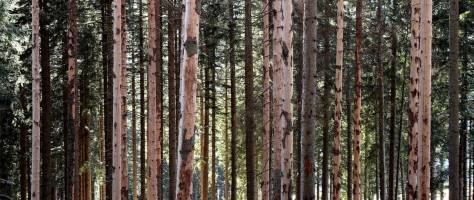
Globally, forests are increasingly under pressure. Climatic extremes such as heat and drought are major stress factors for them. A study in cooperation with the Technical University of Munich (TUM) and published in Science is examining, how global change may affect forests in the future. The researchers present potential scenarios of future forest development and thereby offer important information for forest policy and management.
Environment - 19.05.2020
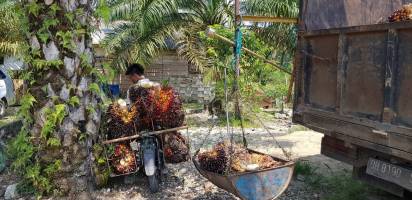
Scientists at the University of Göttingen analyse data on ecological, social and economic effects Palm oil is often associated with tropical deforestation above all else. However, this is only one side of the story, as agricultural scientists from the University of Göttingen and the IPB University Bogor (Indonesia) show in a new study.
Earth Sciences - Environment - 17.04.2020
Sixty-six million years ago - at the Cretaceous-Paleogene boundary - nearly three-quarters of all animal species died out, including the dinosaurs. The cause for this has fuelled controversy among scientists for decades. The latest research from an international research team indicates that an asteroid strike was the sole driver of the mass extinction and that volcanic activity did not play a role, even though it certainly had an impact on the climate and the biosphere.
Environment - Life Sciences - 25.02.2020
Biodiversity increases the efficiency of energy use in grasslands Plants obtain their energy from the sun. Other beings rely on eating to survive. Yet how does the energy flow inside ecosystems function and are there differences between ecosystems with many species in comparison to those with few species' Researchers have now examined these questions using a holistic approach by evaluating data gathered through a large-scale biodiversity experiment.
Astronomy & Space - Environment - 17.02.2020
Planetologists from Münster University show that the meteorite contains minerals that formed under the presence of water on small planetesimals in the early history of our solar system. A fireball in the sky, accompanied by a bang, amazed hundreds of eyewitnesses in northern Germany in mid-September last year.


