





news
University of Münster
Results 341 - 360 of 363.
Chemistry - Physics - 03.03.2017

In the current issue of the "Science" magazine, chemists at Münster University present a new approach which for the first time enables three - and not, as previously, two - chemical components to be "coupled" in one single reaction, without any metals to aid the process. The researchers succeeded in producing not only pharmaceutically relevant compounds containing fluorine, but also various γ-lactones.
Career - Social Sciences - 03.03.2017
Defying the skills shortage with family-friendly HR policies: The Family-Friendly HR Policy Research Centre at Münster University publishes a study on family-friendly measures at Münster University Hospital
The Family-Friendly HR Policy Research Centre at Münster University publishes a study on family-friendly measures at Münster University Hospital Can family-friendly measures undertaken by companies can be innovative and, at the same time, a worthwhile social investment? This is the question asked in a study just published entitled "Balancing career and family with the audit berufundfamilie programme - a case study at Münster University Hospital".
Life Sciences - 14.02.2017
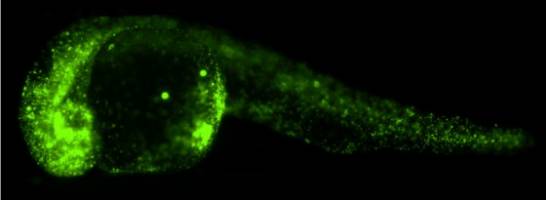
Cells form tissues or organs, migrate from place to place and in doing that their mechanical features and forces generated within them play a key role. Researchers at the Cells-in-Motion Cluster of Excellence at Münster University have now investigated the mechanical features of cells in living zebrafish embryos using the holographic optical tweezers-based method.
Life Sciences - Chemistry - 01.02.2017
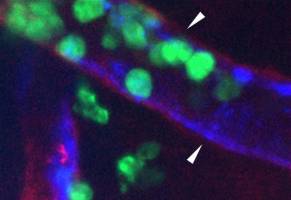
Which molecular mechanisms are at work when, in the case of inflammation, immune cells migrate from the blood vessel into the tissue? Researchers at the Cells-in-Motion Cluster of Excellence at Münster University have gained new insights into this question: the laminin 511 protein, that underlies endothelial cells that form the inner cell layer of the blood vessel wall, influences how permeable the vessel is for immune cells.
Astronomy & Space - 26.01.2017

Water on Earth is the precondition for life as we know it. But where does it come from, and how long has it been here? Scientists currently discuss two possibilities: Either water was here at an early stage, during the main phase of Earth's formation, or Earth was initially completely dry and water only arrived later - through the impacts of comets or 'wet' asteroids originating from the outer areas of the solar system.
Life Sciences - 08.12.2016

A stressful job, trouble with the children and a near-empty bank account. When everything starts to get too much again, it can help to make a fresh start. If cells are under a lot of stress, for example as a result of injuries, they also undergo a fundamental reorganization. It's all about their cytoskeleton, which again and again forms new structures from many individual components in a highly flexible way, for example in order to support the cell or to transport molecular charges.
Life Sciences - Health - 10.11.2016

The ultimate aim in biomedical research is the transfer of results from experiments carried out in animals to patients. Researchers at the Cells-in-Motion Cluster of Excellence (CiM) at the University of Münster have succeeded in doing so. For the first time, they have been able to image ongoing inflammation in the brain of patients suffering from multiple sclerosis (MS).
Physics - Electroengineering - 27.09.2016

Optical quantum computers are what people are pinning their hopes on for tomorrow's computer technology - whether for tap-proof data encryption, ultrafast calculations involving enormous quantities of data or so-called quantum simulation, which allows highly complex systems to be reproduced on the computer.
Astronomy & Space - 19.09.2016

All objects in our solar system are build from matter synthesized in previous generations of stars. Using high-precision isotope measurements of neodymium and samarium, scientists from Münster (Germany), Chicago and Livermore (USA) have now found that Earth contains more material from red giant stars than primitive meteorites (chondrites) located in the asteroid belt between Mars and Jupiter.
Astronomy & Space - Earth Sciences - 02.09.2016

In 2015 the Dawn spacecraft reached the asteroid Ceres, the largest celestial body in the so-called asteroid belt between Mars and Jupiter. The data collected by Dawn will make it possible for scientists to analyse the geological properties of Ceres and understand its origins. The latest issue of the "Science" journal contains reports by several international teams of researchers on their findings.
Health - Life Sciences - 23.05.2016
From Münster to Houston
Sometimes an internship abroad can serve as a springboard for an international career - or it turns into a full-time job.
Psychology - 11.05.2016

It seems to be the stuff of pure fantasy: a hand made of rubber feels as if it belongs to the owner's body. Although it is hardly conceivable, it is an illusion which is in fact well-known in the field of psychology - and one that can be produced in skilful experimental setups. Psychologists from Germany and the Netherlands have now shown for the first time how test persons can also integrate their own smartphones into their bodily selves.
Life Sciences - Health - 29.03.2016
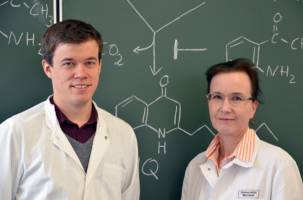
So-called hospital germs are a big worry for physicians and hygiene specialists as these bacteria can spell danger for people with a weakened immune system. This is especially true when the germs are resistant to one or more antibiotics and surround themselves with a so-called biofilm as a sort of protective shield.
Life Sciences - Health - 01.03.2016
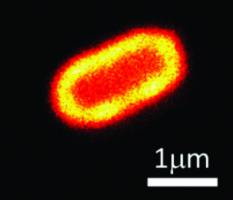
Bacterial infections can have serious consequences - for example, when the microorganisms colonize an artificial heart valve or some other prosthesis. There is especially problematic when the bacteria are resistant to several antibiotics. Researchers are therefore looking for new methods of treatment as well as for ways to find centres of infection in the body.
Life Sciences - Mathematics - 22.02.2016

Crumpled paper and Romanesco cauliflower have one thing in common: they have a fractal form. "Scientists have long been discussing whether the curves of our cerebrum have a fractal form," explains Dr. Marc de Lussanet, a researcher at Münster University. Experts want to know how the brain folds are produced in order to understand the brain, its development and possible disorders.
Life Sciences - Health - 17.02.2016

Stroke and dementia rank among the most pressing health issues in Europe. Both conditions are linked with so-called cerebral small vessel diseases (SVDs). SVDs account for more than 30% of strokes and at least 40% of dementia cases. Despite this profound impact on human health, reliably effective treatments for SVDs are still elusive.
Life Sciences - Physics - 05.02.2016

Without oxygen, cells cannot survive. If the oxygen supply drops, for example due to a heart attack, long-term damage may result. However, just how serious such damage really is can only be assessed hours or even days later. For the first time now, and using light microscopy, scientists in Münster have observed reduced oxygen supply directly in individual cells.
Administration - Health - 19.01.2016
Almost €2 million in funding for Münster virologist
Dr. Mario Schelhaas from Münster University has seen off the competition to receive a grant from the European Research Council (ERC). The grant, worth up to two million euros, is particularly prestigious. Mario Schelhaas is a virologist and biochemist at the Institute of Molecular Virology and the Institute of Medical Biochemistry.
Life Sciences - Physics - 18.01.2016
Blood cells in action
In experiments and computer simulations, researchers repeatedly deformed red blood cells, let them "wriggle" and then analysed their behaviour. Three tiny spheres hold the cells in place during the process, while the movements of the cell membrane are measured with the help of a fourth sphere. The "wrapper" of the blood cell consists of a lipid double layer and a cytoskeleton; active forces, produced for example by an ion pump, move the membrane (red arrows) and fluids (green arrows) locally in opposite directions.
Physics - Life Sciences - 22.09.2015

Light is ideally suited to data transfer, as it can transmit large quantities of information in a very short time, and is an indispensable part of the IT world of today and tomorrow. However, a stumbling block so far has been the storage of large quantities of data directly in the optical domain. While optical fibre cables - and, with them, data transfer by means of light - have long since become part of our everyday life, data on a computer are still processed and stored electronically.


