Basement membrane protein influences the connection of blood vessel cells: Tracking inflammatory processes / Study produced by researchers at Cells-in-Motion Cluster of Excellence
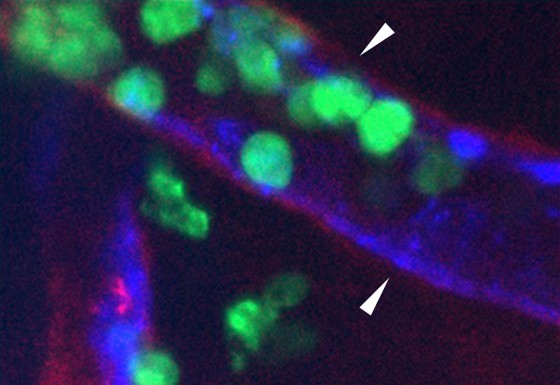
Laminin 511 (red) inhibits the migration of immune cells (green) through the endothelial cell layer (blue) of the blood vessels. Immune cells migrate preferentially into the tissue at sites of low or no laminin expression (arrows).
- Song et al./Cell Reports
Which molecular mechanisms are at work when, in the case of inflammation, immune cells migrate from the blood vessel into the tissue? Researchers at the Cells-in-Motion Cluster of Excellence at Münster University have gained new insights into this question: the laminin 511 protein, that underlies endothelial cells that form the inner cell layer of the blood vessel wall, influences how permeable the vessel is for immune cells. The study has been published in the journal "Cell Reports". Immune cells - leukocytes - are a kind of health police in the body. They circulate in the bloodstream and patrol the vessels of all the organs. When inflammation occurs, immune cells migrate from the blood into the tissue, where they fight the inflammation. To get into the tissue, they have to overcome two barriers. One is a thin layer of endothelial cells that coat the blood vessels and a second protein barrier - the basement membrane - that underlies the endothelial layer and forms the outer portion of the vessel wall.
UM DIESEN ARTIKEL ZU LESEN, ERSTELLEN SIE IHR KONTO
Und verlängern Sie Ihre Lektüre, kostenlos und unverbindlich.