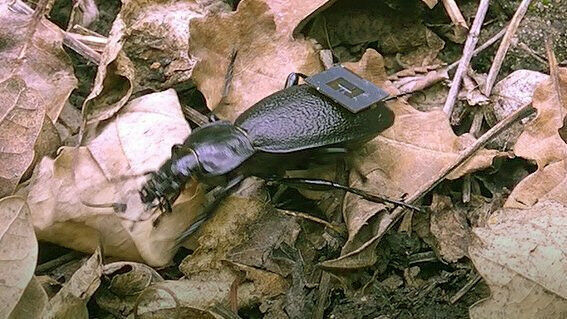
The movements of this beetle (Carabus coriaceus) have been tracked with the help of a RFID tag. Image: Stefan Bernhardt/iDiv
The movements of this beetle (Carabus coriaceus) have been tracked with the help of a RFID tag. Image: Stefan Bernhardt/iDiv - Global warming is affecting terrestrial insects in multiple ways. In response to increasingly frequent heat extremes, they have to either reduce their activity or seek shelter in more suitable microhabitats. A new study led by researchers from the German Centre for Integrative Biodiversity Research (iDiv) and Friedrich Schiller University Jena shows: The more diverse these microhabitats are, the better for the insects. For their study, published in "Global Change Biology", they developed a new approach to accurately track insect movements and activity. Anthropogenic global warming has far-reaching implications for the world we live in. Some of these changes might be less obvious and often go unnoticed for a long time.
TO READ THIS ARTICLE, CREATE YOUR ACCOUNT
And extend your reading, free of charge and with no commitment.