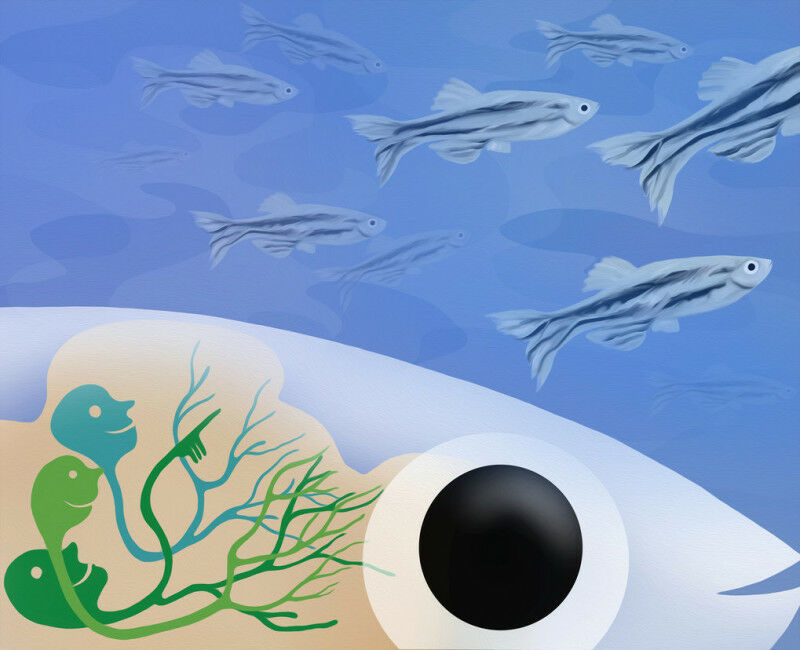
 A specialized brain region enables zebrafish to detect and approach nearby conspecifics.
Specialized nerve cells in the zebrafish visual system enable recognition of conspecifics. A specialized brain region enables zebrafish to detect and approach nearby conspecifics. MPI for Biological Intelligence, i.f. Julia Kuhl - Humans are famously social animals. But they are not alone in their tendency to team up with other individuals of the same species (conspecifics) to reach their goals. In fact, herds of mammals, flocks of birds, or shoals of fish are abundantly observed in nature. How does an animal's brain recognize other animals of its own kind? Scientists at the Max Planck Institute for Biological Intelligence, in foundation, study this process in young zebrafish. They now discovered a neuronal circuit that mediates social attraction.
TO READ THIS ARTICLE, CREATE YOUR ACCOUNT
And extend your reading, free of charge and with no commitment.
Your Benefits
- Access to all content
- Receive newsmails for news and jobs
- Post ads