


news 2020
« BACK
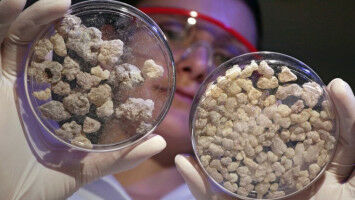 Frankincense reprograms inflammatory enzyme
 Major Depression: Early Prognosis for Ketamine Therapy
 Nature as a model: Producing novel active substances more effectively
 Preserving inflammation-free phases
 Blocking sugar structures on viruses and tumor cells
 Analysis of whole brain vasculature
 A molecular map for the plant sciences
 Eat or be eaten
 "A rethinking in the minds of researchers is necessary": Guest comments
 Research team illuminates macrophages
 Lane change in the cytoskeleton
 The invisibility cloak of a fungus
 Biological diversity as a factor of production
Life Sciences
Results 81 - 100 of 108.
Life Sciences - Pharmacology - 11.05.2020
Research team has clarified the anti-inflammatory effect of a natural product from frankincense resin Life A research team from the University of Jena and Louisiana State University (USA) has clarified the molecular mechanism behind the anti-inflammatory effect of a natural product from frankincense resin.
Pharmacology - Life Sciences - 01.05.2020
An Alternative for Antibiotics
International Team of Researchers Investigates Antibacterial Effects of Antimicrobial Peptides No 073/2020 from May 01, 2020 Scientists at Cornell University, Georgetown University, and Freie Universität Berlin have analyzed and summarized to what extent antimicrobial peptides, such as those found in plants and animals, can be used as an alternative to conventional antibiotics.
Pharmacology - Life Sciences - 29.04.2020
Jena University Hospital coordinates a European research network that aims at establishing therapeutic biomarkers for treatment response to ketamine The World Health Organization estimates that more than 4 million people in Germany suffer from depression. Standard therapy is working insufficiently in one third of patients; in another third, it does not work at all.
Life Sciences - Pharmacology - 29.04.2020
Multi-resistant germs can cause severe infections, particularly in people with a weakened immune system, and are difficult to treat with conventional antibiotics. Novel active substances with anti-infective and sometimes antibiotic effects such as violacein are promising candidates for a remedy, but it has so far been difficult to produce them in sufficient quantities.
Life Sciences - Health - 15.04.2020
Crohn's disease is a chronic inflammatory disorder of the intestine that, in most cases, relapses episodically. As of now, there is no cure for this disease. A research group led by the Technical University of Munich (TUM) has discovered a marker at a microscopic level, which can be used to identify patients that show a high probability of suffering from an inflammation recurrence in the immediate future.
Life Sciences - Health - 25.03.2020
A new mechanism triggering cell death and inflammation: a left turn that kills
Z-form nucleic acids are double-stranded DNA and RNA molecules with an unusual left-handed double helix structure, as opposed to the classical right-handed Watson-Crick double helix. Z-nucleic acids were discovered more than 40 years ago, but their biological function has remained poorly understood.
Health - Life Sciences - 17.03.2020
Coronavirus: University operations limited +++ make use of online services +++ many staff working from home +++ www.tum.de/corona Artificial sugar-binding protein may inhibit cell growth During a viral infection, viruses enter the body and multiply in its cells. Viruses often specifically attach themselves to the sugar structures of the host cells, or present characteristic sugar structures on their surface themselves.
Life Sciences - Health - 13.03.2020
Coronavirus: University operations limited +++ make use of online services +++ many staff working from home Biochemical methods and AI show even the finest capillaries Diseases of the brain are often associated with typical vascular changes. Now, scientists at LMU University Hospital Munich, Helmholtz Zentrum München and at the Technical University of Munich (TUM) have come up with a technique for visualising the structures of all the brain's blood vessels - right down to the finest capillaries - including any pathological changes.
Life Sciences - Chemistry - 12.03.2020
First comprehensive map of the proteome of the model plant Arabidopsis thaliana Plants are essential for life on earth. They provide food for essentially all organisms, oxygen for breathing, and they regulate the climate of the planet. Proteins play a key role in controlling all aspects of life including plants.
Life Sciences - 06.03.2020
Why Individuals Are Not Alike
Neurobiologists studied how brain development influences behavioral differences No 051/2020 from Mar 06, 2020 Neurobiologists at Freie Universität Berlin led by Bassem Hassan, Einstein BIH Visiting Fellow, in collaboration with the group led by Robin Hiesinger at the Department of Biology, Chemistry, and Pharmacy at Freie Universität Berlin, described in a study published in Science why fruit flies display individual behavioral differences despite having the same genotype and being reared in identical environmental conditions.
Environment - Life Sciences - 25.02.2020
Biodiversity increases the efficiency of energy use in grasslands Plants obtain their energy from the sun. Other beings rely on eating to survive. Yet how does the energy flow inside ecosystems function and are there differences between ecosystems with many species in comparison to those with few species' Researchers have now examined these questions using a holistic approach by evaluating data gathered through a large-scale biodiversity experiment.
Life Sciences - 21.02.2020
Trusting Our Own Knowledge
What do we know about the topic of climate change and how great is our trust in our own knowledge? An interdisciplinary team of researchers from Heidelberg University has explored this question in a representative study involving around 500 participants. It turned out that those interviewed mainly were uncertain of their own level of knowledge when confronted with false statements.
Life Sciences - Health - 20.02.2020
Molecular Motor
How do cells disentangle clumped, and hence non-functional, proteins? A Dutch-German team including researchers from Heidelberg University explored this question. The researchers describe a molecular machine which pulls on exposed loops of the protein chains and extracts them from the protein aggregate.
Computer Science - Life Sciences - 19.02.2020
The reproducibility of research results is one of the fundamental quality criteria in science. The demand for transparency of the scientific knowledge process aims to ensure the repeatability of scientific studies or experiments. The project "Opening Reproducible Research" (o2r) of the Institute for Geoinformatics of the University of Münster and the University and State Library of Münster deals with this topic.
Life Sciences - Chemistry - 13.02.2020
Body Temperature Controls Enzyme Activity
A new study at Freie Universität Berlin shows how body temperature regulates certain enzymes and biological processes No 033/2020 from Feb 13, 2020 Researchers from Freie Universität Berlin's Institute of Chemistry and Biochemistry have shown that the activity of a class of enzymes is directly controlled by subtle changes in body temperature.
Life Sciences - Health - 12.02.2020
Molecular switch in bone marrow stem cells helps research into inflammatory processes in the brain Life Macrophages are part of the innate immune system and essential for brain development and function. Using a novel method, scientists from Jena University Hospital, the University of Bonn and the Memorial Sloan Kettering Cancer Center in New York (USA) succeeded in visualizing macrophages that were formed in the bone marrow.
Life Sciences - 12.02.2020
Transport proteins can switch between microtubule network and actin network Many amphibians and fish are able to change their color in order to better adapt to their environment. Munich-based scientists have now investigated the molecular mechanisms in the cytoskeleton necessary for this and revealed potential evolutionary paths.
Life Sciences - Health - 05.02.2020
While viruses and bacteria regularly manage to infect the human organism, fungi only very rarely succeed. The reason for this is that the human immune system can recognize them very easily because their cells are surrounded by a solid cell wall of chitin and other complex sugars. Chitin is, so to speak, the alarm signal for our immune system, to which it reacts with a whole arsenal of defensive weapons.
Life Sciences - Agronomy & Food Science - 05.02.2020
Bumble bees prefer a low-fat diet
A bumble bee's diet affects survival and reproductive capabilities Are bees dying of malnourishment? Professor Sara Diana Leonhardt examines the interactions between plants and insects with her work group at the TUM School of Life Sciences Weihenstephan. Using behavioral experiments, her team analyzes how bumble bees evaluate the quality of food sources and how foods of various qualities affect their well-being.
Environment - Life Sciences - 30.01.2020
Relationship between the economic value of our ecosystems and biodiversity Can the biodiversity of ecosystems be considered a factor of production? A group of researchers under the direction of the Technical University of Munich (TUM) are studying the economic benefits that farmers and foresters can obtain by focusing on several species instead of just one.


