


news 2020
« BACK
 Controlling cells with light
 MEET - Publication galvanic corrosion
 Flavor research for consumer protection
 Predicting reaction results: Machines learn chemistry
 A molecular map for the plant sciences
 A real alternative to crude oil
 Deciphering the sugar code
 Chemists allow boron atoms to migrate
Chemistry
Results 41 - 50 of 50.
Life Sciences - Chemistry - 15.05.2020
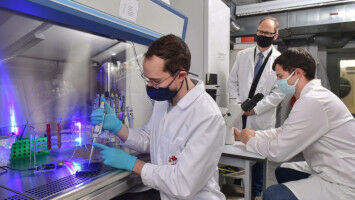
A research team from Jena, Munich and New York develops an active substance that controls an important component of the cytoskeleton with the help of light Light Life Photopharmacology investigates the use of light to switch the effect of drugs on and off. Now, for the first time, scientific teams from Jena, Munich, and New York have succeeded in using this method to control a component of cells that was previously considered inaccessible.
Chemistry - Materials Science - 27.04.2020
In addition to high purchase costs and the still underdeveloped charging infrastructure, the limited range is one of the biggest obstacles to switching to electric vehicles. Industry and science are therefore working intensively on developing batteries with a higher energy density and making them suitable for series production.
Chemistry - 26.03.2020
Flavorings containing benzaldehyde can develop benzene under the influence of light In 2013, the Stiftung Warentest found harmful benzene in drinks with cherry flavor. But how did the substance get into the drinks' Was the source benzaldehyde, an essential component of the cherry flavoring? And if so, how could the problem be solved? A new study by the Leibniz-Institute for Food Systems Biology and the Technical University of Munich (TUM) is now able to answer these questions.
Chemistry - Computer Science - 17.03.2020
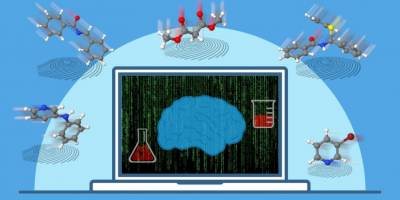
Everyday life without artificial intelligence is barely conceivable in today's world. Countless applications in areas such as autonomous driving, foreign language translations or medical diagnostics have found their way into our lives. In chemical research, too, great efforts are being made to apply artificial intelligence (AI), also known as machine learning, effectively.
Life Sciences - Chemistry - 12.03.2020
First comprehensive map of the proteome of the model plant Arabidopsis thaliana Plants are essential for life on earth. They provide food for essentially all organisms, oxygen for breathing, and they regulate the climate of the planet. Proteins play a key role in controlling all aspects of life including plants.
Life Sciences - Chemistry - 13.02.2020
Body Temperature Controls Enzyme Activity
A new study at Freie Universität Berlin shows how body temperature regulates certain enzymes and biological processes No 033/2020 from Feb 13, 2020 Researchers from Freie Universität Berlin's Institute of Chemistry and Biochemistry have shown that the activity of a class of enzymes is directly controlled by subtle changes in body temperature.
Life Sciences - Chemistry - 29.01.2020
Tree-like Detergent Molecules for Membrane Proteins
Scientists at Freie Universität Berlin and University of Oxford Develop Novel Technique for the Analysis of Membrane Proteins No 017/2020 from Jan 29, 2020 Researchers at Freie Universität Berlin and the University of Oxford developed a method, which enables the gentle release of proteins from membranes.
Chemistry - Materials Science - 27.01.2020
The synthesis of bio-based high-performance polyamide from biogenic residues A research team from the Fraunhofer Society and the Technical University of Munich (TUM) led by chemist Volker Sieber has developed a new polyamide family which can be produced from a byproduct of cellulose production - a successful example for a more sustainable economy with bio-based materials.
Life Sciences - Chemistry - 24.01.2020
Like animals and humans, plants possess a kind of immune system. It can e.g. recognize pathogenic fungi by the chitin in their cell walls, triggering disease resistance. Some fungi hide from the immune system by modifying some of the chitin building blocks, converting chitin into chitosan.
Chemistry - Physics - 17.01.2020
Organic molecules with atoms of the semi-metal boron are among the most important building blocks for synthesis products that are needed to produce drugs and agricultural chemicals. However, during the usual chemical reactions used in industry, the valuable boron unit, which can replace another atom in a molecule, is often lost.


