A new research team focused on photonic quantum technologies will begin work this February at RWTH’s Chair for Laser Technology (LLT).
While quantum computers already demonstrate superior processing power compared to conventional systems for complex tasks, researchers are now tackling the next frontier: how to enhance their capabilities while ensuring secure access. The newly formed research group at RWTH’s Chair for Laser Technology aims to address these challenges while pursuing their broader vision of creating a quantum internet that could enable revolutionary new applications.
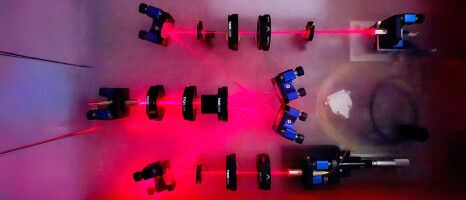
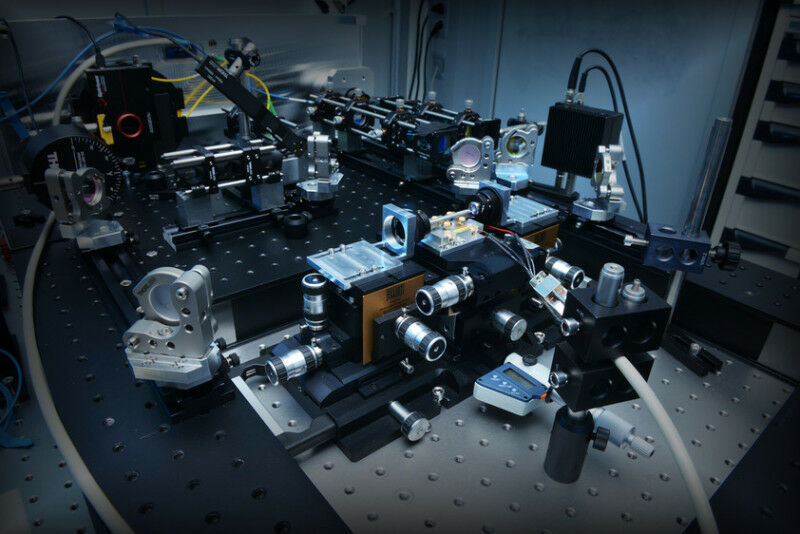
The research team will focus on developing specialized optical connections for quantum computers. These connections will be designed to modify key properties of photons - including wavelength, bandwidth, and duration - enabling different quantum computers to communicate both within networks and across long distances. The project employs various optical methods, both active and passive, which will undergo continued development and optimization.
Beyond pure technology development, the team will combine theoretical modeling with practical system design to establish real-world demonstration networks. This integrated approach - merging quantum physics expertise with photonic technologies and systems engineering approaches - aims to create practical solutions that can accelerate the development of next-generation quantum networks.
The project has secured funding through the Federal Ministry of Education and Research (BMBF) Quantum Futur program. This initiative serves two key purposes: advancing quantum technology development while establishing sustainable research infrastructure that enables promising early-career scientists to transform basic research findings into practical technological and economic applications.
The BMBF has committed to funding five positions at the Chair for Laser Technology for a five-year period, along with significant investment in laboratory equipment. This support is designed to provide young researchers with optimal conditions for successful scientific work. The project, operating under funding code 13N17227, is currently recruiting talented scientists to join the BMBF-funded early-career research group led by Florian Elsen.
The research team maintains close collaboration with the Fraunhofer Institute for Laser Technology ILT and the Quantum Technology Group, led by Prof. Hendrik Bluhm at the Institute for Quantum Information. As a partner in the Quantum Internet Alliance, a European initiative for quantum internet development, the early-career research group works alongside leading international scientists and companies in the field.