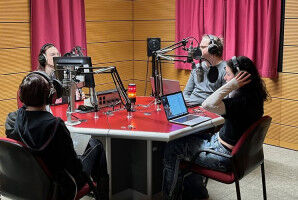
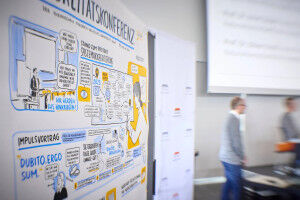
Brazil Day at the University of Bonn is all’about promoting partnership, dialogue and inter-continental academic collaboration
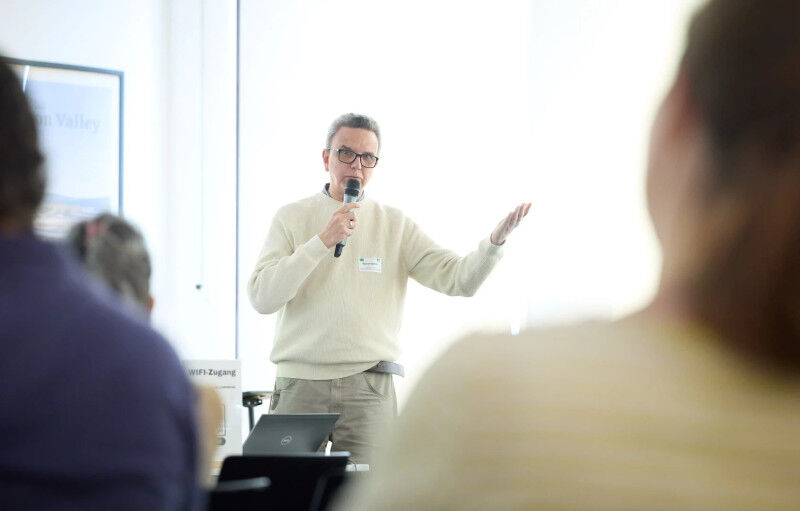
Brazil Day at the University of Bonn is an innovative forum for dialogue and networking-a day dedicated to strengthening academic ties with Brazil by stimulating conversation, generating ideas and gaining new perspectives. Researchers from North Rhine-Westphalia, representatives of funding organizations and members of the Brazilian academic diaspora in Germany came together at the conference to present their projects and discussed potential collaborations.
Held March 6, the focus topic of Brazil Day was the "Third Meeting of the Brazilian Diaspora in NRW," jointly organized by the University of Bonn and the Brazilian-German APoeNA network, whose members are professors, students, doctoral candidates and postdocs from the two countries, representing any and all fields. "Brazil has been an important partner country for the University of Bonn for many years now," said Professor Birgit Ulrike Münch, Vice Rector for International Affairs, in her opening speech, "Brazil Day is an important but low-threshold internationalization event that promotes our bi-lateral relations in specific fashion, bringing people together who may go on to initiate collaborations. Ideally, these will grow into reliable, long-term cooperation structures."
Academic networking across continents
Numerous partnerships are already in place between researchers in Bonn and Brazilian universities and research institutions such as Universidade de São Paulo, Pontifícia Universidade Católica do Rio Grande do Sul, Universidade Federal do Rio Grande do Sul and Fundação Oswaldo Cruz (Fiocruz).
The network is flanked by the University of Bonn Interdisciplinary Center for Latin American Studies (ILZ) and the German Centre for Research and Innovation São Paulo (DWIH São Paulo), which promotes collaboration between German and Brazilian research institutions.
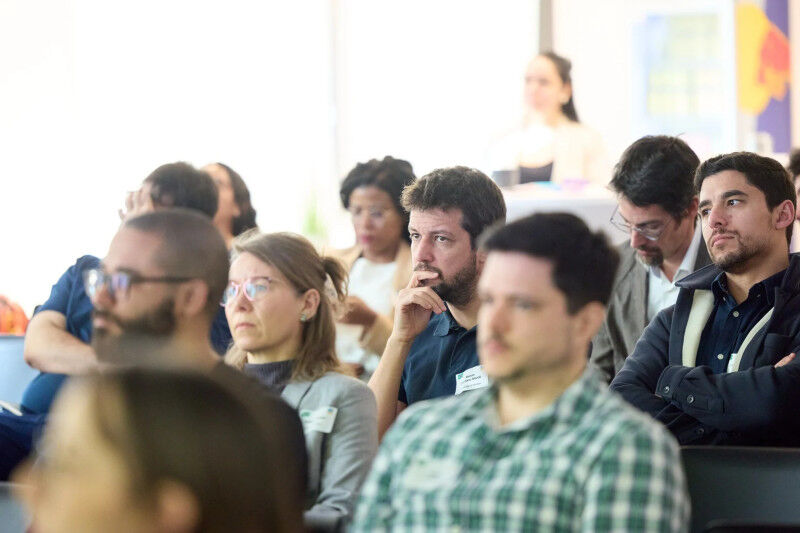
At Brazil Day, researchers presented joint projects, discussed funding options and explored new possibilities for partnerships across the spectrum-from the natural and life sciences to the humanities and social sciences, including broader interdisciplinary projects.
CAPES Visiting Professorship: strengthening cooperation
The "Brazil Chair" visiting professorship is a key instrument for German-Brazilian cooperation at the University of Bonn. The chair is the fruit of a partnership with the Coordenação de Aperfeiçoamento de Pessoal de Nível Superior (CAPES) foundation, the largest state organization for the promotion of higher education and research in Brazil.
This professorship program has made it possible for an outstanding Brazilian researcher to do an extended research stay in Bonn every year since 2016. Only a few such CAPES visiting professorships exist worldwide, at universities including Oxford, Harvard, Cambridge and Sorbonne. Being a member of such an auspicious network underscores the University of Bonn’s prestige as an international research center. "Rather than an isolated project, the partnership with Brazil is an integral part of our larger strategy," said Vice Rector Münch. "The CAPES Visiting Professorship and similar programs are how we institutionally anchor excellence, exchange and responsibility."
Professor Marciel Stadnik: Focus on sustainable agriculture
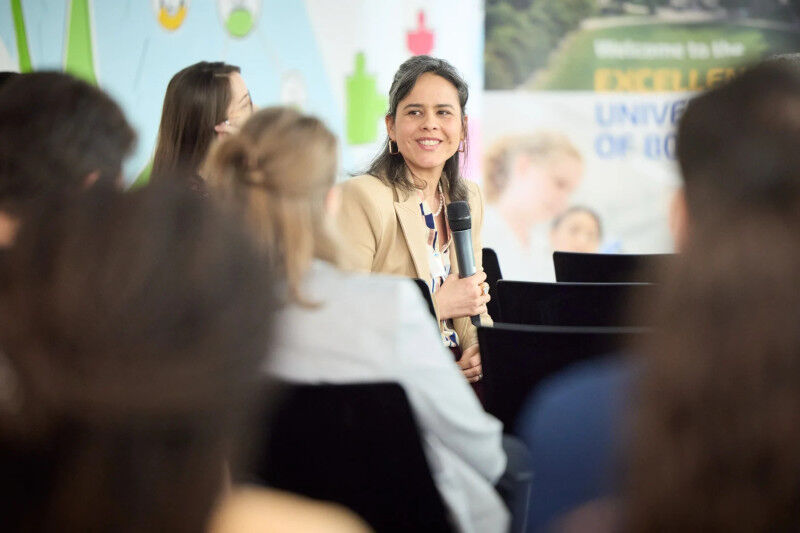
Professor Marciel Stadnik of the Universidade Federal de Santa Catarina is CAPES Visiting Professor at the University of Bonn for the 2025/2026 academic year, conducting research on agroecology and organic farming at the Institute for Crop Science and Resource Conservation (INRES).
A prominent ecological farming scientist, Professor Stadnik gave the keynote address for the Agriculture and Land section at Brazil Day, presenting his work on "Bio-Based Solutions for Sustainable Land Use."
Having Stadnik as visiting professor brings fresh expertise to Bonn while promoting networking among research groups and early-career researchers in this pioneering field.
Stronger research ties
The academic presentations at the conference were flanked by a panel discussion of issues around research partnerships and responsibility. The panel members talked about the role of the academic diaspora in innovation, knowledge circulation, international networks, and the academic communities of both countries.
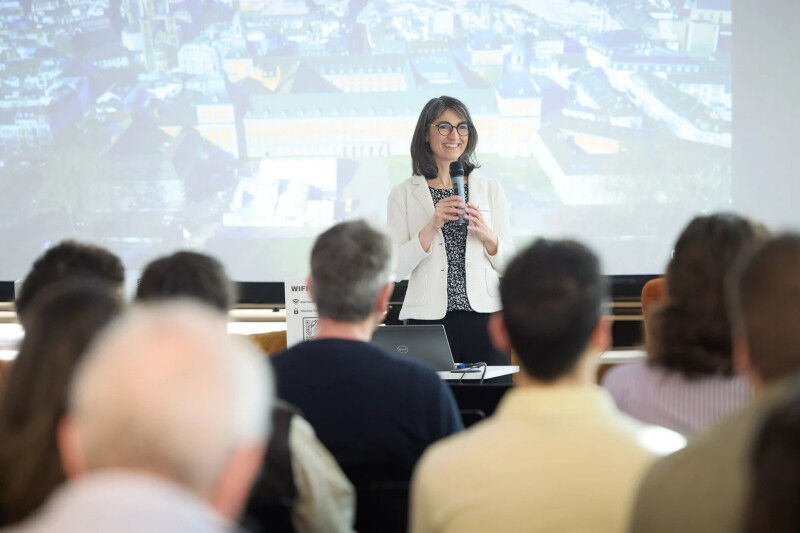
Research ethics and the responsibilities of the academic community toward future generations were another discussion topic. Representatives from funding organizations including the German Academic Exchange Service (DAAD), the German Research Foundation (DFG), the Alexander von Humboldt Foundation and project management agency DLR Projektträger introduced funding possibilities and answered questions about funding programs connected with Brazil.
Brazil Day created specific starting points for new projects through extensive discussions, numerous expert presentations and a joint networking event, highlighting how vibrant and multifaceted the dialogue between the academic communities of Bonn and Brazil is today while revealing potential for future collaborations.